Decision 42/2026/QD-TTg: 2,441 facilities must run a GHG inventory — how an SME checks if it is in scope before 25 Sep 2026
Decision 42/2026/QD-TTg puts 2,441 facilities in six sectors into Vietnam's mandatory GHG inventory list from 25 Sep 2026. How an SME checks if it is in scope.
August 14, 2026 · 18 min read
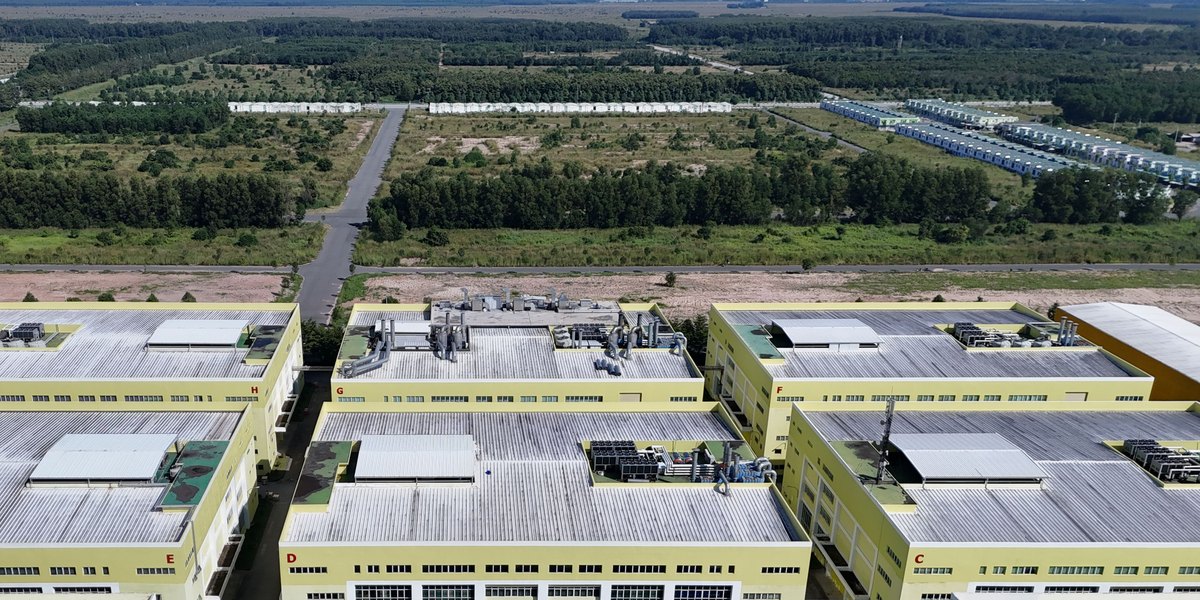
Photo: Vietnam Real Estate / Pexels (free license)
Quick summary
On 10 August 2026, Deputy Prime Minister Ho Quoc Dung signed Decision No. 42/2026/QD-TTg issuing the updated list of sectors and greenhouse-gas-emitting facilities required to conduct GHG inventories. It replaces Decision 13/2024/QD-TTg and takes effect on 25 September 2026. The list covers 2,441 facilities across six sectors, split by supervising ministry: 1,916 under the Ministry of Industry and Trade, 411 construction facilities and 53 transport facilities under the construction portfolio, and 61 under the Ministry of Agriculture and Environment. This article does not teach how to run an inventory. It answers a narrower and more urgent question for small and medium enterprises: are you in scope, where do you look, and what must you do before the effective date. It builds a self-check around the three threshold criteria in Article 6 of Decree 06/2022/ND-CP, verified against the official gazette PDF and cross-checked against both amending decrees 119/2025 and 83/2026 to confirm the thresholds still stand; it explains how to search the right annex by supervising ministry instead of scrolling the whole file; it lays out a backward schedule to 25 September 2026; and it separates two mechanisms that are routinely conflated, since being on the inventory list is not the same as being allocated an emissions quota. It also explains why news reports carry two different totals and why this article uses 2,441.
Quick answer: if your company operates in energy, transport, construction, industrial processes, agriculture-forestry-land use or waste, then from 25 September 2026 you need to know for certain whether you appear in the 2,441-facility list issued with Decision 42/2026/QD-TTg. Being on the list means a legal duty to run a facility-level greenhouse gas inventory and to file a report under Decree 06/2022/ND-CP. Not being on it is not a permanent exemption, because the list is reviewed and updated on a cycle. This article does not teach inventory methodology — it helps you establish scope and build a work schedule ahead of the effective date.
Last updated: 14 Aug 2026.
The short version for busy readers
Seven things to remember if you only have three minutes:
- The instrument: Decision No. 42/2026/QD-TTg, signed by Deputy Prime Minister Ho Quoc Dung on 10 August 2026, issuing the updated list of sectors and GHG-emitting facilities required to conduct inventories.
- Effective date: 25 September 2026. This is the date you count backwards from.
- Scale: 2,441 facilities across six sectors.
- Split by supervising ministry: 1,916 facilities under the Ministry of Industry and Trade; 411 construction-sector facilities and 53 transport-sector facilities under the construction portfolio; 61 under the Ministry of Agriculture and Environment.
- What it triggers: a facility-level GHG inventory and a report filed under Decree 06/2022/ND-CP, as amended by Decree 119/2025/ND-CP and Decree 83/2026/ND-CP.
- The underlying criteria: annual emissions of 3,000 tonnes of CO₂ equivalent or more, or one of four energy-consumption and waste-capacity thresholds in Article 6 of Decree 06/2022/ND-CP.
- The list is not static: provincial People's Committees must review and update facility information in their area, and the Ministry of Agriculture and Environment leads the process of submitting list updates to the Prime Minister.
Key facts — each line is independently checkable, with its source in place:
- The updated list covers 2,441 facilities across six sectors, per Bao Dau Thau, 12 Aug 2026.
- The split by ministry is 1,916 + 411 + 53 + 61, per the English report by Vietnam Government News, 12 Aug 2026. Those four numbers add up to exactly 2,441.
- Transport and construction together account for 464 facilities, per Bao Xay Dung, 11 Aug 2026.
- The scoping thresholds sit in Article 6(1) of the official gazette PDF of Decree 06/2022/ND-CP: 3,000 tonnes CO₂e per year, or 1,000 TOE per year, or solid-waste treatment capacity of 65,000 tonnes per year.
- The decision takes effect on 25 September 2026, per Vietnam Investment Review, 12 Aug 2026.
The three-threshold self-check: are you in scope
Straight answer: there are two separate questions, and you must answer both. The first is does my facility appear in the list attached to Decision 42/2026 — a lookup question, yes or no, not something to be guessed. The second is does my facility exceed the thresholds that the list is built on — a measurement question, and it matters even if you are not named this time, because the list is reviewed on a cycle. Many small and medium enterprises ask only the first question, find no entry, close the file, and are caught unprepared two years later.
The thresholds sit in Article 6(1) of Decree 06/2022/ND-CP. We read the official gazette PDF directly from the government file server at datafiles.chinhphu.vn rather than relying on press summaries, because this figure decides whether a company carries a legal obligation. In substance, Article 6(1) says a facility must run an inventory if its annual greenhouse gas emissions reach 3,000 tonnes of CO₂ equivalent or more, or if it falls into one of four listed cases: thermal power plants and industrial production facilities consuming 1,000 tonnes of oil equivalent or more per year; freight transport companies consuming 1,000 TOE of fuel or more per year; commercial buildings consuming 1,000 TOE or more per year; and solid-waste treatment facilities with annual operating capacity of 65,000 tonnes or more.
One point almost every news summary skips, and the reason we had to open two further instruments: Decree 06/2022 has been amended twice. We checked the gazette PDF of Decree 119/2025/ND-CP of 9 June 2025, which amends Articles 2, 3, 7, 8, 9 and onwards but does not touch Article 6. We also read the full text of Decree 83/2026/ND-CP of 23 March 2026 and confirmed that it amends only Article 24, Article 26 and replaces certain forms in Annex VI — all administrative procedure concerning controlled substances, nothing on inventory thresholds. Conclusion: the three threshold groups below are the thresholds in force as at 14 August 2026.
| Criterion group | Threshold | Who it applies to | Records you need to self-assess |
|---|---|---|---|
| Emissions level | 3,000 tonnes CO₂e per year or more | Any emitting facility, regardless of sector | Inventory results, or an estimate from your activity data |
| Energy use — manufacturing | 1,000 TOE per year or more | Thermal power plants; industrial production facilities | Electricity bills in kWh, full-year fuel intake ledgers (DO, FO, LPG, coal) |
| Energy use — transport | 1,000 TOE per year or more | Freight transport companies | Fleet fuel logs, fuel invoices by litre |
| Energy use — buildings | 1,000 TOE per year or more | Commercial buildings | Whole-building electricity, generator fuel and gas records |
| Waste treatment capacity | 65,000 tonnes per year or more | Solid-waste treatment facilities | Design capacity records and actual intake volumes |
There is a legitimate shortcut that very few companies use. The 1,000 TOE per year threshold is the same figure used to identify a key energy-using facility under Article 3 of Decree 30/2026/ND-CP of 21 January 2026, which implements the Law on Economical and Efficient Use of Energy and replaces Decree 21/2011/ND-CP. Article 4 of that decree requires provincial People's Committees to approve and publish the list of key energy-using facilities in their province once a year, before 31 March. In other words, if your plant already appears on the province's key-energy list, you have almost certainly passed the 1,000 TOE mark, and the inventory question is no longer hypothetical. Looking up the provincial list is far faster than building an energy balance from scratch. If you already run an energy management system, the data usually exists — see our article on factory energy efficiency under ISO 50001.
What Decision 42/2026 actually changes
Straight answer: Decision 42/2026/QD-TTg does not create a new obligation; it redraws the boundary of an existing one. The duty to run a facility-level GHG inventory has existed since Decree 06/2022/ND-CP. What each list update changes is who falls inside the perimeter. For a small or medium enterprise, that is the single most consequential fact: the line between voluntary ESG and an enforceable obligation runs exactly through whether your facility is named.
The decision has two substantive parts. The first is the list of six sectors subject to inventory. As reported by Bao Dau Tu and in English by Vietnam Government News, those sectors are: energy, covering energy production industries, energy consumption in industry, commerce, services and residential activity, coal mining, and oil and gas extraction; transport, covering energy consumption in the transport sector; construction, covering energy consumption in construction and industrial processes in building-material production; industrial processes, covering chemicals, metallurgy, electronics, the use of substitutes for ozone-depleting substances, and the production and use of other industrial products; agriculture, forestry and land use, covering livestock, forestry and land-use change, crop production, energy consumption in agriculture, forestry and fisheries, and other agricultural emission sources; and waste, covering solid-waste landfills, biological treatment of solid waste, incineration and open burning, and wastewater treatment and discharge.
The second part is the facility list itself, organised by supervising ministry. This is where confusion is most common, so one machinery-of-government note matters: the Ministry of Construction currently also holds the transport portfolio, which is why the construction-sector list contains 53 transport facilities alongside 411 construction facilities. Likewise, the body that now leads list updates is the Ministry of Agriculture and Environment, not the Ministry of Natural Resources and Environment named in the 2022 text of Decree 06/2022. If you search older material under the old ministry name, you will knock on the wrong door.
The decision also assigns roles by level. Listed facilities must run facility-level inventories under the guidance of the Ministry of Agriculture and Environment, the Ministry of Industry and Trade and the Ministry of Construction, and must prepare and file reports under Decree 06/2022/ND-CP as amended by Decrees 119/2025/ND-CP and 83/2026/ND-CP. The ministries are to guide, prompt and inspect. Provincial People's Committees direct their specialist agencies to prompt facilities in their area, coordinate the review and updating of facility information, and bear responsibility for the accuracy and completeness of the local list. That last clause is why the "not listed yet, but likely soon" section below is not a theoretical concern.
Finding your facility: go to the right annex by ministry
Straight answer: do not open the whole list and scroll — identify your supervising ministry first, then open only that annex. The 2,441 facilities are organised by supervising sector, not by province and not alphabetically by company name. For an HSE lead or a chief accountant who has to answer the boss this afternoon, going to the right annex is the difference between ten minutes and half a day.
Identifying the ministry is fairly mechanical. If your facility is an industrial plant, an energy facility, or works in chemicals, metallurgy, electronics, textiles or industrial-scale food processing, you are almost certainly in the Ministry of Industry and Trade annex, by far the largest group at 1,916 facilities. If you make cement, bricks, architectural glass or concrete, or operate a large commercial building, you belong in the construction portion. If you are a large freight transport operator or a port operator, look in the transport portion — still inside the construction-portfolio list. If you run a large livestock operation, an agri-processing facility tied to land and forestry, or a waste treatment facility, you are in the Ministry of Agriculture and Environment annex, the smallest group at 61 facilities.
| Annex by sector | Facilities | Typical operations | Guidance body |
|---|---|---|---|
| Industry and trade | 1,916 | Industrial plants, energy facilities, chemicals, metallurgy, electronics | Ministry of Industry and Trade |
| Construction portfolio — construction | 411 | Building-material production, energy use in construction | Ministry of Construction |
| Construction portfolio — transport | 53 | Energy consumption in transport | Ministry of Construction |
| Agriculture and environment | 61 | Livestock, forestry and land use, crops, waste | Ministry of Agriculture and Environment |
| Total | 2,441 | Six sectors | Ministry of Agriculture and Environment leads list updates |
Three practical notes when searching. First, search by legal entity name and facility address, not by brand — the list is organised by facility, and one legal entity with several plants appears on several lines. Second, if your company has recently changed name, merged, or relocated a plant since the previous update, search the old name too; correcting list information falls within the provincial review process and you should raise it proactively. Third, transport operators with branches should note the identification rule: Decree 30/2026/ND-CP provides that where a transport operator has branches or dependent units operating at several different addresses, each address is treated as a separate transport facility. That split has a direct bearing on whether you cross the threshold.
Why two totals circulate — 2,441 and 2,411
Straight answer: this article uses 2,441, because it is the only total consistent with the arithmetic of the list's own four parts. 1,916 plus 411 plus 53 plus 61 equals exactly 2,441. We say this openly rather than quietly picking a number, because you may well have seen a different figure elsewhere and need to know which one to trust.
Specifically, Bao Dau Thau, Bao Dau Tu, VietnamPlus and, in English, Vietnam Investment Review all report 2,441 and all list four components that add to that figure. Dan Tri, 12 Aug 2026 instead reports 2,411. The two differ only by a transposition of the last two digits, which is a familiar editing slip. Because the arithmetic supports 2,441, we use 2,441.
There is a companion figure we deliberately do not publish: the increase relative to the 2024 list. Reports give different answers to the same subtraction — Dan Tri says 245 more facilities while Vietnam Investment Review says 274. When sources disagree on a number we cannot verify ourselves from the two underlying instruments, the correct handling is to drop it, not to pick whichever sounds most plausible and attach a citation. The one thing that is certain, and the part that matters to you: the perimeter of the list is widening with each update cycle. According to Dan Tri, Decision 01/2022 covered 1,912 facilities and Decision 13/2024 raised it to 2,166; this is the third revision.
Why labour a single number? Because this is an article about the scope of a legal obligation. If a company reads it and then walks into a board meeting, the number has to be right and the source has to open. An ESG article that is loose at its foundational figure does nothing to fight greenwashing — it just relocates the looseness.
Counting back from 25 September 2026
Straight answer: 25 September 2026 is the date the decision takes effect, not a reporting deadline. This is where unnecessary panic starts. From that date, the updated list applies and listed facilities are formally inside the regulatory perimeter; reporting periods, forms and filing deadlines follow Decree 06/2022/ND-CP and the guidance of the relevant sector ministry. What you need to do before 25 September is establish your position and build your data, not rush out a report.
A sensible sequence has four blocks of work. First, establish scope: search the list, confirm your supervising ministry, enumerate every facility your company operates and flag which ones are named. Second, appoint an owner — a single point of contact with the authority to demand data from finance, engineering, procurement and the health-safety-environment function; skip this and every later step drags. Third, gather a full year of activity data in physical units rather than money: kWh of electricity, litres of fuel, kilograms of refrigerant, tonnes of coal, tonnes of waste. Fourth, and only then, choose your method and start calculating — which is where our article on Scope 1, 2 and 3 GHG inventories for SMEs becomes useful. That one covers method; this one covers who has to do it.
| Stage | What must be done | Owner | Verifiable output |
|---|---|---|---|
| As soon as you read this | Search the correct ministry annex; also check your province's key energy-using facility list | Legal or HSE | A yes/no conclusion with a screenshot of the list entry |
| Following week | Appoint the data owner and announce it internally in writing | Management board | A signed assignment decision |
| Before the 25 Sep 2026 effective date | Assemble 12 months of activity data in physical units; audit the gaps in supporting records | Finance, engineering, procurement, HSE | One consolidated activity-data sheet with a source for every line |
| After the effective date | Run the facility-level inventory and prepare the report under sector-ministry guidance | In-house team or adviser | Facility-level GHG inventory report |
| Ongoing | Track the provincial review and update of local facility information | Data owner | Correspondence file with the province's specialist agency |
One small habit saves a lot of time: when you request electricity bills, state explicitly that you need kWh consumption per billing period, not the amount paid. A large share of the files handed to advisers contain only totals in currency, and working backwards from money to physical quantity is slow and error-prone, particularly when tariffs change mid-year. The same applies to fuel: you need litres and kilograms, with the fuel type identified.
Not listed yet, but likely soon: who should prepare now
Straight answer: an absent name this round is not a permanent exemption. Decision 42/2026 assigns provincial People's Committees, working with the Ministry of Agriculture and Environment, the Ministry of Industry and Trade and the Ministry of Construction, to review and update information on emitting facilities in their area, and makes them responsible for the accuracy and completeness of the local list. That runs alongside the Ministry of Agriculture and Environment's role in submitting list updates to the Prime Minister.
Three groups should prepare early. The first is a plant that is scaling up: you have added a line, added a shift, or moved from outsourced processing to in-house production, so this year's energy consumption may look nothing like the year the list drew its data from. The second is a company that has recently merged or acquired another facility, so that total consumption at a single address now crosses the threshold even though neither predecessor did on its own. The third is a solid-waste treatment facility expanding intake capacity towards the 65,000-tonne mark.
For these three, the right move is not to wait for the next update cycle and then scramble. The real cost of an inventory is not the calculation; it is retrieving historical data — last year's invoices, boiler logs already archived, refrigerant top-up records held by a maintenance contractor who has since changed. A company that starts recording systematically today will spend materially less than one that starts after receiving an official notice. That is the central argument of our article on the net zero roadmap for SMEs: data is an accumulating asset, not something you can buy in a hurry.
Being listed is not the same as receiving a quota
Straight answer: these are two different mechanisms, and confusing them produces false financial expectations. Being on the inventory list means you must measure and report your emissions. Being allocated an emissions quota is a separate step, applying to a far narrower set of facilities, and it is what opens the door to trading allowances on the exchange.
The legal basis for the distinction is in the amendment itself. Decree 119/2025/ND-CP amends point b of clause 4, Article 7 of Decree 06/2022/ND-CP to state that, for the period from 2025 to the end of 2030, facilities that have been allocated quotas must develop and implement mitigation measures consistent with the allocated quota, while facilities that have not been allocated quotas must develop and implement a facility-level GHG mitigation plan under Article 13. In other words, the law itself splits the population into two groups, and the large majority of the 2,441 sit in the second.
| Aspect | On the inventory list | Allocated an emissions quota |
|---|---|---|
| Establishing instrument | A Prime Ministerial decision issuing the list — currently Decision 42/2026/QD-TTg | A quota allocation decision by the competent authority |
| Population size | 2,441 facilities across six sectors | Much narrower, concentrated in heavy-emitting sectors |
| Core duty | Facility-level inventory and report filing | Keep emissions within the allocated quota |
| If no quota allocated | Inventory duty still applies | Build and run a facility-level mitigation plan under Article 13, Decree 06/2022/ND-CP |
| Link to the exchange | Not direct | Yes — allowances are the traded instrument |
This has a very concrete consequence for financial planning. A small or medium enterprise newly added to the inventory list should not budget on the assumption of selling surplus allowances. What you receive immediately is a measurement duty and a dataset; what you may receive later, if you qualify, is access to market mechanisms. Reversing that order is a recipe for disappointment and for overstated claims to investors.
Context: the carbon exchange is already running
Straight answer: the inventory duty does not sit in isolation — it is the first gate in an infrastructure that began operating in 2026. Seeing the chain helps explain why investing in emissions data is not purely a compliance cost.
At the Vietnam Carbon Forum 2026 held in Ho Chi Minh City on 14 August 2026, as reported by Sai Gon Giai Phong, a representative of the Hanoi Stock Exchange said that after more than two months of pilot operation the carbon trading system had run stably and was connected to the national registry system of the Ministry of Agriculture and Environment. As at the forum date, 92 organisations had registered to participate, mostly from the three large-emitting sectors of steel, cement and thermal power, and the national registry was managing roughly 510 million tonnes of CO₂-equivalent allowances for the 2025-2026 period. The same source reports that the first trading session on 29 June 2026 for the VN2025 allowance code recorded 1,210 tonnes of CO₂ equivalent traded, a closing price of VND 130,000 per tonne, and total turnover of VND 161.66 million.
Put the two datapoints side by side and the picture is clear: 2,441 facilities must measure, while only 92 organisations have so far registered on the market. That gap is the distance most Vietnamese companies, and small and medium enterprises in particular, will travel over the coming years. If you want to understand the far end of the chain before you get there, read our piece on the Vietnamese carbon market for SMEs. And if your European customers are already asking for emissions figures on exported goods, inventory data is precisely what they need — see our CBAM compliance guide for exporting SMEs.
Why this article prints no TOE conversion table
Straight answer: because we could not verify a currently effective official conversion table, and publishing a wrong one is worse than publishing none. This is where we deliberately diverge from other guides in circulation.
The problem is this. The 1,000 TOE threshold is a legal threshold and we verified it from a primary source. But to convert electricity, oil and coal invoices into TOE yourself, you need a table of conversion factors. The most widely circulated Vietnamese table is drawn from an annex to a 2014 circular of the Ministry of Industry and Trade — that is, implementing guidance for Decree 21/2011/ND-CP. And Decree 21/2011 has been replaced by Decree 30/2026/ND-CP of 21 January 2026. We read the full gazette PDF of the new decree and found no conversion table in it, and we could not confirm the current status of that 2014 circular from an official source. In that situation our editorial rule is to drop the figure, not to slap a "for reference" label on it as a workaround.
So what should a company do instead? Three things, all achievable in a morning. One, look up the list of key energy-using facilities that your provincial People's Committee issues annually before 31 March under Article 4 of Decree 30/2026/ND-CP — that list is built on the same 1,000 TOE threshold, so it answers the question for you. Two, ask your provincial Department of Industry and Trade directly which conversion factors apply for the current reporting period; this is an ordinary administrative question, not a sensitive one. Three, assemble your raw data in physical units — kWh, litres, kilograms, tonnes — because whatever factors apply, the raw data is what you will need, and it is also the input to the inventory step that follows.
Against greenwashing: commit only to what you measure
Straight answer: appearing on the inventory list is neither an environmental achievement nor a black mark — it is a fact about scale. How a company communicates about it drives legal risk more than the emissions figure itself does.
Three kinds of statement are best avoided. The first turns an obligation into a voluntary commitment in marketing copy — saying the company "proactively joined the national inventory programme" when in fact it was placed on a mandatory list. The second publishes an emissions figure without stating the boundary and the reporting period, leaving readers to assume it represents the company's entire carbon footprint. The third leaps from having run an inventory to claiming carbon neutrality or net zero — two very different things, requiring entirely different evidence. The consistent principle: environmental claims must be substantiated, must state their boundary and reporting period, and must not mislead consumers or partners. Our article on Vietnam's green labelling and anti-greenwashing rules for SMEs goes deeper into that framework.
GROW does not promise that running an inventory will by itself reduce your emissions — it will not. An inventory is a measurement; reductions come from the investment and operating decisions that follow the measurement. What we can do, through our Green Transition Advisory pillar, is help you establish scope correctly, build a clean activity-data set, and prepare for the reporting cycle without a last-minute sprint. Book a free consultation if you want a quick review of whether your facility sits inside the 2,441 and where your data gaps are.
The bottom line: Decision 42/2026/QD-TTg does not create a new greenhouse gas inventory obligation but redraws the boundary of an existing one — with 2,441 facilities across six sectors and an effective date of 25 September 2026, the most urgent task for a small or medium enterprise is not filing a report but establishing with certainty whether it is in scope, and starting to collect activity data in physical units right now.
Frequently asked questions
When does Decision 42/2026/QD-TTg take effect?
On 25 September 2026. It was signed by Deputy Prime Minister Ho Quoc Dung on 10 August 2026 and issues the updated list of sectors and greenhouse-gas-emitting facilities required to conduct inventories. Note that this is the effective date of the decision, not a reporting deadline; reporting periods and forms follow Decree 06/2022/ND-CP and sector-ministry guidance.
How many facilities are on the list and how are they split?
2,441 facilities across six sectors. By supervising ministry: 1,916 under the Ministry of Industry and Trade; 411 construction-sector and 53 transport-sector facilities under the construction portfolio; and 61 under the Ministry of Agriculture and Environment. Those four figures add to exactly 2,441. Some reports state 2,411, but that total does not reconcile with the components, so this article uses 2,441.
What thresholds put a facility in scope?
Under Article 6(1) of Decree 06/2022/ND-CP, a facility is in scope if its annual emissions reach 3,000 tonnes of CO2 equivalent or more, or if it falls into one of four cases: thermal power plants and industrial production facilities consuming 1,000 TOE or more per year; freight transport companies consuming 1,000 TOE of fuel or more per year; commercial buildings consuming 1,000 TOE or more per year; and solid-waste treatment facilities with capacity of 65,000 tonnes or more per year. We verified this against the official gazette PDF and confirmed that amending Decrees 119/2025 and 83/2026 do not change this article.
If my company is not on the list, is there anything to do?
There is no mandatory inventory duty yet, but do not treat it as a permanent exemption. Decision 42/2026 tasks provincial People's Committees with reviewing and updating facility information locally and makes them responsible for the accuracy and completeness of the local list, while the Ministry of Agriculture and Environment leads updates submitted to the Prime Minister. Companies that are scaling up, have recently merged, or are expanding waste treatment capacity should start recording activity data early.
Does being on the inventory list mean I get an emissions quota?
No. These are two different mechanisms. Decree 119/2025/ND-CP amended point b of clause 4, Article 7 of Decree 06/2022/ND-CP to distinguish them: facilities allocated a quota must mitigate in line with that quota, while facilities not allocated a quota must build and implement a facility-level mitigation plan under Article 13. Most of the 2,441 fall into the second group, so you should not budget on the assumption of selling surplus allowances.
What is the fastest way to find my facility in the list?
Identify your supervising ministry first and open only that annex rather than scrolling the whole file. Industrial plants, energy, chemicals, metallurgy and electronics are generally in the Ministry of Industry and Trade annex. Building-material production and commercial buildings sit in the construction portion; freight transport sits in the transport portion, still within the construction-portfolio list. Livestock, crops, forestry and waste treatment sit with the Ministry of Agriculture and Environment. Search by legal entity name and facility address, not by brand name.
References
- Nghị định 06/2022/NĐ-CP (PDF Công báo, datafiles.chinhphu.vn) — Điều 6 khoản 1: ngưỡng kiểm kê
- Nghị định 119/2025/NĐ-CP (PDF Công báo) — sửa đổi Nghị định 06/2022/NĐ-CP
- Nghị định 83/2026/NĐ-CP (Công báo số 183) — chỉ sửa Điều 24, Điều 26 và Phụ lục VI
- Nghị định 30/2026/NĐ-CP — hướng dẫn Luật Sử dụng năng lượng tiết kiệm và hiệu quả (thay Nghị định 21/2011)
- Báo Đầu tư, 12/8/2026 — 6 lĩnh vực, 2.441 cơ sở phải thực hiện kiểm kê khí nhà kính
- Báo Đấu thầu, 12/8/2026 — 2.441 cơ sở phát thải khí nhà kính phải thực hiện kiểm kê
- VietnamPlus, 11/8/2026 — Hơn 2.400 cơ sở phát thải khí nhà kính phải thực hiện kiểm kê
- Báo Xây dựng, 11/8/2026 — 464 cơ sở thuộc lĩnh vực giao thông vận tải, xây dựng phải kiểm kê
- Dân trí, 12/8/2026 — bản tin ghi 2.411 cơ sở và lịch sử các kỳ cập nhật danh mục
- Báo Chính phủ (bản tiếng Anh), 12/8/2026 — Over 2,440 GHG-emitting facilities required to conduct inventories
- Vietnam Investment Review, 12/8/2026 — Nearly 2,500 facilities to conduct greenhouse gas inventory
- Báo Sài Gòn Giải Phóng, 14/8/2026 — Thị trường tín chỉ carbon Việt Nam sau 2 tháng giao dịch