GHG Inventory Scope 1-2-3 for SMEs: A 2026 Practical Guide
A practical playbook for Vietnamese SMEs to measure and report Scope 1, 2, and 3 emissions — the three scopes explained, the 15 Scope 3 categories per the GHG Protocol, mandatory thresholds under Decree 06/2022 & Decision 13/2024, and a 5-step roadmap.
July 8, 2026 · 14 min read
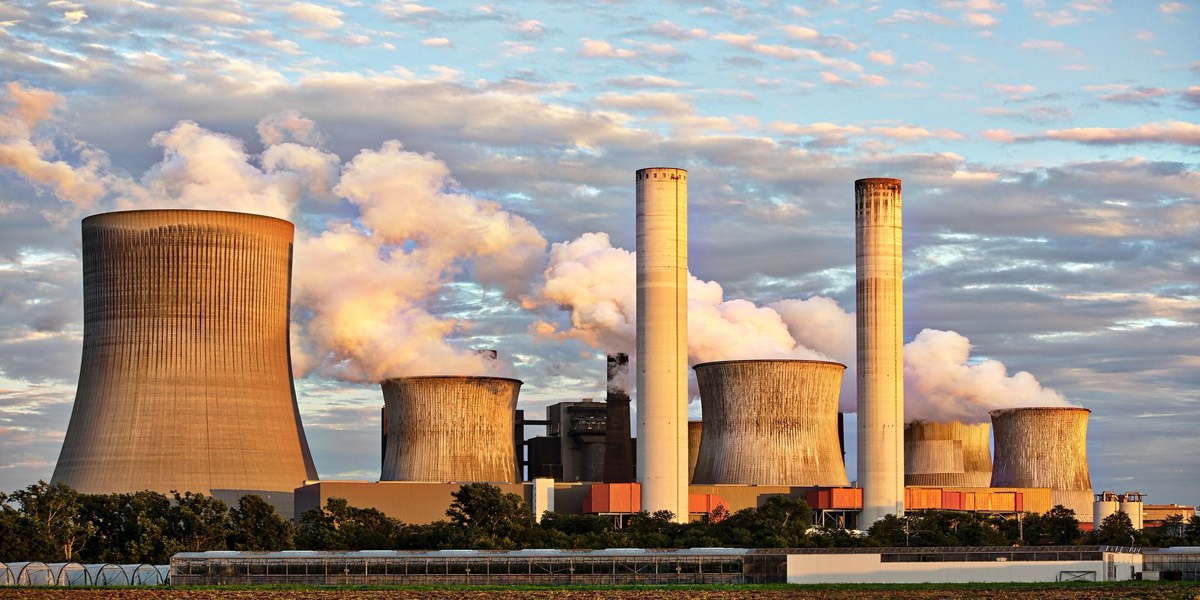
Photo: Pixabay / Pexels (free license)
Quick summary
A GHG inventory is measuring, calculating and reporting a company's total emissions, split into three scopes per the GHG Protocol: Scope 1 (direct), Scope 2 (purchased electricity/steam/heat) and Scope 3 (value chain, 15 categories). In Vietnam, facilities emitting ≥3,000 tCO₂e/year (or ≥1,000 TOE/year) on the Decision 13/2024 list are mandatory reporters under Decree 06/2022/ND-CP; Decision 13/2024/QD-TTg (in force 1 Oct 2024) covers 2,166 facilities across 6 sectors. SMEs below the threshold should still inventory early, because EU customers and CBAM demand supply-chain emissions data.
What a GHG inventory is, and why SMEs should act now
A greenhouse-gas (GHG) inventory is the first, non-negotiable step of any ESG or Net Zero journey: what you don't measure, you can't manage, reduce, or prove to customers. The most widely used international framework is the GHG Protocol Corporate Standard, which splits emissions into three scopes to avoid double-counting when many companies report along one value chain.
Three pressures are converging on Vietnamese SMEs at once:
- Domestic law: Decree 06/2022/ND-CP sets the basis for mandatory inventories and for allocating emission quotas over 2026–2030.
- Carbon market: Vietnam has launched a pilot Emissions Trading Scheme (ETS) for three high-emitting sectors (coal thermal power, steel, cement), piloting 2025–2028 and going fully operational from 2029.
- Supply chain: selling to EU customers or large corporates means being asked for product-level emissions — which is the customer's Scope 3 and the SME's own Scope 1+2.
SMEs should not wait until they land on the mandatory list. Measuring early means having the numbers ready when partners ask — and avoiding legal exposure from unsubstantiated "green" claims.
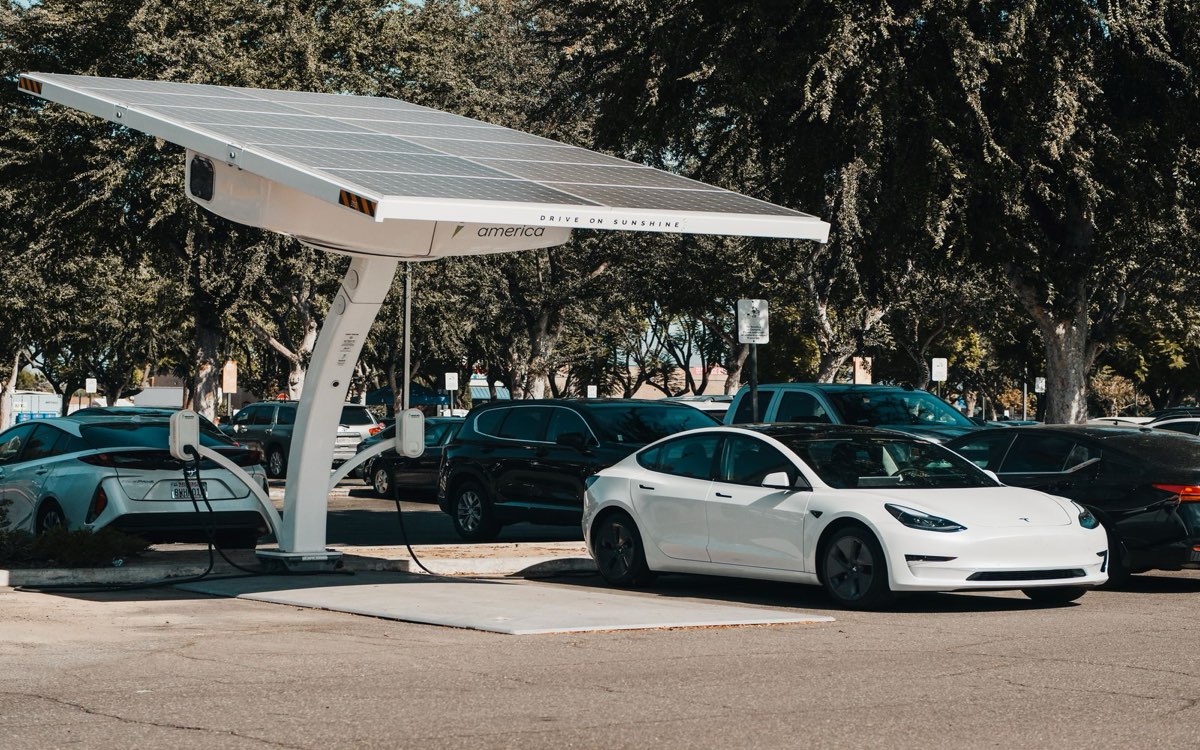
The three scopes, defined
The difference between the scopes is about who controls the emitting source and where in the value chain the emission occurs (per the GHG Protocol):
| Scope | Nature | Typical example at a manufacturing SME | Who controls it |
|---|---|---|---|
| Scope 1 — direct | Emissions from sources the company owns or controls | Boilers, furnaces; company vehicles; refrigerant leaks | The company |
| Scope 2 — indirect energy | Emissions from purchased electricity, steam, heat, cooling | Grid electricity used for production lines, lighting, compressors | Energy seller (but consumed by the company) |
| Scope 3 — value chain | All other indirect emissions, upstream & downstream (15 categories) | Purchased materials, outsourced transport, business travel, use of sold products, end-of-life | Suppliers / customers |
An important technical note: Scope 2 has two methods — location-based (national grid-average factor) and market-based (contractual factor, e.g. renewable certificates). SMEs should start with location-based because the data is easier to obtain.
The 15 Scope 3 categories
Scope 3 is usually the largest part of a company's total emissions, yet the hardest to measure because it sits outside the control boundary. The GHG Protocol splits Scope 3 into 15 categories — 8 upstream and 7 downstream. SMEs do not need to measure all 15 at once. Best practice is a screening assessment to find the 2–3 material categories (usually category 1 — purchased goods, and 4/9 — transport), then measure those in depth first.
| # | Category | Chain position |
|---|---|---|
| 1 | Purchased goods and services | Upstream |
| 2 | Capital goods | Upstream |
| 3 | Fuel- and energy-related activities (not already in Scope 1 & 2) | Upstream |
| 4 | Upstream transportation and distribution | Upstream |
| 5 | Waste generated in operations | Upstream |
| 6 | Business travel | Upstream |
| 7 | Employee commuting | Upstream |
| 8 | Upstream leased assets | Upstream |
| 9 | Downstream transportation and distribution | Downstream |
| 10 | Processing of sold products | Downstream |
| 11 | Use of sold products | Downstream |
| 12 | End-of-life treatment of sold products | Downstream |
| 13 | Downstream leased assets | Downstream |
| 14 | Franchises | Downstream |
| 15 | Investments | Downstream |
Which standards and rules apply?
Vietnamese rules define who must report and to whom; international standards define how to measure and disclose. Key thresholds under Vietnamese guidance: facilities emitting ≥3,000 tonnes CO₂e per year (or large energy users ≥1,000 TOE/year) on the Decision 13/2024 list are mandatory reporters. Decision 13/2024/QD-TTg took effect on 1 October 2024, replacing Decision 01/2022, and covers 2,166 facilities across 6 sectors (Energy; Transport; Construction; Industrial processes; Agriculture, forestry & land use; Waste). Internationally, IFRS S1 & S2 (ISSB) were issued June 2023, for annual reporting periods from FY2024, subject to each jurisdiction's adoption; S2 requires disclosing Scope 1, 2 and 3, with a first-year transition relief for Scope 3.
| Framework / instrument | Role | Key point |
|---|---|---|
| GHG Protocol Corporate Standard | Standard for measuring & calculating emissions (Scope 1-2-3) | The common foundation that almost every other standard references |
| ISSB — IFRS S1 & S2 | Standard for disclosing sustainability & climate information to capital markets | Issued June 2023, for reporting periods from FY2024 (subject to each jurisdiction's adoption); S2 requires Scope 1, 2, 3 disclosure, with a first-year relief for Scope 3 |
| Decree 06/2022/ND-CP | Vietnam's rule mandating inventories & emissions mitigation | Basis for allocating emission quotas over 2026–2030 |
| Decision 13/2024/QD-TTg | The list of facilities required to inventory GHGs | In force 1 Oct 2024, replacing Decision 01/2022; 2,166 facilities, 6 sectors |
| CBAM (EU) | The EU's carbon border adjustment mechanism | Requires EU importers to declare the embedded emissions of imports — creating Scope 3 pressure on Vietnamese suppliers |
A 5-step GHG inventory roadmap for SMEs
| Step | What to do | Output |
|---|---|---|
| 1. Define boundaries | Choose the consolidation approach (financial/operational); list facilities and equipment | Organizational & operational boundary map |
| 2. Collect activity data | Electricity and fuel invoices, refrigerants, transport distances… | Monthly/annual activity-data table |
| 3. Select emission factors | Use official factors (national/IPCC); state the source | Factor & source list |
| 4. Calculate & allocate by scope | Multiply data × factor; assign to Scope 1/2/3 | Emissions-by-scope table |
| 5. Report & verify | Prepare the report; file under Vietnamese rules if in scope; consider independent verification | GHG inventory report |
Anti-greenwashing
Every published emission figure or "green" claim must be measurable, sourced, and scope-transparent. Under Vietnamese law (Advertising Law, Consumer Rights Protection Law 2023, Environmental Protection Law 2020), misleading environmental claims are prohibited. This article therefore gives no specific carbon figures for any sample company — those depend on real activity data and must be computed by each business using official emission factors.
Under Vietnam's Advertising Law, Consumer Rights Protection Law 2023 and Environmental Protection Law 2020, environmental advertising and disclosures must be substantiated and must not be misleading.
Frequently asked questions
My SME is below 3,000 tCO₂e — do I have to inventory?
If you are not on the Decision 13/2024 list and below the threshold, you are not yet required to file under Vietnamese rules. Still, inventory early: EU customers/large corporates and CBAM may ask for your emissions data before placing orders.
Scope 3 has 15 categories — must SMEs measure them all?
No. The GHG Protocol defines 15 categories, but the practice is to screen for the 2–3 material ones (usually purchased materials and transport) and measure those in depth first.
How do location-based and market-based Scope 2 differ?
Location-based uses the grid-average emission factor; market-based uses a contractual factor (e.g. renewable certificates). SMEs should start with location-based because the data is easier to obtain.
Does IFRS S2 require Scope 3 disclosure in year one?
IFRS S2 requires disclosing Scope 1, 2 and 3, but with a first-year transition relief for Scope 3. Issued June 2023, for annual reporting periods from FY2024, subject to each jurisdiction's adoption.