Factory Energy Efficiency for Vietnamese SMEs: The New 2026 Law, ISO 50001 and Measuring It Properly
Vietnam's Law 77/2025 and Decree 30/2026 reset the rules for factory energy: the 1,000 TOE threshold, ISO 50001, and how to measure savings honestly.
July 27, 2026 · 13 min read
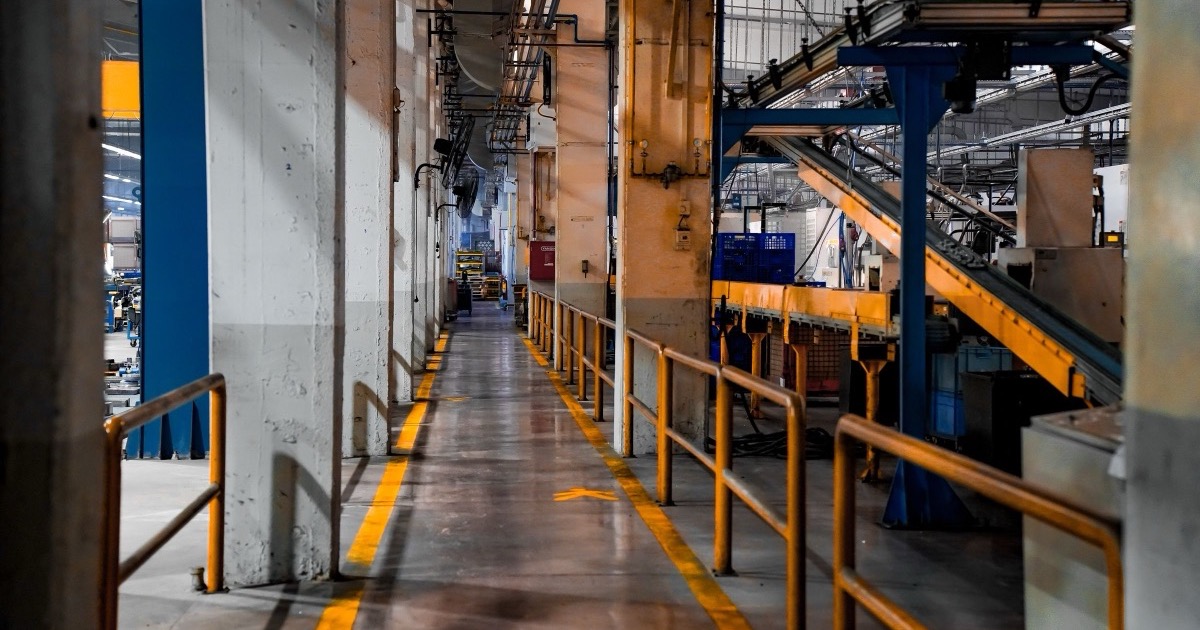
Photo: Yetkin Ağaç / Pexels (free license)
Quick summary
From 1 January 2026, Vietnam's amended Law on Economical and Efficient Use of Energy (Law No. 77/2025/QH15, passed 18 June 2025) took effect; on 21 January 2026 the Government issued Decree 30/2026/ND-CP, replacing Decree 21/2011/ND-CP. Together they redefine who counts as a 'key energy-using establishment' — 1,000 TOE per year for industrial, agricultural and transport operations; 500 TOE per year for buildings — with duties to prepare annual and five-year plans, undergo a mandatory energy audit every three years (Article 33, Law 50/2010/QH12) and apply an energy management model. This article explains the law that is actually in force, the role of ISO 50001:2018, which savings figures are MEASURED and which are merely modelled, and how to report results without greenwashing. It gives no savings figure for any specific factory — that must come from your own energy audit.
Quick answer: factory energy efficiency is not a piece of equipment you buy — it is a management system: knowing how much energy you use and where, improving continuously, and being able to prove it with numbers. Since 1 January 2026 this has had a new legal framework in Vietnam, and for many manufacturing SMEs it has moved from "should do" to "must do".
Last updated: 27/07/2026.
What factory energy efficiency means — and why 2026 is a pivot year
For a factory, energy is usually the large operating cost that is least managed: the electricity bill arrives monthly, everyone sees it rising, yet very few firms can answer "how many kWh does one tonne of my product consume, and is that getting better or worse?". Real energy efficiency starts there — with measurement, not with buying new kit.
2026 is a pivot year for two independent reasons. First, the two foundational legal instruments in this field both changed within the past seven months. Second, globally, industry has become the bottleneck: per the International Energy Agency's Energy Efficiency 2025 report (published 20 November 2025), around two-thirds of global final energy demand growth since 2019 has been concentrated in industry, while the average annual rate of industrial energy intensity improvement has fallen to under 0.5%, compared with almost 2% in the previous decade. In short: consuming more, improving more slowly.
The IEA also estimates global energy efficiency progress at 1.8% in 2025 (up from around 1% in 2024), but the average since 2019 is just 1.3% per year — barely half the 4% annual improvement by 2030 target set at COP28. That gap is precisely why governments, Vietnam included, are tightening rules rather than merely encouraging.
The new legal framework: Law 77/2025 and Decree 30/2026
This is where online sources most often go wrong, so let us be precise. The foundation remains the Law on Economical and Efficient Use of Energy No. 50/2010/QH12 (issued 17 June 2010, effective 1 January 2011). But it has just been amended: Law No. 77/2025/QH15 was passed by the 15th National Assembly on 18 June 2025 and took effect on 1 January 2026. According to the Ministry of Industry and Trade, it passed with 425 of 426 deputies in favour, amending 19 articles and adding one new article.
At decree level the change matters even more to businesses: Decree No. 30/2026/ND-CP was signed on 21 January 2026, effective from the date of signing, and its Article 27 states that it replaces Decree No. 21/2011/ND-CP. If a guide you are reading still cites Decree 21/2011, it is citing a repealed instrument.
One point that must be stated accurately, because the consulting market often overstates it: neither Law 77/2025 nor Decree 30/2026 mentions "ISO 50001" at all. The amended Article 33 only requires key establishments to "apply an energy management model as prescribed by the Minister of Industry and Trade". ISO 50001 is a common, internationally recognised way to meet that requirement — it is not a statutory obligation in itself.
Two further changes are worth noting: energy labelling now extends to construction materials (not just vehicles and equipment as before); and energy management certificates issued before the Law took effect remain valid until 31 December 2030 — there is a transition path, not an immediate reset.
Are you a "key energy-using establishment"?
This question determines your entire compliance burden. Law 77/2025 no longer sets the threshold in the statute but delegates it to the Government; the current threshold sits in Article 3 of Decree 30/2026/ND-CP.
| Item | Rule | Basis |
|---|---|---|
| Threshold — industrial and agricultural production facilities, transport units | Total annual energy consumption converted to 1,000 TOE or more | Decree 30/2026, Art. 3.1 |
| Threshold — buildings (offices, housing, education, healthcare, etc.) | Total annual energy consumption converted to 500 TOE or more | Decree 30/2026, Art. 3.2 |
| Who publishes the list | Provincial People's Committees approve and issue it once a year, before 31 March | Decree 30/2026, Art. 4 |
| Mandatory planning | Prepare annual and five-year plans on economical and efficient energy use | Decree 30/2026, Art. 5.1 |
| Energy audit | Once every three years, mandatory; self-audit or engage an audit organisation | Law 50/2010, Art. 33.1.d & Art. 34.1 |
| Energy management model | Applied as prescribed by the Minister of Industry and Trade | Law 77/2025 (amending Art. 33) |
| Requirement for audit organisations | At least three energy auditors on contracts of 12 months or longer | Decree 30/2026, Art. 6.3.c |
TOE (tonne of oil equivalent) is the common conversion unit across all energy carriers: electricity, coal, oil, gas, biomass. A mid-sized manufacturing SME running boilers or drying ovens can hit 1,000 TOE far sooner than expected — so the first practical step is to convert your last 12 months of bills into TOE and see where you stand.
Even if you are below the threshold, three reasons still justify managing energy: operating cost, data demands from export customers, and eligibility for green finance. See also how to build a Scope 1-2-3 greenhouse gas inventory — energy data is the direct input to Scope 1 and Scope 2.
ISO 50001 — a management system, not a device
ISO 50001:2018 "Energy management systems — Requirements with guidance for use" (second edition, published August 2018, prepared by ISO/TC 301, reviewed and confirmed as current in 2024, with Amd 1:2024) is the international standard for an energy management system (EnMS). Per its own scope clause, it "is applicable to any organization regardless of its type, size, complexity, geographical location, organizational culture or the products and services it provides" and applies "irrespective of the quantity, use, or types of energy consumed". Crucially for SMEs, the standard "requires demonstration of continual energy performance improvement, but does not define levels of energy performance improvement to be achieved".
Its structure is the Plan-Do-Check-Act cycle: Plan — conduct an energy review, identify significant energy uses (SEUs), establish energy performance indicators (EnPIs) and energy baselines (EnBs), objectives and action plans; Do — implement the plans, operational and maintenance controls, competence and communication, and consider energy performance in design and procurement; Check — monitor, measure, analyse, evaluate, audit and hold management reviews; Act — address nonconformities and keep improving.
EnB and EnPI are the technical heart of the matter. An energy baseline is a "quantitative reference providing a basis for comparison of energy performance"; an EnPI is a "measure or unit of energy performance, as defined by the organization". Without both, any claim that "we saved X%" is unverifiable — which is exactly the line between a credible report and greenwashing.
A pressure-reliever for SMEs: under clause 0.4 of ISO 50001:2018, an organisation wishing to demonstrate conformity has three options — (1) evaluation and self-declaration, (2) confirmation of that conformance by interested parties such as customers, or (3) certification of its EnMS by an external body. Third-party certification is one of three, not a requirement. ISO itself states that ISO does not perform certification.
Related standards — and the withdrawn-edition trap
A great many Vietnamese-language materials still cite ISO 50002:2014 for energy audits. That edition has been withdrawn. The table below reflects the correct status as at this update.
| Reference | Subject | Status | Why SMEs care |
|---|---|---|---|
| ISO 50001:2018 | Energy management systems — requirements | Current (confirmed 2024, Amd 1:2024) | The core standard, PDCA framework |
| ISO 50005:2021 | Guidelines for a phased implementation | Current | Designed for resource-constrained organisations — the best SME entry point |
| ISO 50004:2020 | Guidance for implementing, maintaining and improving an EnMS | Current | The practical companion to 50001 |
| ISO 50002:2014 | Energy audits | Withdrawn | Stop citing this edition |
| ISO 50002-1:2025 | Energy audits — Part 1: general requirements (with Part 2 for buildings, Part 3 for processes) | Current (2025) | The correct basis for the mandatory three-yearly audit |
| ISO 50006:2023 | Evaluating energy performance using EnPIs and EnBs | Current (replaces the 2014 edition) | How to build indicators and baselines properly |
| ISO 50015:2014 | Measurement and verification (M&V) | Current | Proving the savings are real |
For an SME starting from zero, the most sensible entry is ISO 50005:2021 — implement in phases, consolidating each one, rather than trying to swallow ISO 50001 whole in a single year.
How much can you actually save — measured versus modelled
This is where clear thinking matters most, because most figures circulating online are scenario simulations rather than measurements. This article separates the two.
Measured figures: per Lawrence Berkeley National Laboratory documentation citing U.S. Department of Energy data, industrial and service facilities certified to Superior Energy Performance (a programme built on ISO 50001) achieved an average energy performance improvement of 10% per certification cycle, with a range of 5.6%–41.9% — see LBNL-1006338. LBNL also reports that Therkelsen et al. (2015), studying real facilities, found an ISO 50001-certified EnMS delivers more than four times the savings of a business-as-usual scenario, with a payback of under 1.5 years for medium to large industrial facilities.
Modelled figures: claims such as "ISO 50001 will save 105 EJ and nearly US$700 billion by 2030" are scenario projections — specifically, they assume 50% of projected global industrial and service sector energy consumption is managed under ISO 50001 by 2030. That is a policy-planning number, not a commitment for any one factory. Likewise, the "5%" figure that recurs in LBNL material is a default value in a spreadsheet input cell (the minimum improvement required for SEP Silver certification), not a measured outcome.
| Figure | Type | Source | Useful for… |
|---|---|---|---|
| Average 10% per certification cycle (range 5.6–41.9%) | Measured | LBNL-1006338, citing U.S. DOE (2016) | Setting realistic board expectations |
| More than 4× business-as-usual savings; payback under 1.5 years | Measured | LBNL, citing Therkelsen et al. (2015) | Building the investment case |
| 105 EJ / ~US$700bn / 6,500 Mt CO₂ by 2030 | Modelled (50% ISO 50001 coverage scenario) | LBNL scenario report | Policy context — not for a single company |
| "5% in year one" | Tool default value | LBNL-1006338 (SEP Silver minimum) | Should not be quoted as a result |
| Global energy efficiency investment 2025 ≈ US$800bn (+6% year on year) | Market estimate | IEA, Energy Efficiency 2025 | Sector context |
On the number of valid ISO 50001 certificates worldwide and in Vietnam: from 2025 ISO stopped publishing the ISO Survey tables on iso.org and moved the dataset to the IAF CertSearch platform, which requires a login to download. Because that primary source could not be retrieved, this article gives no certificate counts rather than repeating unverified figures circulating on certification-body websites.
Where to start: a roadmap for an SME with nothing in place
The sequence below follows Vietnamese legal duties and the ISO 50001 framework, ordered by increasing cost:
- Step 1 — Convert to TOE. Take 12 months of electricity, coal, oil and gas bills and convert to TOE. The result tells you whether you fall within the key-establishment regime (1,000 TOE for manufacturing), and gives you a figure to check against the provincial list published before 31 March each year.
- Step 2 — Build the baseline (EnB) and indicators (EnPI). Choose an EnPI that genuinely reflects your operation: kWh per tonne of product, kWh per m² of floor area, or kWh per machine-hour. Reference ISO 50006:2023.
- Step 3 — Find the significant energy uses (SEUs). These usually cluster in a few places: motors and air compressors, boilers and process heat, refrigeration, lighting. The IEA notes industrial motors account for a large share of the sector's electricity, and that two-thirds of countries still have no mandatory energy performance standards for industrial motors — so the headroom here is often larger than assumed.
- Step 4 — Do the no-capital items first. Fix compressed-air leaks, switch off idling equipment, re-sequence operating schedules, maintain on time. This group pays back fastest and needs no capital approval.
- Step 5 — Run a proper energy audit. If you are a key establishment this is a three-yearly duty; if not, do it once anyway to obtain a list of opportunities ranked by payback. Use ISO 50002-1:2025 (the edition in force).
- Step 6 — Invest in equipment and self-generation. High-efficiency motors, variable-speed drives, waste-heat recovery, heat pumps for low-temperature duty — the IEA notes much of the heat required in lighter industry falls up to 200°C, a range that existing technology can electrify. In parallel, consider self-consumption rooftop solar.
- Step 7 — Systematise. Fold the above into an EnMS following ISO 50005:2021, then progress towards ISO 50001, so improvement no longer depends on one individual.
National targets tell you the benchmark you are measured against: Decision 280/QD-TTg of 13 March 2019 (the VNEEP3 national programme) targets national energy savings of 8–10% of total consumption over 2019–2030, and sets average energy-intensity reductions by industrial sub-sector against the 2015–2018 period: textiles at least 6.80%, steel 5.00–16.50%, plastics 21.55–24.81%, cement at least 10.89%, paper 9.90–18.48%, chemicals at least 10.00% (all by 2030). The same Decision targets 100% of key energy-consuming establishments applying an energy management system as prescribed, and 90% of industrial parks and 70% of industrial clusters reached with efficiency solutions by 2030.
Where the money is — energy efficiency finance in Vietnam
The scale of need is real: per a World Bank press release (8 March 2021), the energy efficiency investment need for Vietnam's key industries was estimated at around US$3.6 billion, and Vietnam could avoid up to 11 GW of new generation capacity by 2030 if comprehensive demand-side efficiency investments are carried out.
There is a successful precedent: the World Bank-financed VEEIE project (Vietnam Energy Efficiency for Industrial Enterprises), now closed, achieved projected lifetime energy savings at 185% of target and avoided emissions at 119% of target, with enterprise and financial-institution co-financing reaching 62% against a 36% target. It is equally important to be candid the other way: a separate risk-sharing guarantee facility for energy efficiency lending in Vietnam had, as of 2026 supervision reporting, issued no guarantees and mobilised US$0 in commercial financing. The lesson: do not build a financing plan around a concessional programme that has yet to disburse. See also routes to capital and the cost of green transition for SMEs.
Reporting results without greenwashing
Once you have saved energy, the disclosure must be as rigorous as the measurement. Vietnam's Law on Protection of Consumer Rights 2023 (No. 19/2023/QH15), the Law on Advertising and the Law on Environmental Protection 2020 all prohibit false or misleading information about the characteristics and effects of goods and services — including every environmental claim. Four hard rules:
- State the baseline and the boundary. "12% less electricity" is meaningless without saying against which period, over what boundary (whole plant or one line), and whether it has been normalised for output.
- Separate absolute savings from intensity savings. Lower output also lowers the bill — that is not energy efficiency. Only an intensity EnPI (kWh per tonne of product) shows the difference.
- Do not absolutise. Avoid "100% green factory" or "carbon neutral" without an inventory and independent verification. Self-declaration under ISO 50001 is legitimate, but it must be called self-declaration — never presented as certification.
- Keep the numbers consistent. Figures on your website, in tender documents and in customer reports must match each other and match the audit data.
For that reason, this article gives no sample savings figure for any factory — every number must come from your own energy audit and metering.
How GROW supports SMEs on energy management
Through the Green Transition Advisory pillar, GROW helps SMEs convert consumption to TOE to establish their obligations under Decree 30/2026, build energy baselines (EnB) and indicators (EnPI), prepare for energy audits under ISO 50002-1:2025, and roll out an EnMS in phases following ISO 50005:2021. Read more on greenhouse gas inventories, what ESG means for SMEs, or book a quick review of your factory's energy profile.
Frequently asked questions
Is my factory legally required to adopt ISO 50001?
No. Neither Law No. 77/2025/QH15 (in force from 1 January 2026) nor Decree 30/2026/ND-CP mentions ISO 50001. The amended Article 33 only requires key energy-using establishments to 'apply an energy management model as prescribed by the Minister of Industry and Trade'. ISO 50001 is a common way to meet that requirement, not a statutory obligation in itself.
What is the 'key energy-using establishment' threshold?
Per Article 3 of Decree 30/2026/ND-CP: industrial and agricultural production facilities and transport units with total annual energy consumption converted to 1,000 TOE or more; buildings (offices, housing, education, healthcare and similar) at 500 TOE or more. Provincial People's Committees approve and publish the list once a year, before 31 March.
How often is an energy audit required?
Once every three years, under Article 33.1(d) of the Law on Economical and Efficient Use of Energy No. 50/2010/QH12 — a provision Law 77/2025 did not amend. A facility may self-audit or engage an energy audit organisation, which must have at least three energy auditors under Decree 30/2026.
How much does ISO 50001 actually save?
There is no universal figure. The most reliable MEASURED data: facilities certified to Superior Energy Performance (built on ISO 50001) improved energy performance by an average of 10% per certification cycle, ranging from 5.6% to 41.9% (LBNL, citing U.S. DOE). Figures such as '105 EJ by 2030' are policy scenario models and do not apply to an individual factory.
I have found guidance citing Decree 21/2011 and ISO 50002:2014 — is it still usable?
No. Decree 21/2011/ND-CP was replaced by Decree 30/2026/ND-CP from 21 January 2026 (Article 27). ISO 50002:2014 has been withdrawn and superseded by ISO 50002-1:2025 (general requirements), ISO 50002-2:2025 (buildings) and ISO 50002-3:2025 (processes). Citing the old editions means citing instruments no longer in force.
References
- Luật số 77/2025/QH15 — sửa đổi, bổ sung một số điều của Luật Sử dụng năng lượng tiết kiệm và hiệu quả (thông qua 18/6/2025, hiệu lực 01/01/2026)
- Bộ Công Thương — Quốc hội thông qua Luật sửa đổi, bổ sung Luật Sử dụng năng lượng tiết kiệm và hiệu quả (425/426 tán thành)
- Nghị định số 30/2026/NĐ-CP ngày 21/01/2026 — thay thế Nghị định 21/2011/NĐ-CP (ngưỡng 1.000 TOE / 500 TOE)
- Luật Sử dụng năng lượng tiết kiệm và hiệu quả số 50/2010/QH12 (Công báo) — Điều 33, 34: kiểm toán năng lượng ba năm một lần
- Quyết định 280/QĐ-TTg ngày 13/3/2019 — Chương trình quốc gia về sử dụng năng lượng tiết kiệm và hiệu quả 2019–2030 (VNEEP3)
- ISO 50001:2018 — Energy management systems — Requirements with guidance for use
- ISO 50005:2021 — Energy management systems — Guidelines for a phased implementation
- ISO 50002-1:2025 — Energy audits — Part 1: General requirements with guidance for use
- ISO 50006:2023 — Evaluating energy performance using energy performance indicators and energy baselines
- IEA (2025), Energy Efficiency 2025, IEA, Paris (công bố 20/11/2025, Licence: CC BY 4.0)
- LBNL-1006338 — dữ liệu hiệu quả năng lượng của các cơ sở chứng nhận Superior Energy Performance (dẫn U.S. DOE 2016; Therkelsen et al. 2015)
- World Bank (8/3/2021) — nhu cầu đầu tư hiệu quả năng lượng công nghiệp Việt Nam ~3,6 tỷ USD; tiềm năng tránh 11 GW đến 2030