What Is CBAM? A Compliance Guide for Vietnamese SMEs Exporting to the EU
From 1 January 2026 CBAM enters its definitive phase. This article explains what CBAM is, which sectors are affected, the new 50-tonne exemption threshold, and what Vietnamese SME exporters must actually do — grounded in the EU's own legal texts.
July 6, 2026 · 15 min read
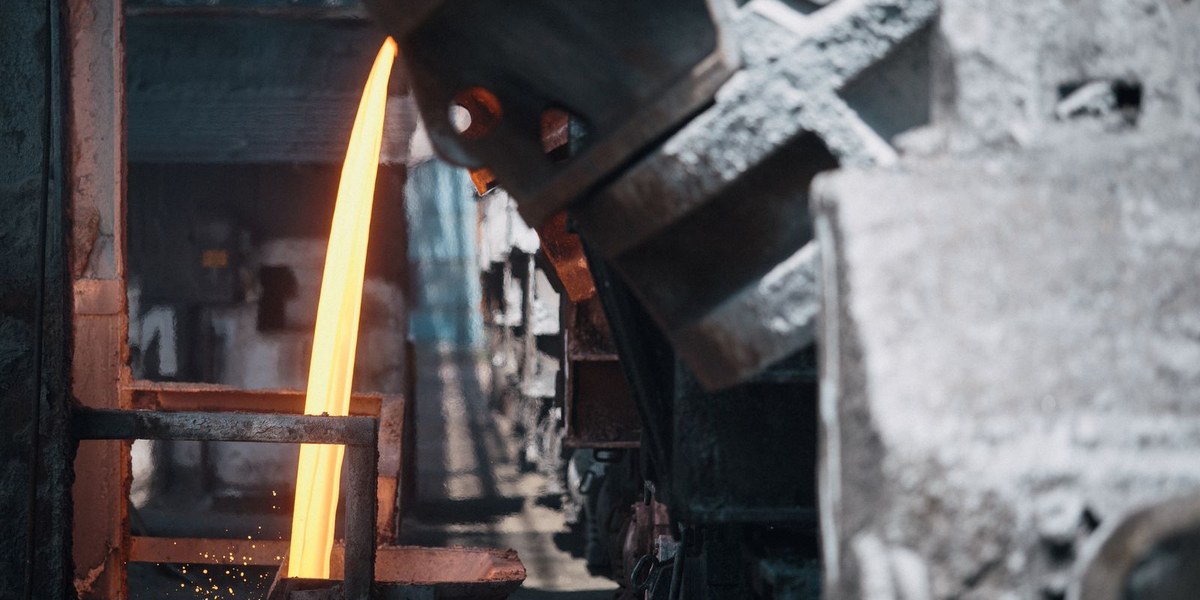
Photo: Bence Szemerey / Pexels
Quick summary
CBAM (the EU's Carbon Border Adjustment Mechanism, Regulation (EU) 2023/956) requires declaring and paying for the emissions “embedded” in imports across six groups: cement, iron & steel, aluminium, fertilisers, electricity, hydrogen. The legal obligation sits with the EU importer, but the real burden on Vietnamese SMEs is generating verified, installation-level emissions data. For Vietnamese steel (intensity ~2.51 tCO₂/t, above the global steel-sector average commonly estimated at ~1.9–2.0 tCO₂/t depending on source), CBAM is a competitiveness risk — yet per the Fulbright study's forecasting model, the macro impact is modest if firms prepare early.
What is CBAM — and why can't SME exporters ignore it?
CBAM (the Carbon Border Adjustment Mechanism) is a European Union instrument established by Regulation (EU) 2023/956, adopted on 10 May 2023. Its goal: to price the greenhouse-gas emissions "embedded" in goods imported into the EU, so imports do not gain a price advantage over EU-made goods that already pay a carbon cost through the EU ETS.
For Vietnamese businesses, the key is the timeline — and this is exactly where secondary sources get it wrong most often. The transitional period (1 Oct 2023 – 31 Dec 2025) required reporting only, with no payment. From 1 January 2026, CBAM enters its definitive phase: what starts on that date is the obligation for EU importers to obtain authorised CBAM declarant status and to monitor and record embedded emissions — not to surrender certificates during 2026. Keep the two apart: the obligation begins on 1 January 2026 is NOT the same as certificates must be surrendered in 2026.
Under the consolidated text of Regulation (EU) 2023/956 as at 20 October 2025 (as amended by Regulation (EU) 2025/2083), the real calendar is: the EU only starts selling CBAM certificates on 1 February 2027 (Article 20(1); Article 36(2)(d)); the first CBAM declaration and first surrender of certificates — covering 2026 emissions — are due by 30 September 2027 (Article 22(1)); the rule requiring at least 50% of certificates to be held each quarter applies from 2027 (Article 22(2)); and certificates bought for 2026 emissions that go unused are cancelled on 1 November 2027 (Article 24(2)). In other words: 2026 is the pivotal year for preparing and recording data; the money is actually paid in 2027 — which is why Vietnamese SMEs exporting to the EU need to start now.
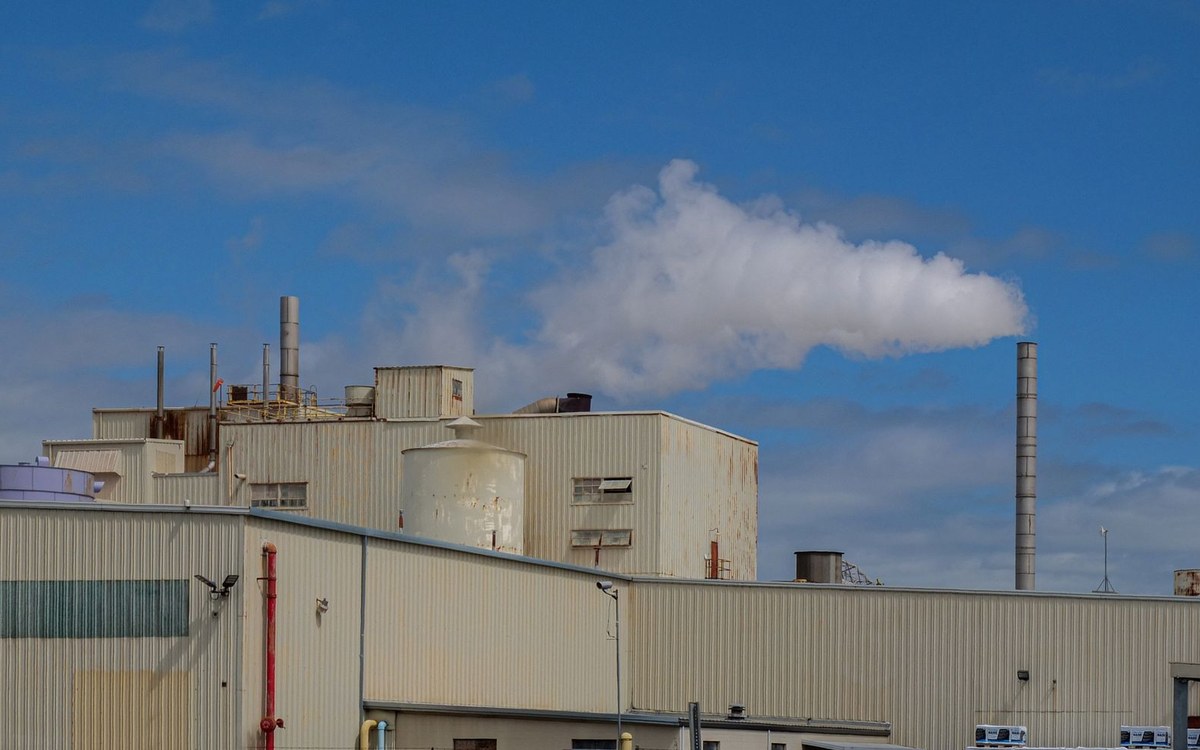
The six goods groups covered by CBAM
In its initial scope (Annex I of the Regulation), CBAM applies to six groups:
- Cement
- Iron and steel
- Aluminium
- Fertilisers
- Electricity
- Hydrogen
For Vietnam, the most exposed group is iron & steel, followed by aluminium; cement and fertilisers barely reach the EU, so their impact is negligible. Per VP Carbon's estimate based on General Department of Customs data, iron & steel accounts for the overwhelming share of the value of Vietnam's CBAM-covered exports to the EU (this is a private-organisation estimate, not officially published customs data).
| Goods group | Relevance to Vietnam's exports to the EU |
|---|---|
| Iron and steel | Vietnam's most exposed group |
| Aluminium | Second most exposed group |
| Cement | Barely exported to the EU — negligible impact |
| Fertilisers | Barely exported to the EU — negligible impact |
| Electricity | 50-tonne exemption does not apply; little relevance to SME goods exports |
| Hydrogen | 50-tonne exemption does not apply; little relevance to SME goods exports |
What are "embedded emissions" and who is responsible?
CBAM is based on embedded emissions — direct emissions from production plus indirect emissions from consumed electricity, converted to CO₂e per tonne of product. The calculation methodology is set out in Commission Implementing Regulation (EU) 2023/1773.
One point to state precisely to avoid misleading claims: during the transitional period, indirect emissions must be reported for all goods groups; but in the definitive period, indirect emissions apply only to the groups listed in Annex II (in practice cement and fertilisers). It is inaccurate to say CBAM "always covers both direct and indirect".
On legal responsibility: the obligation to declare and surrender certificates sits with the EU importer (the "authorised CBAM declarant"), NOT the Vietnamese producer. But this is where SMEs often misunderstand: under Article 10 of the consolidated Regulation, for the EU buyer to use actual emission values (rather than the usually higher default values), the third-country producer must generate installation-level emissions data, verified by an independent third party. That is the real burden on the exporter, even though the certificate is surrendered by the importer.
The new 50-tonne exemption (Omnibus 2025) — good news for small SMEs
In October 2025 the EU adopted Regulation (EU) 2025/2083 (the "Omnibus" CBAM simplification package), in force from 20 October 2025. The most important change for SMEs: a single mass-based de minimis threshold of 50 tonnes of CBAM goods per importer per year. Below this threshold, the importer is exempt from CBAM obligations.
Note the threshold is cumulative across all CBAM goods types (e.g. 30 t steel + 25 t aluminium = 55 t → above the threshold), and it does not apply to electricity or hydrogen. The EU estimates this exempts about 90% of importers (mostly small consignments/individuals) while still covering roughly 99% of embedded emissions. For Vietnamese SMEs shipping small lots through multiple channels, this is worth reviewing together with the importer.
Table: what must Vietnamese SME exporters actually do?
| Task | Direct / de-facto | Framework applied |
|---|---|---|
| Organization-level emissions inventory (Scope 1 + Scope 2) | De-facto (buyer-required) | GHG Protocol; ISO 14064-1:2018 |
| Per-product embedded emissions (CO₂e/tonne) | De-facto (to use actual values) | ISO 14067:2018; CBAM method (EU) 2023/1773 |
| Third-party independent verification | De-facto (Article 10) | Accredited verifiers |
| Provide installation data to EU importer | De-facto | CBAM registry (third-country installation) |
| Declare & surrender CBAM certificates | NO — the EU importer's job | Authorised CBAM declarant |
In short: Vietnamese SMEs do not surrender certificates, but without verified emissions data the EU buyer must fall back on default values — usually higher than reality, raising costs and eroding the competitiveness of Vietnamese goods.
A quantitative case study: a Vietnamese steel workshop preparing for CBAM
Consider a mid-sized steel SME exporting to the EU. Its starting disadvantage is documented: Vietnamese steel carbon intensity is high, about 2.51 tCO₂/tonne (cited via VP Carbon), above the global steel-sector average — which is commonly estimated in the range of ~1.9–2.0 tCO₂/tonne, depending on the source and methodology. The intensity above that average is precisely the portion "penalised" when converted to the EU ETS carbon price.
Illustrative math (assumed, to show the mechanism — not a real company's figures): assuming the intensity above the average is 0.5 tCO₂/tonne, for a 500-tonne steel shipment the "excess" emissions ≈ 500 × 0.5 = 250 tCO₂e. If the firm has no verified data, the importer must use higher default values — meaning CBAM cost is charged on a larger number than reality. Conversely, an ISO 14064-1 inventory plus ISO 14067 CO₂e/tonne calculation lets the firm prove its true intensity, and any carbon price already paid in Vietnam (once the domestic carbon market operates) can be deducted from the CBAM obligation.
At the macro level, according to a forecasting model in a study in the Fulbright Review of Economics and Policy (2024), CBAM alone could reduce Vietnam's steel export value by about −3.8% and aluminium by about −4.5% by 2030, with CBAM-covered goods representing roughly 3.2% of GDP. These are scenario-modelled figures from the research team, not realised outcomes. The economy-wide impact is assessed as modest (around US$0.1 billion in 2030) — CBAM is a sector/firm-level risk rather than a "national disaster", and it is fully manageable with early preparation.
CBAM does not penalise Vietnamese goods for being "not green" — it penalises goods that cannot prove how green they are. Verified data is the shield.
Frameworks to measure — and a common misconception to correct
- GHG Protocol — the most widely used emissions accounting standard, defining Scope 1 (direct), Scope 2 (purchased electricity/heat), Scope 3 (value chain, 15 categories).
- ISO 14064-1:2018 — organization-level GHG inventory.
- ISO 14067:2018 — the carbon footprint of a product (CO₂e/product), directly matching how CBAM measures embedded emissions per tonne of goods.
Correcting a common misconception: there is NO separate "simplified GRI for SMEs" standard. GRI applies one modular set of standards (GRI 1 – Foundation, GRI 2 – General Disclosures, GRI 3 – Material Topics) to organizations of all sizes, complemented by SME training programmes and guidance materials — not a distinct "GRI for SMEs" standard. Getting this right avoids misciting the framework.
The Vietnam context: law and support finance
Vietnam has committed to Net Zero by 2050 (Prime Minister Pham Minh Chinh's pledge at COP26, Glasgow, November 2021). Domestically, Decree 06/2022/ND-CP (issued 7 January 2022, amended by Decree 119/2025/ND-CP) establishes an MRV system and mandatory GHG inventories for large emitters — the foundation that leaves firms with data ready when CBAM demands it.
On finance: IFC disbursed a record US$310 million in climate financing for Vietnam in 2024, alongside a US$30 million SME supply-chain facility via VPBank. The State Bank of Vietnam (Decision 1408/QD-NHNN) sets the green-credit framework, with green-credit outstanding around VND 750 trillion. A draft 2%-per-year interest-rate support scheme for green/circular/ESG projects is also under submission — note this is a draft, not yet an enacted, broadly applied policy, and firms should not treat it as a guaranteed fixed rate.
A 6-step roadmap to make your SME CBAM-ready in 2026
- Determine exposure: are your goods in the six CBAM groups? Do you export to the EU? Does total volume through each importer exceed the 50-tonne/year threshold?
- Inventory Scope 1 + Scope 2 under ISO 14064-1 to establish a baseline.
- Calculate CO₂e/tonne of product under ISO 14067 for the exact goods exported to the EU.
- Get third-party verification so the data is accepted by the EU in place of default values.
- Coordinate with the EU importer to provide installation data and register installation details where needed.
- Genuinely reduce emissions intensity (energy, process) — because every portion above the average is a CBAM cost.
GROW helps SMEs clear the CBAM hurdle
Through the Green Transition Advisory pillar, GROW helps SMEs run ISO 14064-1 emissions inventories, calculate product carbon footprints under ISO 14067, prepare installation-level data for CBAM, and connect to green finance such as IFC. Read more about the Net Zero roadmap for SMEs, learn what ESG for SMEs is, or book a free CBAM exposure assessment.
Frequently asked questions
Must Vietnamese businesses pay the EU under CBAM?
Not directly. The obligation to surrender CBAM certificates lies with the EU importer, not the Vietnamese producer. However, for the EU buyer to use actual emission values instead of the usually higher default values, the Vietnamese firm must provide verified installation-level emissions data. Otherwise, CBAM cost is charged on higher numbers, eroding competitiveness.
When does CBAM start charging?
The transitional period (1 Oct 2023 – 31 Dec 2025) required reporting only, with no charge. From 1 January 2026 CBAM enters its definitive phase, but what begins on that date is the obligation to obtain authorised CBAM declarant status and to monitor and record embedded emissions — NOT to surrender certificates during 2026. Under the consolidated text of Regulation (EU) 2023/956 as at 20 October 2025, the EU only starts selling CBAM certificates on 1 February 2027; the first CBAM declaration and first surrender, covering 2026 emissions, are due by 30 September 2027; certificates bought for 2026 that go unused are cancelled on 1 November 2027.
Which Vietnamese sectors are most affected by CBAM?
Iron & steel is the most exposed group, accounting for the overwhelming share of the value of Vietnam's CBAM-covered exports to the EU (per VP Carbon's estimate based on Customs data — not officially published customs data), followed by aluminium. Cement and fertilisers barely reach the EU, so their impact is negligible.
How does the 50-tonne exemption work?
Under Regulation (EU) 2025/2083 (in force 20 Oct 2025), importers bringing in under 50 tonnes of CBAM goods per year are exempt. The threshold is cumulative across all CBAM goods types and does not apply to electricity or hydrogen. The EU estimates it exempts about 90% of importers while still covering roughly 99% of embedded emissions.
Which frameworks should firms use to measure emissions for CBAM?
Use the GHG Protocol and ISO 14064-1:2018 for organization-level inventories; use ISO 14067:2018 for per-product carbon footprints (CO₂e/tonne), which directly matches how CBAM measures embedded emissions. Note: there is NO separate “simplified GRI for SMEs” standard; GRI uses one modular standards set for all sizes.
References
- Quy định (EU) 2023/956 — Cơ chế CBAM (bản gốc)
- Quy định (EU) 2023/956 — bản HỢP NHẤT tới 20/10/2025 (chứa Điều 2a, Điều 20, 22, 24 và Phụ lục VII)
- Quy định (EU) 2025/2083 — Omnibus đơn giản hóa CBAM (ngưỡng 50 tấn)
- European Commission — Carbon Border Adjustment Mechanism
- Fulbright Review of Economics and Policy (2024) — Tác động kinh tế của CBAM lên Việt Nam
- IFC — Record Climate Financing in Viet Nam (2024)
- Ngân hàng Nhà nước Việt Nam — Tín dụng xanh (QĐ 1408/QĐ-NHNN)