Vietnam's green taxonomy and green credit for SMEs: what Decision 21/2025 actually requires
Decision 21/2025/QD-TTg took effect 22 Aug 2025: 7 green sectors, 2 environmental criteria, 2 confirmation routes, and who the incentives really go to.
July 31, 2026 · 14 min read

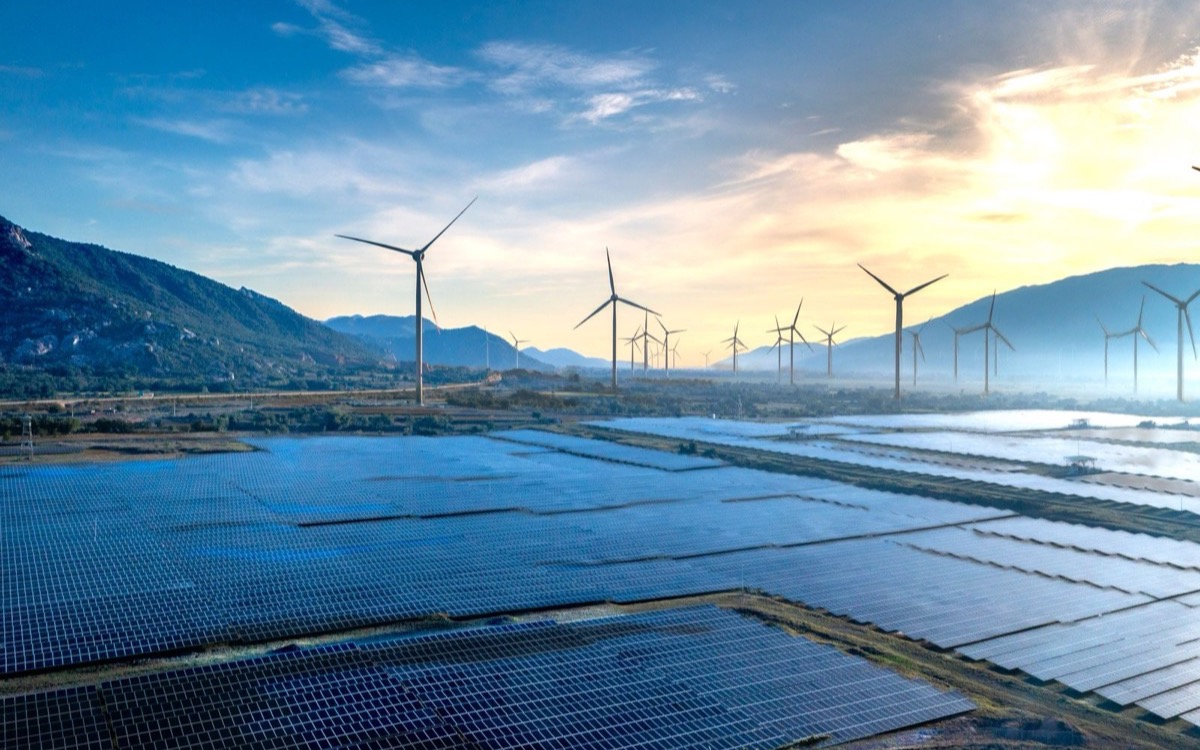
Photo: Akil Mazumder / Pexels (free license)
Quick summary
On 4 July 2025 Vietnam's Prime Minister issued Decision 21/2025/QD-TTg, effective 22 August 2025, giving the country its first official green taxonomy. Appendix I lists 7 sector groups — energy; transport; construction; water resources; agriculture, forestry, fisheries and biodiversity conservation; processing and manufacturing; environmental services — covering 45 project types. Article 3 sets exactly two environmental criteria, while Articles 4 and 5 open two parallel confirmation routes: bundling the request into the state environmental impact assessment or environmental licence procedure, or hiring an independent verification body accredited to TCVN ISO/IEC 17029:2020 or assurance standard ISAE 3000. This article corrects two widespread misreadings. Confirmation is voluntary, not mandatory, and the confirmation document is only one of the grounds for requesting STATE incentives — it is not a precondition for bank lending, since Article 2.6 explicitly leaves credit institutions to apply the taxonomy under their own policies. The substantive incentives sit in Decree 08/2022/ND-CP: Article 155 rewards banks rather than borrowers, Article 156.3 opens an interest-rate support mechanism payable after medium and long-term loan contracts conclude, effective from 1 January 2026, and Article 157.8 offers only securities service-fee preferences plus priority capital allocation for public investment projects. The article also places green credit balances, green bond issuance and Vietnamese SMEs' collateral barrier side by side, and flags that Decree 48/2026/ND-CP has moved taxonomy-issuing authority down to ministerial level. It gives no specific bank interest rates and promises no incentive level to any company.
Short answer: Vietnam now has an official green taxonomy — Decision 21/2025/QD-TTg, issued 4 July 2025 and effective 22 August 2025. But asking for confirmation that your project belongs to that taxonomy is voluntary, and the confirmation letter only helps you request state incentives. It is not a mandatory ticket to a bank loan.
Last updated: 31/07/2026.
Quick summary for busy readers
Four things to remember, each backed by the source document inside this article:
- The taxonomy exists and is live. Decision 21/2025/QD-TTg took effect on 22 August 2025; Appendix I lists 7 sector groups covering 45 project types eligible for green confirmation.
- There are only two criteria. Article 3: (1) you already hold an approved environmental impact assessment, an environmental licence, or an environmental registration; (2) your project sits in an environmental-protection or environmentally beneficial field and meets the requirements set in Appendix I.
- Voluntary, not mandatory. Confirmation happens only "at the request of the project owner"; banks still extend green credit under their own policies.
- The incentives are not in Decision 21. They sit in Decree 08/2022/ND-CP — and most of them are aimed at banks, not at borrowing companies.
Key figures — one verifiable source per line:
- Decision 21/2025/QD-TTg was issued on 4 July 2025 and took effect on 22 August 2025, signed on behalf of the Prime Minister by Deputy PM Tran Hong Ha (Official Gazette No. 933+934, 19 July 2025, full text).
- System-wide green credit reached VND 828 trillion across 82 credit institutions, growing more than 20% a year on average over 2017–2025 (Vietnam Government News, 9 June 2026).
- At the end of 2025 green credit stood at nearly VND 780 trillion, just 4.19% of total outstanding credit in the economy (Banking Times, 27 March 2026).
- Only 17.4% of small firms in Vietnam use banks to finance investment, and small firms self-finance 80.2% of their investment (World Bank Enterprise Surveys — Viet Nam 2023).

What the green taxonomy is, and why it is not what most people assume
Direct answer: the green taxonomy is a legal classification that decides which projects count as green for the purpose of state incentives on green credit and green bonds — it is not a sustainability scorecard for companies.
Article 1 states the scope tightly: the Decision "prescribes environmental criteria and the confirmation of investment projects meeting environmental criteria in order to enjoy the State's preferential and support policies on green credit and green bonds." Its object is the investment project, not the enterprise. A company may have one production line confirmed as green while the rest of the plant is not — that is normal and by design.
The point most Vietnamese-language commentary gets wrong is whether it is compulsory. Article 2.1 defines the covered parties as project owners and green bond issuers "who wish to have their projects confirmed"; Article 5 opens with confirmation being carried out "at the request of the project owner or the green bond issuer." No clause obliges a business to seek confirmation, and no penalty attaches to not seeking it.
The same goes for banks. Article 2.6 uses the word "encourage": credit institutions and foreign bank branches in Vietnam are encouraged to apply the Decision when identifying and extending green credit "under their own institutional policies." In other words, every bank keeps its own internal green criteria. If you are borrowing, the practical question remains "what does this bank's green product require", not "do I hold a Decision 21 confirmation letter".
The legal background matters here. Vietnam's 2020 Law on Environmental Protection assigns this task to the Government, not the Prime Minister. Article 149.5 reads: "The Government shall promulgate the roadmap and incentive mechanisms for green credit"; Article 150.5 on green bonds says only "The Government shall detail this Article" (consolidated Law on Environmental Protection). Delegation to the Prime Minister came through Decree 08/2022/ND-CP — a detail worth remembering, because it has just changed.
The two environmental criteria: necessary and sufficient
Direct answer: Article 3 sets exactly two conditions and both must be met — your environmental paperwork must already be complete, and your project type must appear in Appendix I and satisfy the technical requirement written on that specific row.
The first condition, verbatim, requires "a decision approving the environmental impact assessment appraisal results, or an environmental licence, or an environmental registration under environmental protection law, except projects exempted from environmental procedures." This is where most SMEs fall at the first hurdle. If your plant has not completed its environmental licence or registration, the green file cannot even start. It is also why this article and our piece on industrial water and wastewater should be read together: the environmental licence is the shared gate.
The second condition requires the project to sit "in the field of environmental protection or bring environmental benefits and meet the requirements set out in Appendix I." That "and" is a real constraint. Appendix I has five columns, and column (5), headed "Requirement", carries the specific threshold, certification or condition for each project type. Being in the right industry is not enough; you must hit the threshold on your row.
One detail that is easy to miss: columns (3) and (4) of Appendix I separately mark which project types qualify for green credit and which qualify for green bonds. The two lists do not overlap perfectly, because they refer back to two different provisions of the Law on Environmental Protection — Article 149.1 and Article 150.2. Before concluding "my project is in the taxonomy", check the right column.
Seven sectors, 45 project types: is your project in there
Direct answer: Appendix I splits into 7 sector groups; the broadest for manufacturing SMEs are processing and manufacturing and environmental services, while the group with the most project types is agriculture, forestry and fisheries.
| Code | Sector group (as written) | Project types (our count) | Typical SME relevance |
|---|---|---|---|
| A | Energy | 10 | Solar, wind, energy-efficiency upgrades |
| B | Transport | 3 | Low-emission vehicles, green transport infrastructure |
| C | Construction | 2 | Certified green buildings |
| D | Water resources | 3 | Clean water supply, water reuse, wastewater treatment |
| Đ | Agriculture, forestry, fisheries and biodiversity conservation | 12 | Certified sustainable farming, afforestation, aquaculture |
| E | Processing and manufacturing | 6 | Certified processing, manufacture of equipment serving environmental goals |
| G | Environmental services | 9 | Collection, recycling, waste treatment, environmental monitoring |
| Total | 45 | — | |
What stands out for SMEs is that the taxonomy leans towards infrastructure and production projects, not services or trading. A pure trading company will struggle to find itself here. Conversely, if you are planning rooftop solar for your factory, replacing a line to cut energy consumption, or investing in water reuse, those are exactly the rows in groups A and D.
Appendix I is not fixed. Article 9.1(d) tasks the Ministry of Agriculture and Environment with "adjusting and supplementing the list of investment projects in the green taxonomy set out in Appendix I", and point (c) tasks it with compiling and publishing the list of confirmed projects on the ministry's portal. That means confirmed projects become public — a transparency mechanism worth using when you need to prove something to a customer.
Two routes to confirmation, and which is cheaper for an SME
Direct answer: if your project is still going through environmental impact assessment or licensing, the state route is essentially free because it is handled in the same pass; if your environmental paperwork was completed earlier, only the independent-verifier route remains, and its price is a matter of negotiation.
| Criterion | Route 1 — State authority | Route 2 — Independent verification body |
|---|---|---|
| Who confirms | The authority appraising the EIA or issuing the environmental licence | A legal entity registered in Vietnam providing conformity-assessment or audit services |
| Capability requirement | As per environmental law competence | TCVN ISO/IEC 17029:2020 or ISO/IEC 17029:2019, or assurance standard VSAE 3000 / ISAE 3000 |
| When to file | Simultaneously with the EIA appraisal or environmental licence application | Any time after the environmental paperwork exists |
| Dossier | Embedded in the EIA/licence file: the request in the application form plus a separate chapter explaining compliance per Appendix III | Request form per Appendix II + the EIA decision / environmental licence / registration + an explanatory report per Appendix III |
| Output | Written into the EIA approval decision or the environmental licence — those documents carry legal value equivalent to a confirmation letter | A standalone confirmation letter containing the seven information items in Article 7.2 |
| Processing time | Follows the EIA/licence timeline — Decision 21 sets no separate deadline | "As agreed between the independent verification body and the project owner" |
| Cost | Decision 21 prescribes no state fee or charge for confirmation | Cost "as agreed" — a market service fee with no published price band |
The practical conclusion from that table: timing determines cost. A company that learns about Decision 21 early and folds the green explanatory chapter into the environmental dossier it is already preparing incurs essentially no extra confirmation cost. A company that discovers it late, after the environmental licence has been granted, must take the paid route. That is a cost created purely by missing information — avoidable by reading ahead.
The only deadline expressed in days sits in the post-confirmation duties. Article 8.2 requires the project owner to "send written notification of the confirmed green-taxonomy project to the Ministry of Agriculture and Environment within 30 days from the date of the confirmation document", using the Appendix IV template. Article 8.1 adds a duty to "meet and maintain the environmental criteria" — so in substance confirmation is not a permanent certificate, even though the text sets no expiry date for it.
What confirmation actually gets you: read the words "one of the grounds"
Direct answer: the confirmation letter generates no incentive by itself. Article 7.3 calls it only "one of the grounds" for requesting state incentives — and the concrete incentives live in Decree 08/2022/ND-CP, mostly pointed at banks rather than borrowers.
Article 7.3 verbatim: the confirmation document "is one of the grounds for the project owner or green bond issuer to request the State's preferential and support policies on green credit and green bonds under environmental protection law and other relevant laws." Those two phrases are the reason this article exists: it is a ground for requesting, not an entitlement.
| Item | Provision | Who benefits | In the text? |
|---|---|---|---|
| Priority access to concessional funding from the Government, international organisations and development partners | Article 155.2(a) | Credit institutions | Yes |
| Training and capacity building on green lending | Article 155.2(b) | Credit institutions | Yes |
| Interest-rate support after medium and long-term loan contracts conclude — applicable from 1 Jan 2026 | Article 156.3 | Project owners | Yes, but only after the Ministry of Finance submits it for the PM's decision |
| Preferential service pricing in the securities field | Article 157.8(a) | Green bond issuers and investors | Yes, but it merely cross-refers to securities pricing law and sets no rate |
| Priority in full capital allocation on schedule | Article 157.8(b) | Only public investment projects funded by government or local green bonds | Yes |
| Waiver or reduction of bond issuance fees; free depository services | — | — | No |
| Dedicated tax incentives for green bond investors | — | — | No |
| Any prescribed preferential loan tenor for green credit | — | — | No |
The final three rows are the most important part of the table. A great deal of advisory material in circulation lists "issuance fee waivers" and "tax breaks for green bondholders" as if they were already in force. Checked against the consolidated text, those phrases do not appear. If an adviser pitches you on these, ask them to point to the provision.
There is another, more concrete channel that gets less attention: the Environmental Protection Fund. Article 133.1 of Decree 08/2022 allows borrowing "at a preferential interest rate of no more than 50% of the state investment credit interest rate announced by the competent authority at the time of lending, with total borrowing not exceeding 80% of total construction investment" for qualifying projects, and a 70% ceiling for the second group. Those are hard, checkable numbers — unlike incentives that exist only as encouragement.
Where the green money is actually going
Direct answer: green credit has grown fast and consistently, but still accounts for roughly 4% of total outstanding credit, and it concentrates in two sectors — agriculture and energy.
| As at | Outstanding | Credit institutions | Share / growth | Source |
|---|---|---|---|---|
| End of Q1 2025 | VND 704,244 billion | 58 | 4.3% of total credit; 21.2% average annual growth 2017–2024 | State Bank of Vietnam, 21 May 2025 |
| 31 Dec 2025 | nearly VND 780 trillion | — | 4.19% of total credit; +9.5% in 2024, +14.62% in 2025 | Banking Times, 27 March 2026 |
| End of Q1 2026 | VND 828 trillion | 82 | above 20% average annual growth 2017–2025; 4.6× the 2017 level | Vietnam Government News, 23 June 2026 |
The composition has shifted too. As at Q1 2026, lending concentrated in "agriculture, forestry, fisheries and biodiversity conservation (over 32%) together with green energy (over 30%)" — more than half between them. A year earlier, under the older classification, the State Bank recorded "renewable and clean energy (over 37%) and green agriculture (over 29%)". The two data sets use different classification systems and are not directly comparable, but the conclusion holds: if your project is neither energy nor agriculture, you are competing for a small remainder.
One indicator gets little attention yet says more than the green balance itself: credit that has been screened for environmental and social risk now exceeds VND 5.1 quadrillion, or 27.7% of the economy's total outstanding credit, nearly 25 times the end-2017 level. It stems from the duty in Circular 17/2022/TT-NHNN (effective 1 June 2023), which requires credit institutions to build internal rules for managing environmental risk in lending. The message for SMEs is blunt: even if you never apply for a single dong of green finance, your environmental file is already being read by your bank.
On the bond side the market is far smaller. According to the Vietnam Bond Market Association (VBMA) Annual Report 2025, GSS bond issuance in 2025 reached an estimated VND 8,590 billion plus USD 400 million, roughly VND 19,000 billion in total, 72% higher than the previous year. Cumulatively over 2016–2024, FiinRatings (21 January 2025) put total green, social and sustainability issuance at nearly VND 33.5 trillion, over USD 1.4 billion. A caution: each year carries two or three different figures depending on whether the compiler includes sustainability bonds, sustainability-linked bonds and USD issuance — so always state the scope when you quote one. And in practice every material 2025 deal came from a bank or a large corporate. Green bonds are not yet an SME funding channel, at least at this stage.
Why SMEs still struggle to borrow while green credit grows
Direct answer: the SME bottleneck is not the word "green" — it is collateral, and survey data puts that ahead of both interest rates and paperwork.
Per the VCCI Vietnam Private Economy Report 2025 (a survey of 3,546 private firms, published 15 May 2026), the collateral requirement stands out above everything else: 75.5% of firms said they cannot borrow without security, and 54.2% said borrowing without collateral is very difficult. The report concludes that formal credit remains heavily asset-dependent, which restricts access for many firms, especially small and medium ones.
| Indicator | All firms | Small | Medium | Large |
|---|---|---|---|---|
| Firms using banks to finance investment (%) | 29.2 | 17.4 | 34.9 | 44.4 |
| Investment financed internally (%) | 68.4 | 80.2 | 68.1 | 41.8 |
| Investment financed by banks (%) | 15.7 | 8.1 | 18.6 | 27.6 |
Read across the rows and the picture is stark: small firms fund 80.2% of their investment themselves while banks contribute 8.1%. Meanwhile small and medium enterprises make up "about 98% of all operating enterprises in the economy" according to Directive 10/CT-TTg of 25 March 2025. The largest group by number is the group with the least bank funding.
Set that against the capital the green transition requires and the gap widens. The World Bank Group's Vietnam Country Climate and Development Report (July 2022) estimates that "Vietnam's total incremental financing needs for the resilient and decarbonizing pathways could reach $368 billion over 2022–2040, or approximately 6.8 percent of GDP per year", of which roughly USD 184 billion is expected from the private sector. Today's 4.19% green credit share does not reach that scale.
The practical implication for SMEs: do not build an investment plan around "once we are certified green, cheap capital will follow." A more useful way to use Decision 21 is as a framework for standardising your project documentation — because the same pack serves a bank loan application, the data requests from export customers described in our piece on green supply chains, and your greenhouse gas inventory.
What to do in the next 90 days
Direct answer: three tasks, in order, and the first one costs nothing.
- Check Appendix I before doing anything else. Open the full text of Decision 21 in the Official Gazette, find your sector group, read column (5) "Requirement" on your exact row, and check columns (3) and (4) to see whether your project type qualifies for green credit, green bonds, or both. If no row matches, stop here — the rest does not apply to you.
- Check the status of your environmental paperwork. Do you already hold an EIA approval decision, an environmental licence, or an environmental registration? If not yet, and you are about to apply, this is the moment: fold the Appendix III explanatory chapter into the same dossier, take route 1, and pay no confirmation fee. If you already hold it, price the independent verifier before committing anything to a bank.
- Ask your bank two direct questions. First: which criteria does your green credit product use — internal, Decision 21, or an international framework? Second: if I obtain a Decision 21 confirmation, exactly how do my lending terms change? Because Article 2.6 leaves this to each bank, the answers will differ — and that is precisely the information you need before spending money on a dossier. Our article on accessing green investment funds includes the accompanying document checklist.
One warning on how durable this framework is. The latest consolidated version of Decree 08/2022 shows Article 154.2 has been amended by Decree 48/2026/ND-CP of 29 January 2026, and now reads: "The Minister of Agriculture and Environment shall preside over and coordinate with relevant ministries and ministerial-level agencies in developing and promulgating the environmental criteria and confirmation for investment projects eligible for green credit and green bond issuance." That authority previously sat with the Prime Minister — the very basis on which Decision 21 was issued. As at the update date of this article, Decision 21/2025/QD-TTg remains in force and is still cited as a legal basis in the consolidated version of Circular 02/2022/TT-BTNMT. But with the mandate now at ministerial level, a replacement circular is a realistic prospect. Do not hard-code Decision 21 into your internal documents as a constant; re-check its status before each filing.
How to talk about green finance without greenwashing
Direct answer: you may state exactly three things — which project was confirmed, under which legal instrument, and who confirmed it. Anything beyond that is inflation.
The line is easy to cross here, because financial language is naturally glossy. The three most common errors:
- Jumping from project to company. Having one project confirmed in the green taxonomy does not let you write "a state-recognised green enterprise". The scope of confirmation is the project, and the project must be named.
- Jumping from a loan to an environmental outcome. Borrowing under a bank's green product does not mean your emissions fell. Claiming reductions requires measurement, following the principles in our article on green labels and anti-greenwashing.
- Claiming incentives that do not exist. Do not say "issuance fees waived" or "tax incentives granted" unless you can cite the provision — per Table 3, most of those phrases are simply not in the text.
A safe formulation that still carries weight names the project, the scope, the legal instrument, the confirming body and the date. For example: "The rooftop solar installation of X kWp at plant Y was confirmed as belonging to the green taxonomy under Decision 21/2025/QD-TTg, confirmed by [authority or body] on [dd/mm/yyyy]." That sentence is verifiable, and because it is verifiable it carries weight with banks and export customers alike.
For SMEs going further, the sensible order is: standardise the environmental paperwork first, check the taxonomy second, and only then consider carbon markets or more complex financial instruments. Reversing that order is the fastest way to spend money on advisers and end up with no document at all.
Vietnam's green taxonomy under Decision 21/2025/QD-TTg is a voluntary framework: it gives businesses a single legal definition of a "green project", but it does not automatically deliver cheaper capital, and the concrete incentives remain in Decree 08/2022/ND-CP, aimed mostly at credit institutions rather than at borrowing companies.
Frequently asked questions
Is it mandatory to have a project confirmed under the green taxonomy?
No. Article 2.1 of Decision 21/2025/QD-TTg defines the covered parties as project owners and green bond issuers 'who wish' to obtain confirmation, and Article 5 states that confirmation is carried out 'at the request of the project owner'. There is no penalty for not seeking it.
Once confirmed, must a bank lend on preferential terms?
No. Article 2.6 merely 'encourages' credit institutions to apply the taxonomy and states that they do so 'under their own institutional policies'. Article 7.3 describes the confirmation document as 'one of the grounds' for requesting state incentives, not as a right to concessional lending.
How long does confirmation take and what does it cost?
Decision 21 sets no separate processing deadline and no state fee. Under the state route, confirmation is handled at the same time as the environmental impact assessment or environmental licence procedure, so it follows that timeline. Under the independent-verifier route, Article 5.2(b) states that the timeline and cost are 'as agreed between the independent verification body and the project owner'.
What if the project already holds an environmental licence?
In that case the bundled route is no longer available, leaving only the independent verification body route under Article 4.2. The dossier comprises a request form per Appendix II, the EIA approval decision or environmental licence or environmental registration, and an explanatory report per Appendix III.
What obligations follow confirmation?
Article 8 requires the project owner to meet and maintain the environmental criteria in Article 3, and to send written notification of the confirmed project to the Ministry of Agriculture and Environment within 30 days of the confirmation document, using the Appendix IV template.
Are green bonds a realistic funding channel for SMEs?
Not yet. Per the VBMA Annual Report 2025, total green, social and sustainability bond issuance in 2025 was around VND 19,000 billion, 72% above the prior year, but every deal came from banks or large corporates. For SMEs, bank credit and funds remain the more practical channels.
References
- Quyết định số 21/2025/QĐ-TTg ngày 04/7/2025 của Thủ tướng Chính phủ quy định tiêu chí môi trường và việc xác nhận dự án đầu tư thuộc danh mục phân loại xanh — toàn văn, Công báo số 933+934 ngày 19/7/2025
- Quyết định số 21/2025/QĐ-TTg — thuộc tính văn bản (ban hành 04/7/2025, hiệu lực 22/8/2025), Cơ sở dữ liệu văn bản quy phạm pháp luật Chính phủ
- Nghị định số 08/2022/NĐ-CP quy định chi tiết một số điều của Luật Bảo vệ môi trường — văn bản hợp nhất 49/VBHN-BNNMT ngày 17/4/2026 (Điều 133, 154–157)
- Luật Bảo vệ môi trường số 72/2020/QH14 — văn bản hợp nhất (Điều 149 tín dụng xanh, Điều 150 trái phiếu xanh)
- Thông tư số 17/2022/TT-NHNN ngày 23/12/2022 hướng dẫn quản lý rủi ro về môi trường trong hoạt động cấp tín dụng, hiệu lực 01/6/2023 — Công báo
- Thông tư 02/2022/TT-BTNMT — văn bản hợp nhất 55/VBHN-BNNMT (viện dẫn Quyết định 21/2025/QĐ-TTg còn hiệu lực)
- Tín dụng xanh tăng tốc hướng tới tăng trưởng bền vững — Báo Chính phủ, 09/6/2026 (828 nghìn tỷ đồng, 82 TCTD)
- Tín dụng xanh mở dòng vốn mới cho hành trình tăng trưởng bền vững — Báo Chính phủ, 23/6/2026 (cơ cấu dư nợ theo lĩnh vực)
- Tăng tốc chuyển đổi xanh hướng tới phát triển bền vững — Thời báo Ngân hàng, 27/3/2026 (dư nợ xanh cuối 2025, tỷ trọng 4,19%)
- Hội thảo về tín dụng xanh — Ngân hàng Nhà nước Việt Nam, 21/5/2025 (dư nợ tín dụng xanh quý I/2025)
- Báo cáo thường niên thị trường trái phiếu 2025 — Hiệp hội Thị trường trái phiếu Việt Nam (VBMA), tháng 3/2026
- Thị trường trái phiếu xanh, xã hội và bền vững Việt Nam giai đoạn 2016–2024 — FiinRatings, 21/01/2025
- Báo cáo Kinh tế tư nhân Việt Nam 2025 — Liên đoàn Thương mại và Công nghiệp Việt Nam (VCCI), công bố 15/5/2026
- World Bank Enterprise Surveys — Viet Nam 2023 Country Profile (tiếp cận tài chính theo quy mô doanh nghiệp)
- Vietnam Country Climate and Development Report — World Bank Group, tháng 7/2022 (nhu cầu vốn 368 tỷ USD tới 2040)
- Chỉ thị số 10/CT-TTg ngày 25/3/2025 về thúc đẩy phát triển doanh nghiệp nhỏ và vừa — Cổng Xây dựng chính sách, Chính phủ