Water and industrial wastewater for SMEs: QCVN 40:2025 replaces 11 old standards, with a runway to 2031
QCVN 40:2025 replaced 11 old standards from 1 Sep 2025: A/B/C discharge zones, a 2,000 m³/day flow threshold and transition until end-2031.
July 29, 2026 · 14 min read
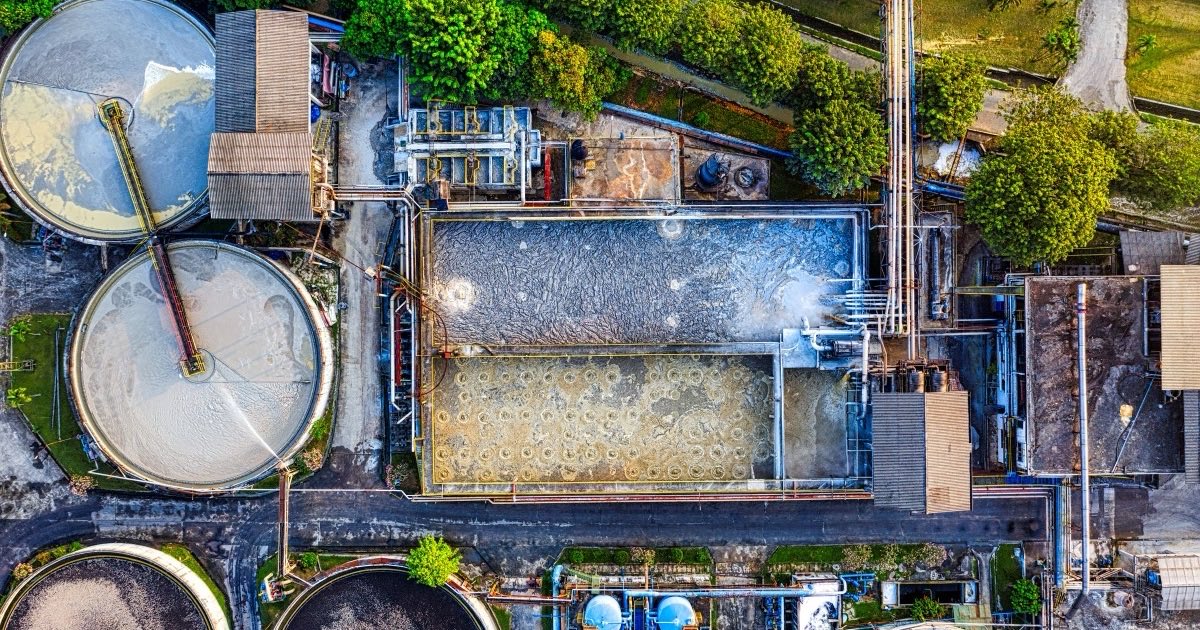
Photo: Tom Fisk / Pexels (free license)
Quick summary
From 1 September 2025, QCVN 40:2025/BTNMT — issued with Circular 06/2025/TT-BTNMT of 28 February 2025 — became Vietnam's single national technical regulation on industrial wastewater, replacing eleven earlier standards including QCVN 40:2011/BTNMT and the whole family of sector-specific standards for textile dyeing, seafood processing, pulp and paper, steel, natural rubber and cassava starch. The structure changed outright: the old Kq/Kf coefficients are gone, replaced by three discharge-zone columns A/B/C tied to the function of the receiving water body, plus a 2,000 m³/day flow threshold that splits the limit tables. Operating facilities have a transition period to 31 December 2031, but new or expanded projects filing after the effective date must comply immediately. The article also sets out the environmental licence thresholds under the latest consolidated text of Decree 08/2022/ND-CP following Decree 48/2026/ND-CP (industrial wastewater from 10 m³/day outside Appendix II, no threshold for Appendix II sectors, dust and air emissions from 5,000 m³/hour), the new fee method under Decree 346/2025/ND-CP in force from 1 January 2026 replacing Decree 53/2020/ND-CP, the automatic monitoring thresholds after Appendix XXVIII was replaced, penalty bands under Decree 45/2022/ND-CP, and how to report water savings without greenwashing. It gives no capital cost or treatment cost figure for any specific factory — those depend on the actual effluent of each site.
Straight answer: if your factory discharges industrial wastewater in Vietnam, the standard you must meet changed its name and its structure on 1 September 2025. QCVN 40:2011 and the sector-specific standards have been folded into a single regulation, QCVN 40:2025/BTNMT. Operating facilities have until the end of 2031; new projects must comply now.
Last updated: 29/07/2026.
The short version
Four things to remember, each traceable to the source text below:
- One standard replaces eleven. QCVN 40:2025/BTNMT supersedes QCVN 40:2011 and ten other wastewater standards.
- The maths changed. No more Kq/Kf coefficients; instead three columns A/B/C based on the receiving water body's function, plus a 2,000 m³/day flow threshold.
- You have time, but it is finite. Operating facilities may keep using the old standards until 31 December 2031; from 1 January 2032 they must meet QCVN 40:2025.
- No zoning determined? Use Column B. That default is written into the Circular itself.
Key facts — one verifiable source per line:
- QCVN 40:2025/BTNMT took effect on 1 September 2025 and replaces 11 standards (Circular 06/2025/TT-BTNMT, Official Gazette No. 559+560).
- Environmental licence threshold for industrial wastewater outside Appendix II: 10 m³/day; for Appendix II sectors there is no flow threshold (Decree 08/2022/ND-CP, consolidated text 49/VBHN-BNNMT of 17 April 2026).
- Industrial wastewater fee without monitoring data: VND 1,700 per m³, charged quarterly (Decree 346/2025/ND-CP, in force 1 January 2026, replacing Decree 53/2020).
- Industrial zones with a centralised wastewater treatment system reached 92.3% over the 2020–2025 term (Ministry of Agriculture and Environment, 12 October 2025).
Why 2026 is the pivot year for water
For most small and mid-sized factories, water is the least examined cost line: there is a master meter, there is a bill, and that is the end of it. Very few sites can answer "how many cubic metres does a tonne of my product consume, and what is in the effluent?" That question just became more expensive, because three things changed at nearly the same time.
First, the technical standard: QCVN 40:2025/BTNMT replaced a whole family of sector standards. Second, the fee regime: Decree 346/2025/ND-CP took effect on 1 January 2026. Third, customer pressure — export buyers are now asking for water data exactly the way they started asking for emissions data in a Scope 1-2-3 greenhouse gas inventory.
The backdrop is not comfortable either. Per the World Resources Institute's Aqueduct analysis (16 August 2023), 25 countries — home to a quarter of the global population — face extremely high water stress every year, and at least 50% of the world's population, around 4 billion people, live under highly water-stressed conditions for at least one month a year. WRI is precise about the definition: water stress is the ratio of water demand to renewable supply, and "extreme" stress means using at least 80% of available supply. Aqueduct data also projects that by 2050, 31% of global GDP — about US$70 trillion — will be exposed to high water stress, up from US$15 trillion (24% of GDP) in 2010.
QCVN 40:2025/BTNMT: what actually changed
Straight answer: the new regulation merges eleven old standards into one, drops the Kq/Kf coefficients, and replaces them with three discharge-zone columns A/B/C plus a 2,000 m³/day flow threshold.
The regulation's foreword lists what it supersedes: QCVN 25:2009 (landfill leachate), QCVN 28:2010 (medical wastewater), QCVN 29:2010 (fuel depots and stations), QCVN 40:2011 (industrial wastewater), QCVN 01-MT:2015 (natural rubber primary processing), QCVN 11-MT:2015 (seafood processing), QCVN 12-MT:2015 (pulp and paper), QCVN 13-MT:2015 (textile dyeing), QCVN 60-MT:2015 (fuel ethanol), QCVN 63:2017 (cassava starch) and QCVN 52:2017 (steel manufacturing). If your business sits in one of those sectors and your internal documentation still cites a sector-specific standard, that documentation is out of date.
The zoning logic is new as well. Column A applies where the receiving water body supplies domestic water or is managed for water-quality improvement corresponding to Level A of QCVN 08:2023/BTNMT on surface water quality; Column B corresponds to Level B; Column C covers the rest. The clause that matters most to SMEs is Article 2.4 of the Circular: where the discharge zoning has not yet been determined, Column B of Tables 1 and 2 applies by default. In practice, until your province issues a zoning decision, design to Column B.
| Parameter | F ≤ 2,000 m³/day — A | B | C | F > 2,000 m³/day — A | B | C |
|---|---|---|---|---|---|---|
| BOD₅ (20 °C) | ≤ 40 | ≤ 60 | ≤ 80 | ≤ 30 | ≤ 50 | ≤ 60 |
| COD | ≤ 65 | ≤ 90 | ≤ 130 | ≤ 60 | ≤ 70 | ≤ 90 |
| TOC (optional, in place of COD) | ≤ 35 | ≤ 50 | ≤ 75 | ≤ 25 | ≤ 40 | ≤ 50 |
| TSS | ≤ 40 | ≤ 80 | ≤ 120 | ≤ 30 | ≤ 60 | ≤ 80 |
Two details are easy to miss but practically useful. One, the regulation expressly lets organisations choose to apply either TOC or COD — for some process lines TOC is faster and more stable to measure. Two, scope: the regulation does not cover livestock wastewater, domestic wastewater or urban and residential-area wastewater; but domestic wastewater combined into the same stream as industrial wastewater is managed as industrial wastewater. Whether to separate the streams is a technical decision with legal consequences.
The transition: you have until end-2031, unless you are a new project
Straight answer: facilities operating before 1 September 2025 may keep using the old standards until 31 December 2031; new or expansion projects filing after that date must apply QCVN 40:2025 immediately.
Article 3 of Circular 06/2025/TT-BTNMT provides that facilities already in operation, and projects whose environmental impact assessment has been approved or whose complete and valid dossier was received before the Circular took effect, may continue to apply the national wastewater standards corresponding to their line of business, together with local government rules, until the end of 31 December 2031. Article 4 closes the loop: from 1 January 2032 those cases must meet QCVN 40:2025, and early adoption is encouraged. The Ministry of Agriculture and Environment restated this transition principle when answering an enterprise on 2 March 2026, covering both the new air-emission and wastewater standards.
| Case | Standard to apply | Deadline |
|---|---|---|
| New investment project, or capacity expansion, filing EIA / environmental licence / environmental registration after 1 Sep 2025 | QCVN 40:2025/BTNMT | Immediately from 1 Sep 2025 |
| Facility already operating, or valid dossier received before 1 Sep 2025 | May continue with sector-specific old standards plus local regulations | Until 31 Dec 2031 |
| Same group, after the transition | QCVN 40:2025/BTNMT mandatory | From 1 Jan 2032 |
| Discharge zoning not yet determined | Default to Column B, Tables 1 and 2 | From 1 Sep 2025 |
| Receiving water body reclassified by a competent authority | Per the roadmap set in that decision | Case by case |
Six years sounds generous, but if your site sits on Column B and the receiving water body is later reclassified to Column A, moving BOD₅ from 60 down to 40 mg/L can require a whole treatment step. That is a capital question, not an operations question — and it belongs in the financial plan now, alongside the items in the cost of green transition for SMEs.
Do you need an environmental licence?
Straight answer: if your site is in a line of business listed in Appendix II as posing environmental pollution risk, you need an environmental licence with no flow threshold at all; if it is not, the threshold is industrial wastewater of 10 m³/day.
This is the easiest part to get wrong, because Article 39 of the Law on Environmental Protection was rewritten by Law No. 146/2025/QH15 with effect from 1 January 2026. Per consolidated text 98/VBHN-VPQH of 10 April 2026, the licence now applies to group I, II and III projects that "generate wastewater, dust or air emissions discharged to the environment requiring treatment when entering official operation as prescribed by the Government", or that import scrap as production input, or that provide hazardous waste treatment services. The old criterion of "generating hazardous waste requiring management" — which appears in almost every guidance article still circulating — is no longer a standalone trigger.
The specific thresholds sit in Article 74.5 of Decree 08/2022/ND-CP, in the latest consolidated text after Decree 48/2026/ND-CP of 29 January 2026 replaced a whole set of appendices.
| Point | Type of discharge | Threshold |
|---|---|---|
| a | Domestic wastewater requiring treatment before discharge | Total flow 50 m³/day or more |
| b | Industrial wastewater, for projects in a line of business posing environmental pollution risk (Appendix II) | No flow threshold |
| c | Industrial wastewater, for projects not in such a line of business | Total flow 10 m³/day or more |
| d | Both domestic and industrial wastewater, each below the levels at (a) and (c) | Total flow 50 m³/day or more |
| đ | Dust and air emissions requiring treatment | 5,000 m³/hour or more |
Two practical warnings. First, point (b) is where SMEs are most often caught out: for Appendix II sectors, the licensing duty does not depend on flow at all — so the first thing to do is not to measure your flow, it is to check your line of business. Second, if the material you are reading states an air-emission threshold of 2,000 m³/hour, or cites "hazardous waste from 1,200 kg/year" as a licensing trigger, it reflects the pre-2026 rules.
On competence: Article 41 in its current form assigns licensing for the largest category to the Ministry of Agriculture and Environment, and everything else to the Chairperson of the provincial People's Committee. District level no longer issues environmental licences.
Wastewater environmental protection fees: the decree has changed
Straight answer: from 1 January 2026, wastewater environmental protection fees follow Decree 346/2025/ND-CP; any document still citing Decree 53/2020/ND-CP is citing an instrument no longer in force.
Decree No. 346/2025/ND-CP was issued on 29 December 2025, took effect on 1 January 2026, and states expressly that it replaces Decree No. 53/2020/ND-CP of 5 May 2020. This is not a light edit — the calculation method changed outright.
What disappeared: the fixed annual fee in dong per year and the familiar formula F = f + C. Fees are now calculated quarterly, on two tracks depending on whether the site has monitoring data. Without monitoring data, the quarterly fee is total wastewater volume multiplied by VND 1,700 per m³. With monitoring, the quarterly fee is volume multiplied by a coefficient C built from the concentration of each pollutant and that pollutant's unit fee.
| Parameter | Decree 346/2025 (current) | Decree 53/2020 (no longer in force) |
|---|---|---|
| COD | 3,000 | 2,000 |
| Total suspended solids (TSS) | 3,500 | 2,400 |
| Mercury (Hg) | 55,000,000 | 20,000,000 |
| Lead (Pb) | 600,000 | 1,000,000 |
| Arsenic (As) | 1,100,000 | 2,000,000 |
| Cadmium (Cd) | 2,800,000 | 2,000,000 |
Read carefully, the table sends a clear policy signal: the fees for the two most common parameters, COD and TSS, went up, mercury nearly tripled, while lead and arsenic came down. In other words, the cost of discharging organic and solids load — precisely what most SME factories discharge — is now higher than before.
One detail that is easy to misread: the 20 m³/day threshold still appears in the new decree, but its role changed. It no longer selects the industrial fee method; it determines which facilities are treated as generating domestic wastewater — those drawing on the clean water supply system with an average annual discharge below 20 m³/day (equivalent to 7,300 m³/year). The domestic wastewater fee remains 10% of the selling price of 1 m³ of clean water, excluding VAT.
Automatic monitoring and penalties: two thresholds worth knowing
Straight answer: the threshold for mandatory automatic, continuous wastewater monitoring has just been relaxed to 500 m³/day (industrial parks, clusters and Appendix II facilities) or 1,000 m³/day (everyone else) — most SME factories sit below it.
Appendix XXVIII of Decree 08/2022/ND-CP was replaced in full by Decree 48/2026/ND-CP of 29 January 2026. The old text required concentrated production, business and service zones and industrial clusters to install automatic monitoring merely for "discharging wastewater to the environment"; the new text sets 500 m³/day for that group and for facilities in Appendix II, and 1,000 m³/day for facilities outside Appendix II, with an intermediate band where the facility may choose automatic or periodic monitoring. This is a meaningful relaxation, but it does not remove periodic monitoring duties.
The other direction is enforcement. Decree 45/2022/ND-CP penalises on two axes: how many times the standard is exceeded, and discharge volume. Exceeding by less than 1.1 times (a 10% overshoot) draws only a warning; but exceeding by 10 times or more at a discharge of 5,000 m³/day or above carries an individual fine of VND 850–950 million — and for organisations the amount doubles, hitting the decree's VND 1 billion ceiling. Discharging without an environmental licence, at provincial level of competence, is fined VND 150–170 million for individuals, meaning VND 300–340 million for organisations. That is usually more than the cost of getting the paperwork right in the first place.
Water is a money question, not only a compliance question
Straight answer: the real cost of water is not the water bill — it is discharge fees, the risk of suspension, and the value lost as the water around your plant deteriorates.
At national level, the World Bank's 2019 report Vietnam: Toward a Safe, Clean, and Resilient Water System offers figures worth reading carefully, because they are also the most frequently misquoted. The report states that pollution is emerging as the greatest water-related threat to the economy, and that the main threat is the impact of water pollution on human health, which could reduce GDP by 3.5 percent by 2035. Adding up all water-related threats, the figure is around 6 percent of GDP (5.96 percent annually); the water-shortage component alone is 1.25 percent. These three numbers are different and must not be substituted for one another.
The industry-specific figures are blunt: the report estimates that at the end of 2018, centralised wastewater treatment plants were treating only about 71% of industrial wastewater, and that of 251 operating industrial zones, 220 (88%) had wastewater treatment plants. Those two numbers are not the same thing — having a treatment plant is not the same as treating the effluent. And if untreated industrial wastewater keeps being discharged, reduced rice yields alone are expected to cut GDP by about 0.8 percent a year.
At company level, CDP (published 17 September 2025, 2024 disclosure cycle) reports that among more than 8,500 companies disclosing on water, businesses reported US$339 billion in potential financial impacts linked to water-related risks, against an estimated US$58.7 billion in expenditures to mitigate them — a six-to-one return. The number does not transfer mechanically to a single SME factory, but it explains why large customers have started asking you about water.
| Indicator | Value | Source & year |
|---|---|---|
| Health impact of water pollution, by 2035 | 3.5% of GDP | World Bank, 2019 |
| All water-related threats combined, by 2035 | About 6% of GDP (5.96% annually) | World Bank, 2019 |
| Industrial wastewater treated at centralised plants (end-2018) | 71% | World Bank, 2019 (citing domestic press) |
| Operating industrial zones with a treatment plant | 220 of 251 (88%) | World Bank, 2019 (citing MPI, 2019) |
| Industrial zones with a centralised wastewater treatment system, 2020–2025 term | 92.3% (target 92%) | Ministry of Agriculture and Environment, 12 Oct 2025 |
| Self-reported corporate water-related financial risk | US$339bn; mitigation expenditure US$58.7bn | CDP, 2024 cycle (published 2025) |
| Global GDP exposed to high water stress by 2050 | 31% (~US$70tn) | WRI Aqueduct, 2023 |
How much water is "a lot"? Handle sector benchmarks with care
Straight answer: international sector benchmarks exist, but they are comparison points rather than legal standards, and most are nearly two decades old.
The most-cited set is IFC's Environmental, Health, and Safety Guidelines. In the textiles manufacturing guideline (2007), reference water consumption is 70–120 litres/kg for yarn finishing, 50–100 litres/kg for woven fabric finishing, and 15–30 litres/kg for yarn dyeing plus 30–50 litres/kg for rinsing. In the food and beverage processing guideline (2007), the reference range is 3.5–6.0 m³/tonne for canned vegetables, 4.5–9.0 m³/tonne for potato processing, and 10–20 m³/tonne for sausages and ham.
Two caveats must be stated. First, IFC itself notes these benchmark values are "provided for comparative purposes only" and that the underlying data came from a limited number of European installations — they are industry estimates, not compliance thresholds. Second, they date from 2007 and technology has moved on. Using them to benchmark yourself is sound; using them to advertise "we beat the industry standard by X%" is misuse of data.
For businesses in textile and footwear supply chains with wet processing, a more practical reference is the ZDHC Wastewater Guidelines version 2.2 (September 2024), which many international brands write into contracts. ZDHC sets a sampling and testing threshold at a wastewater flow rate of 15 m³/day, with three tiers — Foundational, Progressive and Aspirational — whose limits tighten in that order. If your customer names ZDHC, check you are working from version 2.2; a good deal of local consulting material is still on an older edition. This is also one link in the green supply chain for SMEs.
International management tools: ISO 14046, ISO 46001, AWS
Straight answer: none of these international standards is mandatory under Vietnamese law; they are ways to demonstrate systematic water management, not substitutes for meeting the QCVN.
| Tool | Content | Status | When it fits |
|---|---|---|---|
| ISO 14046:2014 | Principles, requirements and guidelines for water footprint assessment, based on LCA | In force (confirmed in 2020; currently in a systematic review with no result yet published) | When customers ask for product water-footprint data |
| ISO 46001:2019 | Water efficiency management system, built on a "reduce, replace, reuse" approach | In force but flagged to be revised; Amd 1:2024 published | When building an internal water management system, at any size |
| AWS Standard V3.0 | Catchment-based water stewardship standard, five steps: Gather & understand → Commit & plan → Implement → Evaluate → Communicate & disclose | V3.0 effective 22 March 2026; one-year transition, all audits against V3.0 from 22 March 2027 | When the site sits in a water-stressed catchment and a customer requires certification |
The Alliance for Water Stewardship defines water stewardship as "the use of water that is socially and culturally equitable, environmentally sustainable and economically beneficial, achieved through a stakeholder-inclusive process". One detail matters for anyone considering it: the AWS Standard moved to version 3.0 in March 2026, so any plan built on V2.0 should be reviewed before the next audit.
Where to start if you have nothing in place
Straight answer: the first four steps cost no capital — check your line of business, meter the flows, re-read your licence, and separate the streams.
- Step 1 — Check your line of business. Open Appendix II of Decree 08/2022/ND-CP — note that this appendix was replaced in full by Decree 48/2026/ND-CP, so use the latest consolidated text — and see whether your sector is listed as posing environmental pollution risk. The answer determines whether the licensing duty binds you regardless of flow.
- Step 2 — Measure, do not estimate. Meter the inlet and each major branch, and log daily readings for at least a month. You need real discharge flow to know whether you fall in the F ≤ 2,000 or F > 2,000 m³/day half of Table 1.
- Step 3 — Re-read your existing environmental licence. Identify your receiving water body and the corresponding zone. If zoning has not been determined, design to Column B as the Circular requires — and treat Column A as your contingency case.
- Step 4 — Separate the streams. Domestic wastewater collected and treated separately is governed by the domestic wastewater regulation; combined with industrial wastewater, it is managed as industrial wastewater. Separation is usually the cheapest way to unload the treatment system.
- Step 5 — Reduce at source before thinking about tanks. Backwash water, cooling water and equipment cleaning are typically the three largest losses. Cooling water that does not come into direct contact with pollutants and has its own drain is treated differently — pulling it out of the common stream is worth doing early.
- Step 6 — Consider reuse. This is where water meets the circular economy: treated effluent can return for floor washing, cooling or irrigation, cutting both purchased water and the volume subject to fees.
- Step 7 — Systematise. Once you have data, fold it into a management framework (ISO 46001, or at minimum a documented internal procedure) so improvement no longer depends on one person — the same logic already applied to factory energy management.
One note on measurement: the regulation requires that monitoring and analysis used to supply data to state authorities be performed by an organisation holding a certificate of eligibility for environmental monitoring services. Numbers you measure in-house are useful for management, but they do not replace valid monitoring results.
Reporting results without greenwashing
Straight answer: every water claim must state its baseline, boundary and measurement method — missing any of the three makes it advertising, not reporting.
- State the baseline and the boundary. "20% less water" means nothing without saying against which period, for the whole plant or one line, and whether it has been normalised for output.
- Separate absolute from intensity savings. Lower output also lowers water use — that is not water efficiency. Only an intensity metric (m³ per tonne of product) shows the difference.
- Do not absolutise. Avoid "zero-discharge factory" or "water neutral" without an ISO 14046 water footprint assessment and third-party verification. Self-declaration is legitimate, but it must be called self-declaration.
- Do not confuse "meets the standard" with "environmentally friendly". Meeting Column B means meeting the legal minimum for that receiving water body, not achieving an environmental milestone. The honest phrasing names the column and the parameters.
- Keep the numbers consistent. Figures on your website, in tender documents and in customer reports must match each other and match the monitoring data.
This is not only communications ethics — it carries penalties. Article 10 of the Law on Protection of Consumer Rights No. 19/2023/QH15 (in force 1 July 2024) prohibits "deceiving or causing confusion to consumers by providing false, incomplete or inaccurate information" about goods and services. The Law on Advertising bars advertising that is inaccurate or misleading about the quality and utility of goods and services. And from 15 May 2026, Decree 87/2026/ND-CP replaced Decree 38/2021/ND-CP: per Vietnam Government News, the maximum fine in advertising is VND 100 million for individuals and VND 200 million for organisations, with misleading claims about a business's ability to supply goods or services in the top band of VND 80–100 million for individuals — that is VND 160–200 million for organisations. See how the same issue plays out in Vietnamese eco-labels and anti-greenwashing.
For that reason, this article gives no sample water-saving figure or treatment cost for any factory — such numbers only mean something when they come from your own meters and monitoring results.
How GROW supports SMEs on water management
Through the Green Transition Advisory pillar, GROW helps SMEs identify their line of business under the new consolidated Appendix II, establish their licensing duties under the current Article 39 of the Law on Environmental Protection, build water baselines and intensity indicators, check treatment design against Tables 1 and 2 of QCVN 40:2025/BTNMT, and plan investment ahead of the 1 January 2032 deadline. Read more on EPR and recycling responsibility, what ESG means for SMEs, or book a quick review of your factory's wastewater file.
The bottom line: Since 1 September 2025, industrial wastewater in Vietnam is governed by a single national standard, QCVN 40:2025/BTNMT — replacing eleven earlier standards, dropping the Kq/Kf coefficients, moving to three discharge-zone columns A/B/C, defaulting to Column B where zoning is undetermined, and giving operating facilities a transition period until 31 December 2031.
This article summarises publicly available sources (Vietnam Official Gazette, the Government legal documents database, Vietnam Government News, World Bank, WRI, CDP, ISO, AWS, IFC, ZDHC) as at 29 July 2026 and is not legal advice. Before investing or filing, verify the full text of Circular 06/2025/TT-BTNMT, the consolidated Law on Environmental Protection 98/VBHN-VPQH, Decree 08/2022/ND-CP consolidated text 49/VBHN-BNNMT (as amended by Decree 05/2025/ND-CP and Decree 48/2026/ND-CP), Decree 346/2025/ND-CP and Decree 45/2022/ND-CP in force, and work directly with your provincial Department of Agriculture and Environment.
Frequently asked questions
Can QCVN 40:2011/BTNMT still be used?
Only within the transition period. QCVN 40:2025/BTNMT, issued with Circular 06/2025/TT-BTNMT and effective 1 September 2025, replaced QCVN 40:2011 along with ten other wastewater standards. Facilities already operating, or whose valid dossier was received before 1 September 2025, may keep applying the old sector standards until 31 December 2031; from 1 January 2032, QCVN 40:2025 is mandatory.
Which standards does QCVN 40:2025/BTNMT replace?
Eleven: QCVN 25:2009 (solid waste landfill leachate), QCVN 28:2010 (medical wastewater), QCVN 29:2010 (fuel depots and stations), QCVN 40:2011 (industrial wastewater), QCVN 01-MT:2015 (natural rubber primary processing), QCVN 11-MT:2015 (seafood processing), QCVN 12-MT:2015 (pulp and paper), QCVN 13-MT:2015 (textile dyeing), QCVN 60-MT:2015 (fuel ethanol), QCVN 63:2017 (cassava starch) and QCVN 52:2017 (steel manufacturing).
What is the difference between Columns A, B and C, and which applies to me?
Column A applies where the receiving water body supplies domestic water or is managed for water-quality improvement corresponding to Level A of QCVN 08:2023/BTNMT on surface water quality; Column B corresponds to Level B; Column C covers the remainder. Zoning is set by current regulations and by the provincial People's Committee. Article 2.4 of Circular 06/2025/TT-BTNMT provides that where zoning has not been determined, Column B of Tables 1 and 2 applies.
How much wastewater triggers the environmental licence requirement?
Under Article 74.5 of Decree 08/2022/ND-CP (consolidated text 49/VBHN-BNNMT of 17 April 2026, after Decree 48/2026/ND-CP replaced the appendices): domestic wastewater requiring treatment from 50 m³/day; industrial wastewater from projects IN a line of business posing environmental pollution risk under Appendix II, with no flow threshold; industrial wastewater from projects NOT in such a line of business, from 10 m³/day; both types each below those levels but totalling 50 m³/day or more; and dust or air emissions from 5,000 m³/hour. Note that Article 39 of the Law on Environmental Protection was rewritten by Law 146/2025/QH15 from 1 January 2026 and hazardous waste is no longer a standalone trigger; the 2,000 m³/hour air threshold is a pre-2026 rule.
How are wastewater environmental protection fees calculated?
Under Decree 346/2025/ND-CP (issued 29 December 2025, in force 1 January 2026, replacing Decree 53/2020/ND-CP), fees are charged QUARTERLY and there is no longer a fixed annual fee or the F = f + C formula. Without monitoring data, the quarterly fee is total wastewater volume times VND 1,700 per m³. With monitoring, it is volume times a coefficient C built from each pollutant's concentration and unit fee: COD VND 3,000/kg, TSS VND 3,500/kg, Hg 55,000,000, Pb 600,000, As 1,100,000 and Cd 2,800,000 VND/kg. The domestic wastewater fee remains 10% of the selling price of 1 m³ of clean water excluding VAT.
Does my factory have to install automatic, continuous wastewater monitoring?
Appendix XXVIII of Decree 08/2022/ND-CP was replaced in full by Decree 48/2026/ND-CP of 29 January 2026. Automatic monitoring is now mandatory from 500 m³/day for concentrated production, business and service zones, industrial clusters, and facilities in a line of business posing environmental pollution risk under Appendix II; and from 1,000 m³/day for facilities outside Appendix II. In the band just below those levels, the facility may choose automatic or periodic monitoring. The old rule requiring zones and clusters to install monitoring merely because they discharge wastewater no longer applies.
Is my factory required to hold ISO 46001 or AWS certification?
No. None of these international standards is a legal obligation in Vietnam; the legal duties sit in the QCVN and the environmental licence. ISO 14046:2014 (water footprint assessment) and ISO 46001:2019 (water efficiency management systems, now flagged for revision) are management tools; AWS Standard V3.0, effective 22 March 2026 with a one-year transition, is normally needed only when an international customer requires it by name.
References
- Công báo Chính phủ số 559+560 (19/3/2025) — Thông tư số 06/2025/TT-BTNMT ngày 28/02/2025 ban hành QCVN 40:2025/BTNMT về nước thải công nghiệp, hiệu lực 01/9/2025
- Công báo điện tử Chính phủ — Trang văn bản Thông tư số 06/2025/TT-BTNMT (ban hành 28/02/2025, hiệu lực 01/09/2025)
- Báo Điện tử Chính phủ — Lộ trình áp dụng quy chuẩn khí thải, nước thải (02/3/2026), Bộ Nông nghiệp và Môi trường trả lời về điều khoản chuyển tiếp đến hết 31/12/2031
- Luật Bảo vệ môi trường — văn bản hợp nhất số 98/VBHN-VPQH ngày 10/4/2026 (Điều 39 và Điều 41 bản hiện hành sau khi được Luật 146/2025/QH15 sửa đổi)
- Nghị định 08/2022/NĐ-CP — văn bản hợp nhất số 49/VBHN-BNNMT ngày 17/4/2026 (khoản 5 Điều 74: ngưỡng phải có giấy phép môi trường)
- Công báo Chính phủ — Nghị định số 48/2026/NĐ-CP ngày 29/01/2026 sửa đổi Nghị định 08/2022/NĐ-CP, thay thế các Phụ lục II, III, IV, XXV–XXVIII, XXXIII
- Công báo Chính phủ — Nghị định số 346/2025/NĐ-CP ngày 29/12/2025 quy định phí bảo vệ môi trường đối với nước thải, hiệu lực 01/01/2026, thay Nghị định 53/2020/NĐ-CP
- Công báo Chính phủ — Nghị định số 45/2022/NĐ-CP ngày 07/7/2022 về xử phạt vi phạm hành chính trong lĩnh vực bảo vệ môi trường (Điều 14, Điều 18)
- Công báo Chính phủ — Luật Bảo vệ quyền lợi người tiêu dùng số 19/2023/QH15 (Điều 10: các hành vi bị nghiêm cấm)
- Báo Điện tử Chính phủ — Quy định mới về xử phạt vi phạm hành chính trong lĩnh vực văn hoá, quảng cáo (Nghị định 87/2026/NĐ-CP, hiệu lực 15/5/2026)
- Bộ Nông nghiệp và Môi trường (12/10/2025) — Tỷ lệ khu công nghiệp có hệ thống xử lý nước thải tập trung đạt 92,3% nhiệm kỳ 2020–2025
- World Bank (2019) — Vietnam: Toward a Safe, Clean, and Resilient Water System
- World Resources Institute (16/8/2023) — 25 Countries Face Extremely High Water Stress (Aqueduct Water Risk Atlas)
- CDP (17/9/2025) — Internal water pricing unlocks resilience and long-term growth (dữ liệu kỳ công bố 2024)
- ISO — ISO 14046:2014 Environmental management — Water footprint — Principles, requirements and guidelines
- ISO — ISO 46001:2019 Water efficiency management systems — Requirements with guidance for use
- Alliance for Water Stewardship — International Water Stewardship Standard V3.0 (hiệu lực 22/3/2026)
- IFC (2007) — Environmental, Health, and Safety Guidelines for Textiles Manufacturing
- IFC (2007) — Environmental, Health, and Safety Guidelines for Food and Beverage Processing
- ZDHC — Wastewater Guidelines Version 2.2 (9/2024)