Rooftop Solar for SME Factories in Vietnam: Decree 243/2026 Lifts the Surplus Cap to 50%
Self-consumption rooftop solar for SME factories in Vietnam: Decree 243/2026 lifts the surplus-sale cap from 20% to 50%, plus filing steps and new penalties.
July 22, 2026 · 13 min read
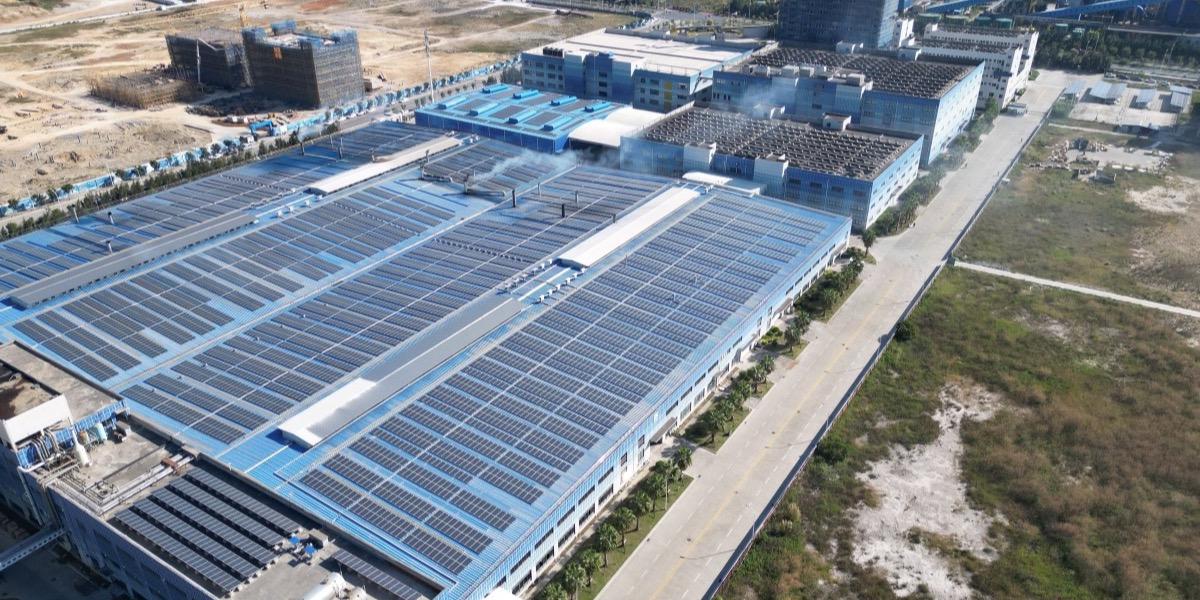
Photo: Nova lv / Pexels
Quick summary
Self-produced, self-consumed rooftop solar is a power source installed on a building's roof to be used on site, with only the surplus sold to the grid. For SME factories it is the most accessible green upgrade because daytime load matches daylight hours. The legal framework has just shifted significantly: Decree 243/2026/NĐ-CP dated 26 June 2026 (effective 26 June 2026) amends Decree 57/2025/NĐ-CP on the direct power purchase mechanism and Decree 58/2025/NĐ-CP detailing the Electricity Law on renewable and new energy development. The headline change: surplus electricity may be traded by agreement between the two parties but must not exceed 50% of the electricity generated at the output of the rooftop solar source according to solar irradiance — up from the previous 20% under Decree 58/2025/NĐ-CP. From the decree's effective date until 31 December 2030, the parties may also agree on a share above 50% where the local grid can absorb it. On procedure, Decree 58/2025/NĐ-CP (effective 3 March 2025, replacing Decree 135/2024/NĐ-CP) splits filings into two groups: NOTIFICATION for households in detached homes under 100 kW with a grid connection and for organisations or individuals under 1,000 kW with a connection that do not register to sell surplus; REGISTRATION for systems of 1,000 kW and above and the remaining cases. From 25 May 2026, Decree 133/2026/NĐ-CP began imposing administrative penalties for failing to notify or register. This article gives no VND/kWh surplus price, capital cost or payback figure for any project — those depend on the annual announcement by the electricity market operator and on each factory's real data.
Last updated: 22/07/2026
Key facts (sourced)
- Decree 243/2026/NĐ-CP dated 26 June 2026 amends Decree 57/2025/NĐ-CP (direct power purchase) and Decree 58/2025/NĐ-CP (renewable and new energy development); the decree is effective from 26 June 2026.
- Surplus cap 20% → 50%: surplus electricity is traded by agreement between the parties but must not exceed 50% of the electricity generated at the output of the rooftop solar source according to solar irradiance (the previous rule under Decree 58/2025/NĐ-CP was 20%).
- A window until 31 December 2030: from the decree's effective date to the end of 31 December 2030, the parties may agree on a share above 50% if the grid at the connection area can absorb it and safe-operation conditions are met.
- Surplus price: the average electricity market price of the immediately preceding year announced by the electricity market transaction operator (VND/kWh), capped at the ceiling of the generation price bracket for ground-mounted solar without storage by region (excluding VAT).
- Filing & penalties: Decree 58/2025/NĐ-CP (effective 3 March 2025, replacing Decree 135/2024/NĐ-CP) separates notification (households under 100 kW; organisations/individuals under 1,000 kW not selling surplus) from registration (1,000 kW and above, etc.); from 25 May 2026, Decree 133/2026/NĐ-CP applies penalties, up to VND 80–100 million for the heaviest category.
What self-consumption rooftop solar is — and why SMEs should re-run the numbers
Straight answer: self-produced, self-consumed rooftop solar is a power source installed on a building's roof to be used on site, with only the surplus sold to the grid — and since 26 June 2026 the sellable surplus has risen 2.5-fold, from 20% to a maximum of 50% of the electricity generated at the output. That is a big enough change for an SME factory that once dismissed the option to reconsider it.
Why are factories the natural customer? Because the load curve matches the sunlight curve. According to Southern Power Corporation (EVNSPC), self-produced, self-consumed rooftop solar draws the most interest from households, production and business facilities with high daytime electricity demand, because it lets the user secure part of their power on site, buy less from the grid and use electricity more efficiently during hot-season peaks (EVNSPC, 18 May 2026). A garment workshop, a machine shop or a cold store on day shift is the ideal load profile.
But the phrase "self-consumption" is the legal crux. This mechanism is not a commercial power-selling model: the goal is on-site use, and the surplus is only a technical by-product of bright hours when the plant is idle or running light. Every rule around it — the cap, the notification/registration procedure, the anti-export requirements — answers one question: will this system unbalance the local grid?
Compared with other green upgrades, rooftop solar is usually the most controllable first step for an SME: no production-line change, no raw-material change, and generation data is measurable immediately — very useful when you run a Scope 1-2-3 greenhouse gas inventory or pursue green-building certification for a factory.

What Decree 243/2026 changes: the surplus cap moves from 20% to 50%
Straight answer: Decree 243/2026/NĐ-CP dated 26 June 2026 amends Article 14 of Decree 58/2025/NĐ-CP, raising the tradable surplus cap from 20% to no more than 50% of the electricity generated at the output of the rooftop solar source according to solar irradiance, and opens a flexible window allowing more than 50% until the end of 31 December 2030 where the local grid can absorb it.
According to the Government's official newspaper, Decree 243/2026/NĐ-CP amends and supplements a number of articles of Decree 57/2025/NĐ-CP dated 3 March 2025 (direct power purchase between renewable generators and large electricity customers) and Decree 58/2025/NĐ-CP dated 3 March 2025 (detailing the Electricity Law on renewable and new energy development), with the most notable item being the surplus-trading mechanism in Article 14 of Decree 58/2025/NĐ-CP (Vietnam Government News, 27 June 2026).
| Item | Rule in force |
|---|---|
| Cap on tradable surplus | By agreement between the parties but not exceeding 50% of the electricity generated at the output of the rooftop solar source according to solar irradiance (previous rule under Decree 58/2025/NĐ-CP: 20%) |
| When more than 50% is allowed | From the decree's effective date until the end of 31 December 2030: the parties may agree a share above 50% if the grid at the connection area can absorb it and the trade meets safe grid operation and system dispatch conditions |
| Mountainous, border and island areas not yet supplied by the national grid | No limit on tradable surplus; payment covers all electricity fed to the grid as metered. Once the area is supplied by the national grid, the corresponding rules apply again |
| Where surplus is measured | At the output of the inverter |
| Electricity from storage | Tradable surplus includes electricity from a storage system charged by the rooftop solar source (if any) |
| Surplus price | The average electricity market price of the immediately preceding year announced by the electricity market transaction operator (VND/kWh). If that price is higher than the ceiling of the generation price bracket for ground-mounted solar without storage in the applicable region, the ceiling price applies (excluding VAT) |
| Electricity operation licence | Organisations and individuals selling surplus must complete electricity operation licensing procedures, except where exempted by law |
Source for Table 1: all items per the reporting on Decree 243/2026/NĐ-CP by Vietnam Government News (27 June 2026) and Industry and Trade Magazine (29 June 2026).
Do not read "50%" as an invitation to build a power-selling project. This is still a self-production, self-consumption mechanism — a higher cap simply means less waste when the system is sized to real load. Sizing to sell rather than sizing to use is the fastest route into both technical and legal trouble.
Who may sell surplus, and how the price is set
Straight answer: Decree 243/2026/NĐ-CP lists five groups of self-consumption rooftop solar sources allowed to sell surplus — an SME factory must check which group it falls into, typically "other sources connected to the national grid and within the capacity scale in power development planning", or "connected at low voltage" if the system is small enough.
Per Vietnam Government News, the five groups are: (a) sources of households in detached homes; (b) sources connected to the national grid at low voltage; (c) sources in mountainous, border and island areas that have a grid but are not yet connected or linked to the national power system; (d) sources installed at works that are public assets (which must also comply with the law on management and use of public assets and match the seller's functions and duties); and (e) other sources connected to the national grid and within the capacity scale in power development planning, the plan implementing that planning, or the power supply network development option in provincial planning.
Group (e) is where SMEs most often misread the rule. It does not say "install it and you may sell": your source must sit within the development capacity scale already in the planning. That is precisely why you talk to the local power utility before fixing capacity — not after the array is on the roof.
On price, the new rule drops a fixed tariff and anchors to the market: the surplus price is the average electricity market price of the immediately preceding year announced by the electricity market transaction operator, in VND/kWh; if that figure exceeds the ceiling of the generation price bracket for ground-mounted solar without storage in the applicable region, the ceiling price applies (excluding VAT). This article deliberately quotes no VND/kWh figure: that number is announced annually, and reprinting an old level would be wrong the moment a new announcement lands.
One more obligation: the seller of surplus electricity must complete electricity operation licensing procedures, except where exempted by law. In other words, "you may sell up to 50%" is a right, not a paperwork exemption.
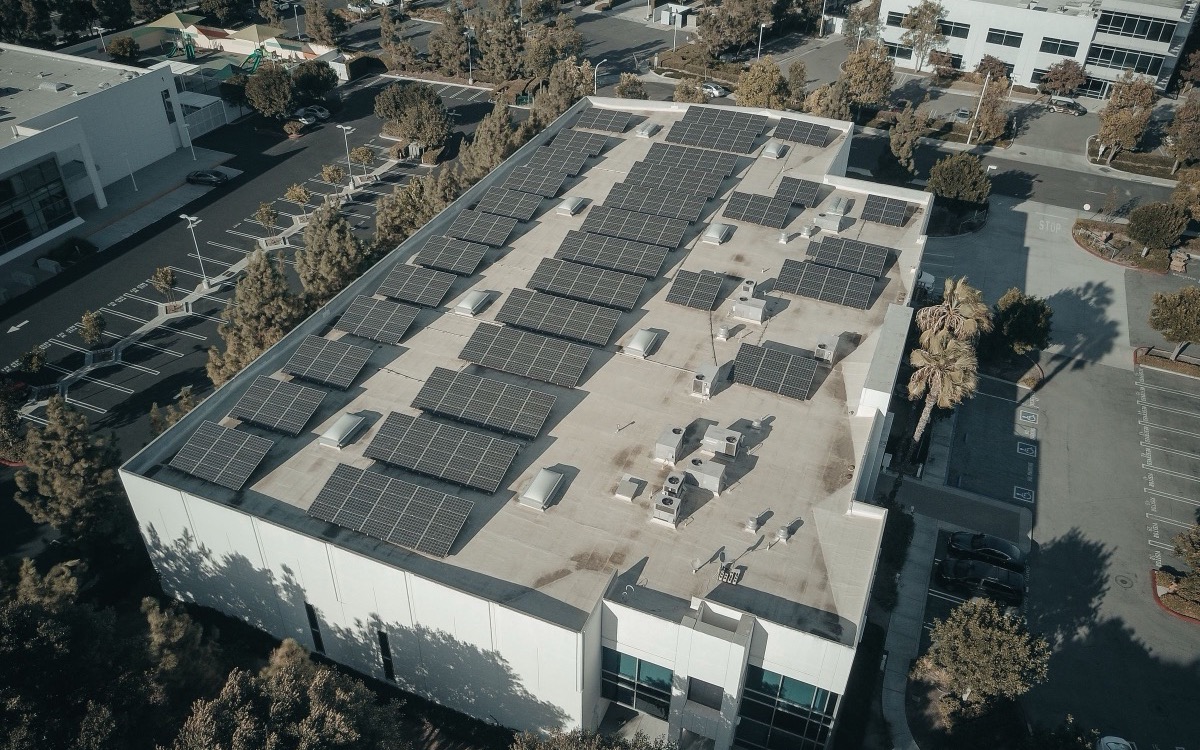
Procedure: notification or registration, by size and connection type
Straight answer: Decree 58/2025/NĐ-CP splits filings into two clear groups — NOTIFICATION for households in detached homes under 100 kW with a grid connection and for organisations or individuals under 1,000 kW with a connection that do not register to sell surplus; REGISTRATION for systems of 1,000 kW and above and the remaining cases. An SME factory installing a few hundred kW purely for own use typically only needs to notify.
EVNSPC describes the split as follows: the notification group covers households in detached homes with systems under 100 kW connected to the national grid, and organisations or individuals with systems under 1,000 kW that are connected but do not register to sell surplus; the registration group covers systems of 1,000 kW and above, systems under 1,000 kW that do not sell surplus but want a development registration certificate, and systems under 1,000 kW that do register to sell surplus to the grid (except certain separately regulated cases).
| Case | Filing group |
|---|---|
| Household in a detached home, system under 100 kW, connected to the national grid | Notification |
| Organisation or individual, system under 1,000 kW, connected and not registering to sell surplus | Notification |
| System of 1,000 kW and above | Registration |
| System under 1,000 kW, no surplus sale, but wants a development registration certificate | Registration |
| System under 1,000 kW that registers to sell surplus to the grid (except certain separately regulated cases) | Registration |
Source for Table 2: grouping per the description of Decree 58/2025/NĐ-CP by EVNSPC (18 May 2026). EVNSPC also states that the power source development notification goes to the provincial Department of Industry and Trade, the power utility, the construction management authority and the local fire-prevention authority as prescribed, while registration is handled by the competent state authority under delegated powers.
Why does the state tighten this step? EVNSPC gives a very practical reason: when many rooftop systems generate at high output at the same time while on-site load is low, the low-voltage grid or the area transformer can experience local overload; knowing the scale, location and connection plan in advance lets the utility assess absorption capacity and check metering, protection and anti-export requirements. For an SME the short version is: contact the local power utility before locking in capacity, equipment and the installer.
Penalties from 25 May 2026: what a mistake costs
Straight answer: from 25 May 2026, Decree 133/2026/NĐ-CP on administrative penalties in the electricity sector began applying sanctions for violations in developing self-consumption rooftop solar — from a warning for low-voltage-connected sources up to VND 80–100 million for the heaviest category involving dismantling wind or solar plants and offshore wind project commitments.
The band that matters most to factories is VND 10–20 million, which covers the mistakes made when work is rushed: not sending the development notification or installing before a development registration certificate is issued for sources connected at medium voltage and above, not implementing the notification or certificate correctly, failing to amend the certificate, not following dispatch orders when feeding surplus to the national grid, or not installing equipment to connect to the data collection, monitoring and control system.
| Conduct | Penalty |
|---|---|
| Failure to send the power source development notification for a self-consumption source connected at low voltage | Warning |
| Failure to implement, or incorrect/incomplete implementation of, the notification for a source connected at low voltage | Warning |
| Repeat failure to notify more than 10 days after a previous penalty — source of capacity up to 20 kW | VND 500,000 – 1 million |
| Repeat failure to notify more than 10 days after a previous penalty — source of capacity above 20 kW | VND 2 – 3 million |
| Failure to notify, or installing before a development registration certificate is issued — source connected at medium voltage and above | VND 10 – 20 million |
| Incorrect or incomplete implementation of the notification/certificate; failure to amend or supplement the certificate as required | VND 10 – 20 million |
| Buying surplus electricity from the wrong party or at the wrong share under the rules | VND 10 – 20 million |
| Not following dispatch orders when feeding surplus to the national grid; not installing equipment connecting to the data collection, monitoring and control system | VND 10 – 20 million |
| Failure to dismantle, or to complete dismantling of, a wind or solar power plant within the prescribed time limit | VND 80 – 100 million |
Source for Table 3: penalty table under Article 7 of Decree 133/2026/NĐ-CP as compiled by LuatVietnam (7 May 2026); the 25 May 2026 effective date and the split by voltage level are also described by EVNSPC. The specific amount for each entity is applied by the competent authority under the decree's general fine rules.
One row deserves a careful read by plant owners: "buying surplus electricity from the wrong party or at the wrong share". It shows the 50% figure is not a soft recommendation — exceeding the cap is sanctionable conduct, and the sanction reaches the buyer too.
The legal timeline, and a wider direct power purchase mechanism
Straight answer: the legal framework for self-consumption rooftop solar has passed four milestones in barely more than a year — Decrees 58/2025 and 57/2025 (3 March 2025), Decree 133/2026 (25 May 2026) and Decree 243/2026 (26 June 2026) — so any advisory material older than June 2026 must be re-checked before it is trusted.
| Date | Instrument | What to remember |
|---|---|---|
| 3 March 2025 | Decree 58/2025/NĐ-CP | Details the Electricity Law on renewable and new energy development; replaces Decree 135/2024/NĐ-CP; the basis for notification and registration procedures |
| 3 March 2025 | Decree 57/2025/NĐ-CP | Direct power purchase agreement (DPPA) mechanism between renewable generators and large electricity customers |
| 25 May 2026 | Decree 133/2026/NĐ-CP | Administrative penalties in the electricity sector; Article 7 sanctions violations in developing self-consumption rooftop solar |
| 26 June 2026 | Decree 243/2026/NĐ-CP | Amends Decrees 57/2025 and 58/2025; raises the surplus cap from 20% to 50%; effective from 26 June 2026 |
| Until 31 December 2030 | Decree 243/2026/NĐ-CP | Window in which the parties may agree a surplus share above 50% if the local grid can absorb it |
Source for Table 4: dates and content per Vietnam Government News, Industry and Trade Magazine, LuatVietnam (29 June 2026) and the Decree 58/2025/NĐ-CP document page.
Beyond the 50% cap, Decree 243/2026/NĐ-CP also widens the direct power purchase (DPPA) mechanism considerably. Per Industry and Trade Magazine, the scope of Decree 57/2025/NĐ-CP now adds electricity retailers in zone and cluster models — except urban areas and free trade zones — to the parties eligible to join the direct power purchase mechanism, alongside renewable generators and large electricity customers. Read that carefully to avoid a common misreading: the decree's definition of "zone and cluster models" covers industrial parks, economic zones, export processing zones, industrial clusters, hi-tech parks, concentrated digital technology parks, hi-tech agricultural zones, urban areas and free trade zones — but the last two (urban areas and free trade zones) are excluded from the retailers eligible to participate in DPPA. The large-customer group also adds customers for production purposes, customers using electricity for data centres, and customers using electricity for charging stations, charging posts and battery-swap cabinets serving EV charging services, buying power at 22 kV and above. The decree further introduces new definitions including zone and cluster models, zero-export switching devices and data centres.
For SMEs inside industrial parks, export processing zones or industrial clusters this is worth watching: buying renewable power through the in-park retailer is being written into law more clearly — a complement to your own rooftop array on the emissions reduction roadmap. Businesses sited in urban areas or free trade zones, by contrast, fall outside this expansion.
A six-step path for SME factories, and the anti-greenwashing line
Straight answer: the safe sequence for an SME factory is measure real load → ask the local utility about absorption capacity → fix capacity and the anti-export design → determine whether you notify or register → file with the right authorities → publish savings only after metered data exists.
- Measure daytime load before choosing capacity. This is a self-production, self-consumption mechanism — sizing to real load cuts the surplus you must seek permission to sell and reduces the local overload risk EVNSPC warns about.
- Ask the local power utility before locking in equipment. EVNSPC recommends contacting the local utility before fixing capacity, equipment and the installer, to get guidance on procedures, connection conditions and safety requirements.
- Classify your system correctly. No connection / low-voltage / medium-voltage; selling surplus or self-use only — getting this right at the start determines your filing set (Table 2).
- File with the right authorities. The development notification goes to the provincial Department of Industry and Trade, the power utility, the construction management authority and the local fire-prevention authority; registration is handled by the competent authority under delegated powers.
- If you want to sell surplus, count the obligations too. A 50% cap (or higher where the grid can absorb it, until the end of 31 December 2030), a price anchored to last year's average market price, and electricity operation licensing unless exempt.
- Communicate only metered numbers. Output recorded at the meter and at the inverter output is evidence; an installer's estimate is not.
The anti-greenwashing line. Rooftop solar is easy to oversell. Three common errors: (1) publishing a clean-energy percentage based on installed capacity instead of actual generation; (2) calling the company "carbon neutral" just because panels sit on the roof while no greenhouse gas inventory has been done; (3) quoting an old surplus price as if it still applied, when the new rule anchors the price to an annual announcement. The safe principle: state only what you measure, cite only instruments in force, and show the update date.
Since 26 June 2026 an SME factory may sell up to 50% of its rooftop solar surplus instead of 20% — but that upside belongs only to businesses that complete the notification or registration correctly while the system is still on paper.
This article summarises publicly available sources (Vietnam Government News, Industry and Trade Magazine, EVNSPC, LuatVietnam) as at 22 July 2026 and is not legal advice. Before investing or filing, verify the full text of Decree 58/2025/NĐ-CP, Decree 243/2026/NĐ-CP and Decree 133/2026/NĐ-CP in force, and work directly with the provincial Department of Industry and Trade and the local power utility.
Frequently asked questions
When did Decree 243/2026/NĐ-CP take effect and what does it amend?
Decree 243/2026/NĐ-CP was issued by the Government on 26 June 2026 and is effective from 26 June 2026. It amends and supplements a number of articles of Decree 57/2025/NĐ-CP dated 3 March 2025 on the direct power purchase mechanism and Decree 58/2025/NĐ-CP dated 3 March 2025 detailing the Electricity Law on renewable and new energy development. The most notable change is to Article 14 of Decree 58/2025/NĐ-CP on the surplus-trading mechanism for self-consumption rooftop solar.
How much surplus electricity may a factory sell?
Surplus electricity is traded by agreement between the two parties but must not exceed 50% of the electricity generated at the output of the rooftop solar source according to solar irradiance — up from 20% under the previous rule in Decree 58/2025/NĐ-CP. From the effective date of Decree 243/2026/NĐ-CP until the end of 31 December 2030, the parties may also agree a share above 50% if the grid at the connection area can absorb it and safe grid operation conditions are met.
How is the surplus electricity price determined?
The surplus price is the average electricity market price of the immediately preceding year announced by the electricity market transaction operator, in VND/kWh. If that price is higher than the ceiling of the generation price bracket for ground-mounted solar without storage in the applicable region, the surplus price equals that ceiling price (excluding value added tax).
Does a company installing rooftop solar notify or register?
Under the grouping in Decree 58/2025/NĐ-CP, NOTIFICATION applies to households in detached homes with systems under 100 kW connected to the national grid, and to organisations or individuals with systems under 1,000 kW that are connected but do not register to sell surplus. REGISTRATION applies to systems of 1,000 kW and above, systems under 1,000 kW that do not sell surplus but want a development registration certificate, and systems under 1,000 kW that register to sell surplus to the grid (except certain separately regulated cases).
What is the fine for not sending the notification?
From 25 May 2026, Decree 133/2026/NĐ-CP applies penalties. For a self-consumption source connected at low voltage, failing to send the notification or not implementing it correctly draws a warning; a repeat more than 10 days after a previous penalty is fined VND 500,000 to 1 million for sources up to 20 kW and VND 2–3 million for sources above 20 kW. For sources connected at medium voltage and above, failing to notify or installing before a development registration certificate is issued is fined VND 10–20 million.
Does selling surplus require an electricity operation licence?
Yes. Under Decree 243/2026/NĐ-CP, organisations and individuals selling surplus electricity must complete electricity operation licensing procedures, except in cases exempted from an electricity operation licence under the law. Businesses should therefore budget for this obligation in the investment plan, not only for the sellable share of output.
Is Decree 135/2024/NĐ-CP still in force?
No. Decree 58/2025/NĐ-CP dated 3 March 2025 replaces Decree 135/2024/NĐ-CP and sets transitional provisions for projects approved before it took effect. Any guidance based on Decree 135/2024/NĐ-CP must therefore be re-checked against Decree 58/2025/NĐ-CP, and then against Decree 243/2026/NĐ-CP, which amended Article 14 of that decree.
References
- Báo Điện tử Chính phủ — Điện mặt trời mái nhà: Nâng tỷ lệ sản lượng điện dư được phép bán lên tới 50% (27/6/2026)
- Tạp chí Công Thương — Mở rộng cơ chế mua bán điện trực tiếp, nâng tỷ lệ điện mặt trời mái nhà dư được phép bán lên 50% (29/6/2026)
- LuatVietnam — Từ 26/6/2026, điện mặt trời mái nhà được bán tối đa 50% sản lượng điện dư (29/6/2026)
- EVNSPC — Nghị định 133/2026/NĐ-CP: Lưu ý mới với điện mặt trời mái nhà tự dùng từ ngày 25/5/2026 (18/5/2026)
- LuatVietnam — Từ 25/5/2026, vi phạm quy định về điện mặt trời mái nhà có thể bị phạt đến 100 triệu đồng (07/5/2026)
- LuatVietnam — Nghị định 58/2025/NĐ-CP quy định chi tiết Luật Điện lực về phát triển điện năng lượng tái tạo, điện năng lượng mới (hiệu lực 03/3/2025, thay thế Nghị định 135/2024/NĐ-CP)