The Circular Economy for Vietnamese SMEs: From Theory to Viable Models
The circular economy is more than recycling. This article breaks down 5 principles, 4 models applicable to Vietnamese SMEs, and a real-world case study.
January 20, 2026 · 13 min read
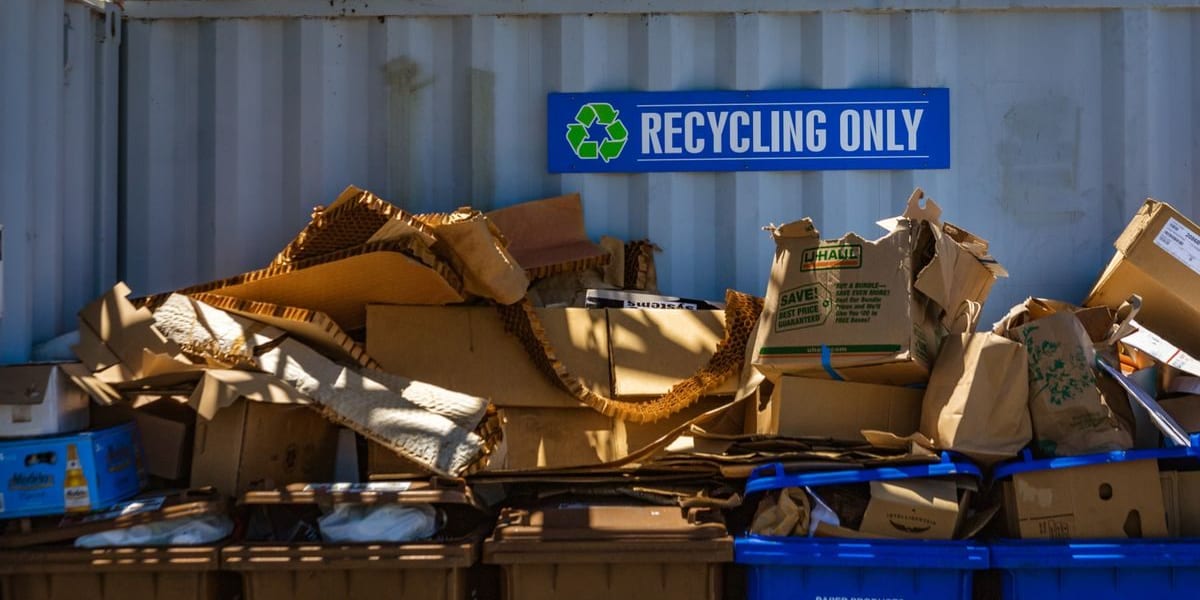
Photo: Robert So / Pexels
Quick summary
The circular economy designs businesses so that resources are used many times over and waste becomes new inputs. For Vietnamese SMEs, viable models include product-as-a-service, remanufacturing, industrial symbiosis, and shared input materials. According to McKinsey, the circular economy could unlock a USD 4.5 trillion global opportunity by 2030.
What is the circular economy?
The circular economy (circular economy) is a model that replaces the linear "take — make — dispose" economy. In this model, materials are kept in the loop of use for as long as possible through recycling, reuse, repair, refurbishment and remanufacturing. According to the Ellen MacArthur Foundation — the pioneering organization on the circular economy — there are 5 core principles:
- Eliminate waste and pollution right from the design stage.
- Keep products and materials in the cycle of use.
- Regenerate nature.
- Decouple economic growth from the consumption of finite resources.
- Create value through cascading loops (cascading value).
Why is the circular economy an opportunity for Vietnamese SMEs?
Vietnam has enacted the 2020 Law on Environmental Protection and Decree 08/2022 with the Extended Producer Responsibility (EPR) mechanism — requiring businesses to take back products after use. At the same time, Decision 687/QĐ-TTg (2022) approved the Scheme for Circular Economy Development, prioritizing SMEs in the garment, footwear, plastics, food, and electronics sectors.
According to McKinsey (2024), the circular economy could unlock an economic opportunity of USD 4.5 trillion globally by 2030. For Vietnamese SMEs, this is a way to reduce dependence on imported raw materials, create value from by-products, and access premium markets.
Four viable circular economy models for SMEs
| Model | How it works | Best-fit sector / example |
|---|---|---|
| Product-as-a-Service | The business leases the product rather than selling it outright, taking responsibility for maintenance and take-back | Office equipment, industrial lighting, forklifts |
| Remanufacturing | Recover used products, disassemble, refurbish usable parts, and reassemble to an as-new standard | Mechanical, electronics, automobile & motorcycle |
| Industrial Symbiosis | The waste of business A becomes an input for business B in the same area | Eco-industrial clusters in Ninh Binh, Can Tho, Da Nang |
| Shared input materials | Multiple SMEs jointly purchase and share raw materials, packaging and equipment | Specialty coffee in Son La (cut material costs 22% for 14 businesses) |
1. Product-as-a-Service
The business does not sell the product outright but leases it and takes responsibility for maintenance and take-back. This suits the office equipment, industrial lighting, and forklift sectors. SMEs gain stable cash flow and control over the product's life cycle.
2. Remanufacturing
Recover used products, disassemble them, refurbish the still-usable parts, and reassemble to an "as-new" standard. Suitable for the mechanical, electronics, and automobile — motorcycle sectors.
3. Industrial Symbiosis
The waste of business A becomes an input for business B in the same area. For example, fly ash from a thermal power plant becomes a cement additive. SMEs can join eco-industrial clusters in Ninh Binh, Can Tho, and Da Nang.
4. Shared input materials
Multiple SMEs jointly purchase and share raw materials, packaging, and equipment. This model has run successfully in the specialty coffee industry in Son La, cutting material costs by 22% for the 14 participating businesses.
Case study: A leather tanning business in Long An
An SME leather tannery in Long An implemented a water circularity model from 2023: investing in a system to treat and reuse wastewater, cutting water supply by 68% and chemical use by 54%. The sludge is supplied to an organic fertilizer plant in the province. Total investment was VND 4.2 billion, recouped within 22 months, while also achieving the LWG (Leather Working Group) certification needed to export to Europe.
A roadmap for SMEs to adopt the circular economy
| Step | What to do |
|---|---|
| 1. Audit material flows | Map the material flow (material flow analysis) to know where waste goes and where inputs come from |
| 2. Identify hot-spots | The 3–5 largest points of resource loss |
| 3. Redesign the product or process | Following the "design for disassembly" principle |
| 4. Find symbiosis partners | Connect within an industrial park or through the SME network |
| 5. Measure & improve | Against circular KPIs (circularity rate) |
Real-world barriers
- Lack of a market for recycled materials — volatile prices.
- The EPR legal framework is still being finalized, and businesses remain hesitant.
- SMEs lack the technical staff to redesign products.
- The upfront investment for water/waste circularity systems is quite large.
How GROW helps SMEs transition to the circular economy
Through the Green Transition Advisory pillar, GROW provides material flow auditing and product redesign services based on circular principles. Through Community Connection, we link SMEs whose waste streams complement each other to build symbiosis models. Read more about green digital transformation.
Frequently asked questions
Is the circular economy any different from recycling?
Recycling is only one part of the circular economy. The circular economy starts at the design stage — how to make a product last long, be repairable, be reusable, and ultimately recyclable. Recycling sits at the end of the loop, whereas circularity aims to reduce waste right from the start.
Should SMEs implement EPR?
EPR is a legal obligation for businesses that manufacture and import products on the mandatory list (packaging, batteries, electronic equipment, lubricants, tires). SMEs in this group must register and pay a financial contribution or organize their own take-back from 2024.
Which model is easiest for Vietnamese SMEs to apply?
Shared input materials and industrial symbiosis are the two easiest models to implement because the investment cost is low, requiring only good coordination between businesses. Product-as-a-service is more suitable for SMEs with durable, high-value products.
Is there any financial support for circular economy projects?
Yes. The National Technology Innovation Fund (NATIF), IFC, ADB, and GCF all have thematic funding packages. In addition, green loans from BIDV and VPBank prioritize circular projects.
How do you measure a business's level of circularity?
A common indicator is the Material Circularity Indicator (MCI) from the Ellen MacArthur Foundation, or simpler metrics such as the share of recycled materials in inputs and the end-of-life product recovery rate. GROW trains SMEs to use these indicators.