Green power for the factory floor: Decree 243/2026 widens Vietnam's DPPA, yet only one customer nationwide buys through the grid
Decree 243/2026/ND-CP, effective 26 June 2026, widens Vietnam's direct power purchase mechanism. As of 15 August 2026 EVNHCMC reported one nationwide customer buying through the national grid — against more than 5,000 rooftop solar registrations.
September 2, 2026 · 18 min read
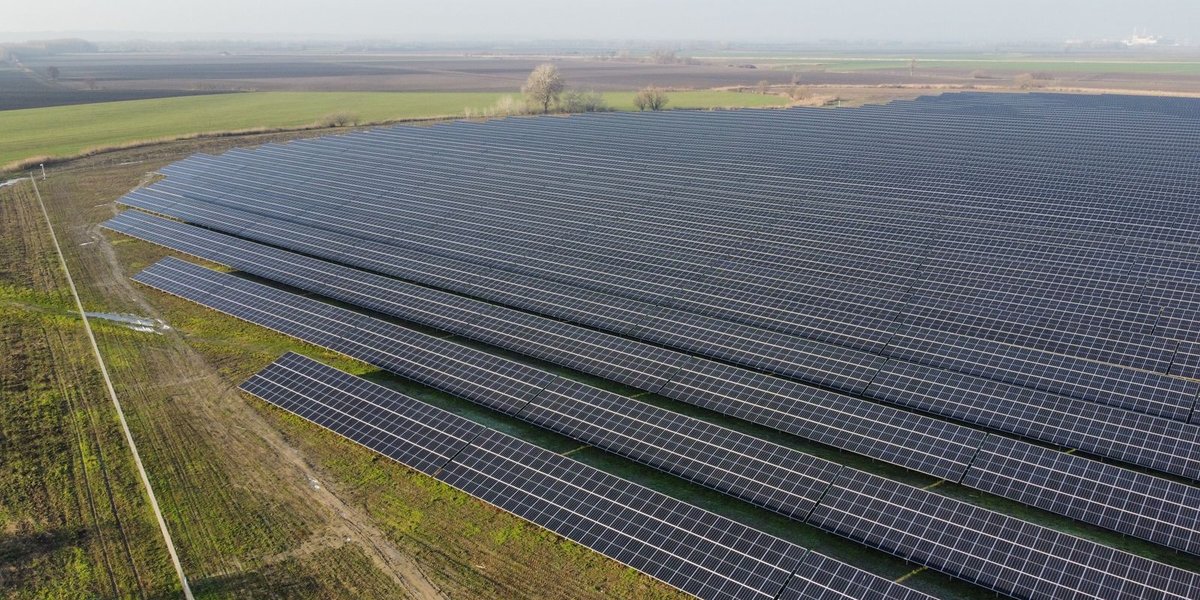
Photo: Anonim Zero / Pexels (free license)
Quick summary
Decree No. 243/2026/ND-CP, issued on 26 June 2026 and effective the same day, amends Decree 57/2025 on the direct power purchase agreement mechanism and Decree 58/2025 on self-produced, self-consumed rooftop solar. It brings electricity retailers inside industrial parks, economic zones and export processing zones into the mechanism, widens the large-consumer category to data centres and electric vehicle charging stations, and resets the rules for selling surplus rooftop solar output. Operating figures released at a forum organised by VCCI and EVNHCMC on 13 August 2026 show how far practice still sits from the legal framework: one customer nationwide participates in DPPA through the national grid, fourteen systems are connected by private line for roughly 600 MW, while EVNHCMC alone has received registrations from more than 5,000 rooftop solar customers totalling about 500 MW. This article reads the Official Gazette full text of Decree 243 directly, checks it against the eligibility conditions in Decree 57, flags one provision that a widely read analysis states backwards, and answers the question small and medium enterprises actually ask: which three routes to renewable electricity are genuinely open, and what green power does and does not change in a greenhouse gas inventory.
Quick answer: Decree No. 243/2026/ND-CP of 26 June 2026 does widen Vietnam's direct power purchase agreement (DPPA) mechanism, but for most small and medium enterprises the realistic route to renewable electricity over the next twelve months is still self-produced, self-consumed rooftop solar, not DPPA. The reason is concrete: as of 15 August 2026, Mr Bui Trung Kien, Deputy General Director of Ho Chi Minh City Power Corporation, told a forum organised by VCCI and EVNHCMC that nationwide there is so far only one customer participating in DPPA through the national grid, as reported by VnEconomy on 15 August 2026.
Last updated: 2 Sep 2026.
The short version for busy readers
Eight things to remember if you only have three minutes, each with its cut-off date and source:
- The governing text: Decree No. 243/2026/ND-CP, issued 26 June 2026, effective the same day, amending Decree 57/2025/ND-CP (DPPA) and Decree 58/2025/ND-CP (self-produced, self-consumed rooftop solar).
- Who may now take part: electricity retailers in zone and cluster models are added to the scope; the large-consumer category is widened to data centres and charging stations, charging posts and battery swap cabinets for electric vehicles.
- Practice as of 15 August 2026: one customer nationwide on grid-connected DPPA; fourteen systems connected by private line, roughly 600 MW in total.
- Rooftop solar looks completely different: EVNHCMC alone has received registrations and notifications from more than 5,000 customers, totalling about 500 MW.
- Grid-connected DPPA is not built for small workshops: the generator must be wind, solar or biomass of 10 MW or more participating directly in the competitive wholesale electricity market, and the buyer must be connected at 22 kV or above.
- The 50 per cent surplus rule is easy to read backwards: the full text sets 50 per cent as the general ceiling, and it is from the decree's effective date until 31 December 2030 that the two sides may agree a ratio above 50 per cent where the local grid can absorb it.
- Green power does not erase emissions: it affects Scope 2 under the market-based method; it does not remove Scope 1 emissions from boilers, trucks or standby generators.
- Do this first: pin down twelve months of electricity consumption and your connection voltage level. Without those two facts nobody can tell you which category you fall into.
Key facts — each line one cut-off date, one authority, one verifiable source:
- 26 June 2026 — Decree No. 243/2026/ND-CP issued and effective the same day; signed by Pham Gia Tuc, per the document record on the Government legal documents portal.
- Article 1 clause 2 of the full text widens the buyer group to large electricity consumers serving production purposes, or serving the operation of data centres, or serving charging stations, charging posts and battery swap cabinets for electric vehicles — Official Gazette PDF, pages 1–2.
- As of 15 August 2026: one grid-connected DPPA customer; fourteen private-line systems at roughly 600 MW; more than 5,000 rooftop solar customers at about 500 MW within EVNHCMC — VnEconomy, 15 August 2026.
- 13 August 2026: the forum on DPPA and energy storage held in Ho Chi Minh City under VCCI's direction, where those figures were released — Nhan Dan, 13 August 2026.
- 4 August 2026: construction started on the Dau Tieng 5 solar plant, described as one of the first projects applying the DPPA mechanism, with commercial operation expected in December 2027 — Bao Xay Dung, 7 August 2026.
Scope note: this article describes rules currently in force and figures already made public. It is not legal advice, not investment advice, and it promises no particular cost saving or emissions reduction for your company. Emission reduction figures quoted here are numbers published by project owners; we attribute them and do not independently verify them.
What Decree 243/2026 actually changed — read from the Official Gazette text
Direct answer: Decree 243/2026/ND-CP does not create a new mechanism, it widens the door on two existing ones. Issued on 26 June 2026 and effective the same day, it simultaneously amends Decree 57/2025/ND-CP on the direct power purchase mechanism and Decree 58/2025/ND-CP on self-produced, self-consumed rooftop solar. We downloaded the digitally signed Official Gazette PDF from the Government document repository and read the body of the decree directly rather than relying on summaries.
The most visible change concerns who is allowed at the table. Article 1 clause 1 rewrites the scope to cover the direct power purchase mechanism between renewable generators, large electricity consumers, and electricity retailers in zone and cluster models. In plain terms, the entity operating electrical infrastructure inside an industrial park can now sit on both the selling and the buying side, rather than merely being the pipe the power travels through. For a factory leasing space inside such a park, this is the single most meaningful change in the whole decree, because it opens the possibility of buying renewable power from the park's own retailer instead of signing a DPPA in your own name.
The second change widens the large-consumer category. The amended point b of clause 2, Article 2 lists buyers on the national grid as large electricity consumers serving production purposes, or serving the operation of data centres, or serving charging stations, charging posts and battery swap cabinets for electric vehicles — in each case buying from power corporations, power companies and electricity retailers, connected at a voltage level of 22 kV or above. The decree also inserts definitions of "data centre" and of the zero-export device into Article 3.
One point deserves to be said plainly: the decree does not lower the consumption threshold at which a company becomes a "large electricity consumer". It adds accepted purposes of use — data centres, charging infrastructure — not smaller sizes. This is where several news reports can mislead a small business. If you are working out whether your plant qualifies, two questions come first: is your connection voltage 22 kV or above, and does your consumption meet the large-consumer threshold set by the Ministry of Industry and Trade under the rules currently in force?
| Area | Previous baseline (Decrees 57/2025 and 58/2025) | After Decree 243/2026 (effective 26 June 2026) |
|---|---|---|
| Scope of the DPPA mechanism | Renewable generators and large electricity consumers | Adds electricity retailers in zone and cluster models |
| Buyers on the national grid | Large consumers serving production; consumers serving EV charging services | Adds data centres; spells out charging stations, posts and battery swap cabinets; keeps the 22 kV or above connection condition |
| Definitions in Article 3 | — | Adds clause 21 zone and cluster models; clause 22 zero-export device; clause 23 data centre |
| Transaction structures inside a park | No role defined for a retailer inside the park | Amended Article 4 permits sales between a renewable generator and the park retailer, and between the park retailer and large consumers |
| Selling surplus rooftop solar output | More tightly capped under Decree 58/2025 | Amended Article 14: general ceiling not exceeding 50 per cent; until 31 December 2030 the parties may agree a ratio above 50 per cent where the local grid can absorb it |
| Rooftop solar capacity measurement | Inconsistent basis | Amended Article 11: measured at the inverter |
Only one customer nationwide buys directly through the national grid
Direct answer: the legal framework has opened, but transaction volume on the grid-connected model is still close to zero. At the forum of 13 August 2026, directed by VCCI and co-organised with EVNHCMC in Ho Chi Minh City, Mr Bui Trung Kien confirmed that nationwide only one customer participates in DPPA through the national grid. On the other model — via a dedicated private line — fourteen systems are connected for roughly 600 MW in total, and have met no obstacles.
The contrasting figure sits with self-produced, self-consumed rooftop solar: also per EVNHCMC, the utility has received registrations and notifications from more than 5,000 customers totalling about 500 MW. In other words, one mechanism has thousands of users and the other has one. If you are a small or medium enterprise deciding where to put time and effort over the next twelve months, that ratio is already an answer.
None of which means DPPA is standing still. On 4 August 2026 Xuan Cau Holdings broke ground on the Dau Tieng 5 solar plant, described as one of the first projects applying the DPPA mechanism, with commercial operation expected in December 2027. Earlier, Samsung Electronics Vietnam Thai Nguyen and the Duc Hue 2 solar plant reached a grid-connected DPPA arrangement effective 1 June 2026. But three details in those very projects explain why SMEs have no part in them yet: the buyer is a very large foreign-invested group, the contracted volume runs to tens of gigawatt-hours a year, and the generator's commercial operation date sits at the end of 2027.
One expert present at the forum said what the figures leave implicit. As reported by VnEconomy, Dr Tran Huynh Ngoc, senior electricity market and power system specialist at AMPERES (Alluvium Group), argued that the operating evidence so far remains a project on paper rather than one genuinely in operation, and that the measure of DPPA's success should not stop at the number of contracts signed but should be the number of transactions running stably and capable of supporting reinvestment. By that criterion, the same report notes, the market is not there yet.
| Indicator | Value | Cut-off / source |
|---|---|---|
| Grid-connected DPPA customers nationwide | 1 | As of 15 Aug 2026, EVNHCMC via VnEconomy |
| DPPA systems via dedicated private line | 14 systems, roughly 600 MW | As of 15 Aug 2026, EVNHCMC via VnEconomy |
| Rooftop solar self-consumption registrations (EVNHCMC area) | more than 5,000 customers, about 500 MW | As of 15 Aug 2026, EVNHCMC via VnEconomy |
| Dau Tieng 5 DPPA project groundbreaking | 4 Aug 2026; commercial operation expected Dec 2027; about 808 GWh a year once operating | Bao Xay Dung, 7 Aug 2026 |
| First grid-connected DPPA arrangement | Samsung Electronics Vietnam Thai Nguyen and Duc Hue 2 solar plant, from 1 Jun 2026; about 70 GWh a year | Bao Xay Dung, 7 Aug 2026 |
| Emissions reduction attached to that arrangement | about 46,000 tonnes CO2 a year — figure published by the company, not independently verified | Bao Xay Dung, 7 Aug 2026 |
Three routes small and medium enterprises can genuinely take
Direct answer: for a typical SME plant the order of feasibility today is rooftop solar first, buying through the industrial park retailer second, direct DPPA last. This is not a ranking by how "green" each route is, but by whether you can realistically sign something this year.
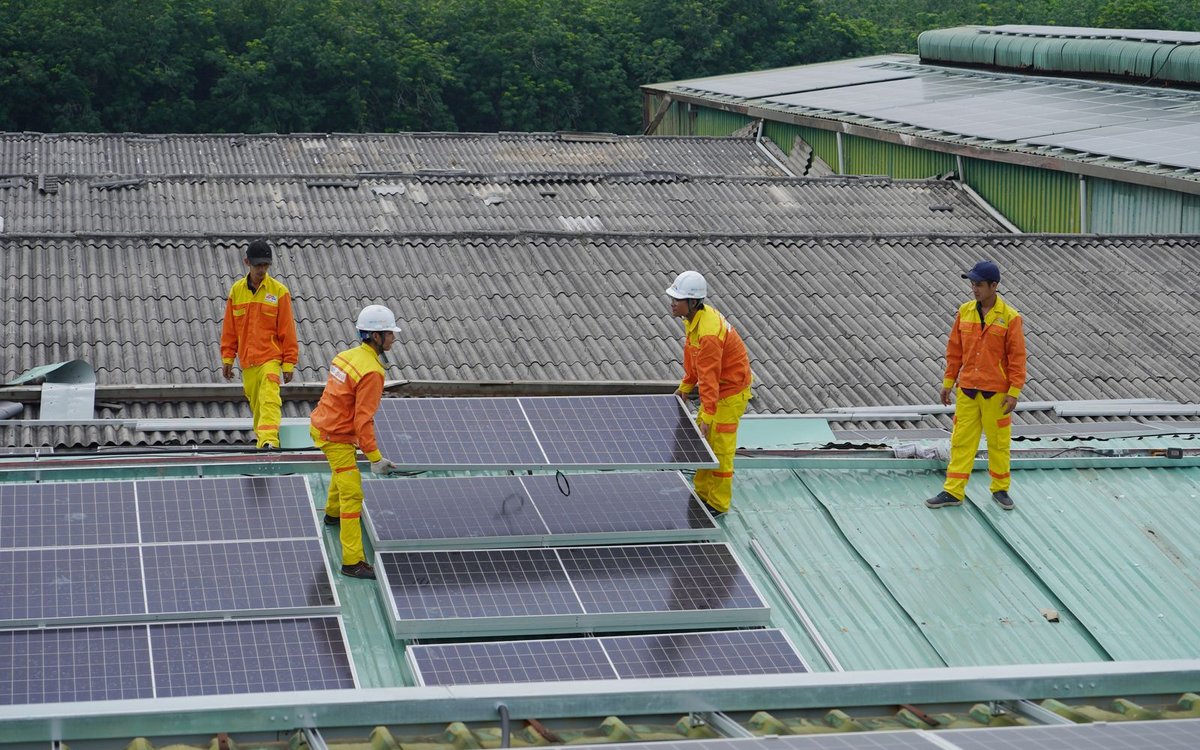
Route one — self-produced, self-consumed rooftop solar. This is the route thousands of businesses and households are actually taking, as the EVNHCMC figures show. After Decree 243, development capacity is measured at the inverter, and surplus output may be sold to the grid under the new rules in the amended Article 14. If you are weighing the investment, we have written separately on the engineering and financial case for self-consumption rooftop solar on an SME factory.
Route two — buying renewable power through the electricity retailer in your zone or cluster. This is precisely the door Decree 243 has just opened. Under the amended Article 4, an industrial park can host several structures: a generator selling directly to customers inside the park; a generator selling to the park's retailer for redistribution; or the retailer investing in its own generation and reselling it. For an SME leasing a workshop inside a park, this is worth raising with park management this quarter, because it does not require you to qualify as a large electricity consumer yourself.
Route three — direct DPPA. Feasible if you are connected at 22 kV or above, meet the large-consumer threshold, and can find an eligible generator. On the grid-connected model the generator must be wind, solar or biomass of 10 MW or more, connected to the national power system and participating directly in the competitive wholesale market. The private-line model is more flexible on generator conditions but demands dedicated line infrastructure, which in practice tends to work only when the generator sits beside the plant.
One caution so you do not fool yourself: all three routes are about buying electricity, not about using less of it. For most factories the cheapest and most certain emissions reduction still sits in efficiency — compressed air leaks, motors running under load, boiler heat losses. If that work is not done, read our piece on factory energy efficiency under ISO 50001 before signing any power contract.
| Route | Main conditions | Who is taking it today | Feasibility in 2026 (GROW assessment) |
|---|---|---|---|
| Self-produced, self-consumed rooftop solar | A roof with adequate load capacity; capacity measured at the inverter; acceptance testing, electrical safety and fire safety compliance before commissioning | More than 5,000 registrations in the EVNHCMC area alone | High |
| Buying through the zone or cluster electricity retailer | Plant located in an industrial park, economic zone, export processing zone or industrial cluster with a licensed electricity retailer | Mechanism opened on 26 June 2026; depends on each park's management | Medium — ask park management now |
| DPPA through the national grid | Buyer connected at 22 kV or above and within the large-consumer category; generator wind, solar or biomass of 10 MW or more participating in the competitive wholesale market | 1 customer nationwide as of 15 Aug 2026 | Low for a typical SME |
| DPPA through a dedicated private line | A private connecting line between generator and buyer; Decree 243 removes the negotiation price ceiling on this model | 14 systems, about 600 MW | Low unless the generator sits beside the plant |
The 50 per cent surplus rule: a provision that is easy to read backwards
Direct answer: 50 per cent is the general ceiling, and the window in which the parties may agree above 50 per cent runs from now until 31 December 2030 — not after 2030. We could only settle this by opening the Official Gazette PDF. One widely read analysis — Vietnam Energy Magazine, 5 July 2026 — presents it the other way round ("until the end of 2030 … a maximum of 50 per cent … after 2030 the ratio may exceed 50 per cent"); we compare only against the full text and do not generalise to other articles.
The full text of Article 2 clause 8 of Decree 243/2026/ND-CP, amending Article 14 of Decree 58/2025/ND-CP, reads as follows. Clause 2 point a: surplus output is traded by agreement between the two parties but not exceeding 50 per cent of the electricity generated at the output of the rooftop solar source according to irradiance. Immediately after, clause 2 point b: from the effective date of this Decree until the end of 31 December 2030, the two parties may agree to trade surplus output at a ratio higher than 50 per cent of the electricity generated at the output of the rooftop solar source according to irradiance, where the grid in the connection area can ensure absorption capacity.
Read side by side, the structure is clear: the law sets a 50 per cent ceiling and simultaneously opens a time-limited window to the end of 2030 in which the parties may agree above it, provided the local grid can absorb the power and the trade meets safe system operation conditions. The practical meaning for a factory owner: if you intend to install rooftop solar and want to exploit a high surplus-sale ratio, that window has an expiry date, and the ratio you actually obtain still depends on absorption capacity at your specific connection point — something only the local utility can answer.
The decree also sets out a formula for output at the source according to irradiance, using a PVout coefficient published by Vietnam Electricity after consulting the Ministry of Industry and Trade. Which means the volume you may sell is not self-declared: it is computed from a coefficient published for the province or city where the system sits. That is an anti-inflation rule, and it is also why sales pitches promising to "sell all your surplus and recover capital fast" deserve a very careful second reading.
What green power changes in your emissions inventory, and what it does not
Direct answer: buying renewable electricity affects Scope 2 under the market-based method and leaves your Scope 1 emissions untouched. This is where overclaiming starts, so it is worth stating precisely.
A factory's greenhouse gas emissions fall into three groups. Scope 1 is direct emissions from sources the company owns or controls — coal or oil-fired boilers, diesel forklifts, standby generators, refrigerant leaks. Scope 2 is indirect emissions from purchased electricity. Scope 3 is everything else in the value chain. We separated the three in our article on Scope 1-2-3 greenhouse gas inventories for SMEs.
A renewable power contract touches Scope 2 only. The GHG Protocol Scope 2 Guidance sets out "Eight Scope 2 Quality Criteria that all contractual instruments must meet in order to be a reliable data source for the scope 2 market-based method". Put simply: a renewable power contract only enters your reported figures if it satisfies criteria on certification, uniqueness, vintage and matching market — signing is not by itself sufficient.
Three practical consequences we advise companies to write into their internal file. First, when a customer or a bank asks about your emissions, be ready with both the grid-average figure and the market-based figure, plus the contractual evidence — do not present only the flattering number. Second, do not convert a power contract into an absolute claim such as "100 per cent green factory" or "zero-emission product": boilers, internal trucks and standby generators remain squarely in Scope 1. Third, every emissions reduction figure in your marketing material must trace back to a calculation someone can reopen, and any figure supplied by a solution vendor must be labelled as the vendor's.
This is not theoretical. In the August 2026 news cycle, figures such as "about 46,000 tonnes of CO2" attached to a foreign-invested group's DPPA arrangement, or "over 26,000 tonnes of CO2" attached to a 28 MWp rooftop solar project at the Ho Chi Minh City Hi-Tech Park, are figures published by the project owners and repeated by the press. They help convey scale, but they are no substitute for an inventory of your own plant.
What is still blocking the market: price, cash flow and connection
Direct answer: the biggest constraint on DPPA today is not missing regulation but generator project cash flow that is not yet solid enough to raise finance against. That theme runs consistently through all three reports of the 13 August 2026 forum.
As reported by VnEconomy, Dr Tran Huynh Ngoc explained that the grid-connected DPPA model carries a far more complex cash flow structure than selling straight to EVN, because three flows run at once: the renewable plant selling into the spot market, the contract-for-difference flow, and the large customer buying electricity from EVN. He grouped the risks into three families — price and fees, volume, and contract — with the price family moving every half hour on the spot market and annually or quarterly on retail tariffs.
The part most relevant to business readers is the two price scenarios presented at the forum. They should be read for what they are: an expert's simulation, not rules currently in force, and the report itself notes these are scenarios that have not yet materialised legally.
| Scenario | Assumption | CFD negotiation band |
|---|---|---|
| Current reference | At present price levels | about VND 1,600/kWh |
| New time-of-use bands under Decision 963/QD-BCT | Prices unchanged at current levels; peak hours no longer coincide with solar hours | falls to about VND 1,200/kWh (roughly 25 per cent lower) |
| Two-component tariff applied | System service costs unchanged | may fall as far as about VND 860/kWh |
| Two-component tariff applied | System service costs about 10 per cent lower | about VND 1,200/kWh |
Beyond price, the reports list a series of unresolved technical gaps: internal losses inside industrial parks, metering discrepancies between seller and buyer, allocation of system upgrade or SCADA costs, and in particular the absence of any dispute resolution mechanism for allocating renewable output within an industrial park, per Nhan Dan of 13 August 2026. For an SME planning to buy through a park retailer, that is exactly the clause to read hardest: when there is not enough renewable output to go around, who has priority and on what basis.
It is also worth recording what remains unsettled. The forum called for publishing an electricity price roadmap and historical operating data, building an economic mechanism for renewable projects paired with battery storage inside industrial parks, and synchronising transmission grid delivery with generation build-out. These are recommendations, not adopted policy — we note them so you can follow them, not so you can plan around them.
What an SME should do in the next 90 days
Direct answer: do three data tasks first, then ask about price. The order matters, because almost every conversation about DPPA or rooftop solar stalls on the company not having the numbers to hand.
Task one — build a twelve-month electricity consumption file. Pull the last twelve electricity bills, split volume by time band if your meter records it, and note the connection voltage level stated in your existing power purchase contract. The two facts "average monthly consumption" and "connection voltage" decide which row of Table 3 you sit in — without them every answer is guesswork.
Task two — ask industrial park management one very specific question. Namely: "Does the park have an electricity retailer licensed for retail supply within the park, and does that retailer plan to join the direct power purchase mechanism under Decree 243/2026/ND-CP?" If the answer is yes, you are closest to the door of the three routes. If it is no, you know immediately to redirect effort towards rooftop solar.
Task three — survey the roof and the grid's absorption capacity. For rooftop solar the two decisive technical questions are how much load the roof structure can carry and how much the grid at your connection point can absorb. Only the local utility can answer the second, and it directly determines whether you can use the above-50-per-cent surplus window that runs to the end of 2030.
Only after those three tasks does the specialist work begin: translating the chosen option into figures in your greenhouse gas inventory and in the file you send customers. If your export customers are asking about renewable energy share and emissions reduction pathways, GROW's green transition advisory team can review your existing file and identify the gaps before you sign any power contract; you can contact GROW to arrange a conversation. We do not sell solar equipment and do not represent any project developer — our work stops at data and documentation.
The closing point: as of 15 August 2026 Vietnam's direct power purchase mechanism through the national grid had exactly one customer, while more than 5,000 customers had registered self-consumption rooftop solar in the EVNHCMC area alone — so for a small or medium enterprise in 2026 the right question is not "how do I sign a DPPA" but "how much can my factory roof carry, and how much can the grid at my connection point absorb".
Frequently asked questions
When did Decree 243/2026/ND-CP take effect?
Decree No. 243/2026/ND-CP was issued on 26 June 2026 and took effect on the same day, per the document record on the Government legal documents portal. It amends and supplements a number of articles of Decree 57/2025/ND-CP on the direct power purchase mechanism and Decree 58/2025/ND-CP on the development of renewable and new energy electricity.
Can a small business buy power directly under the DPPA mechanism?
Mostly not yet. Decree 243/2026/ND-CP widens the large-consumer category to data centres and to charging stations, posts and battery swap cabinets for electric vehicles, but it does not lower the size threshold at which a company becomes a large electricity consumer. On the grid-connected model the buyer must be connected at 22 kV or above and the generator must be wind, solar or biomass of 10 MW or more participating in the competitive wholesale market. As of 15 August 2026 there was one such customer nationwide.
What does Decree 243 mean for a factory leasing space in an industrial park?
This is the clearest beneficiary group. The decree brings electricity retailers in zone and cluster models into scope and permits several transaction structures inside a park, so a company can buy renewable power through the park's retailer instead of signing a DPPA in its own name. The practical step is to ask park management whether the park retailer plans to join the mechanism.
How much surplus rooftop solar output may be sold?
Under Article 14 of Decree 58/2025/ND-CP as amended by Decree 243/2026/ND-CP, surplus output is traded by agreement but must not exceed 50 per cent of the electricity generated at the source output according to irradiance. Specifically, from the effective date of Decree 243 until the end of 31 December 2030, the parties may agree a ratio above 50 per cent where the grid in the connection area can ensure absorption capacity and the trade meets safe grid operation conditions.
Does buying renewable power erase a factory's emissions?
No. A renewable power contract affects Scope 2 emissions under the market-based method, and only where the contractual instrument meets the quality criteria set out in the GHG Protocol Scope 2 Guidance. Scope 1 emissions from boilers, internal vehicles, standby generators and refrigerant leaks remain unchanged. A power contract should therefore never be converted into an absolute claim such as a 100 per cent green factory.
Are the emissions reduction figures in DPPA news reliable?
They need to be read with their source. Figures such as about 46,000 tonnes of CO2 a year attached to the Samsung Electronics Vietnam Thai Nguyen arrangement, or over 26,000 tonnes attached to the 28 MWp rooftop solar project at the Ho Chi Minh City Hi-Tech Park, are numbers published by the project owners and repeated by the press, not independently verified results. They are useful for a sense of scale but do not replace an inventory of your own plant.
References
- Nghị định số 243/2026/NĐ-CP — trang thuộc tính văn bản, Hệ thống văn bản pháp quy Chính phủ (ban hành 26/6/2026, hiệu lực 26/6/2026)
- Nghị định số 243/2026/NĐ-CP — toàn văn PDF Công báo có chữ ký số, kho văn bản Chính phủ (76 trang, bản quét)
- Nghị định số 57/2025/NĐ-CP về cơ chế mua bán điện trực tiếp — giới thiệu đối tượng áp dụng, Cổng thông tin Tập đoàn Điện lực Việt Nam
- VnEconomy, 15/8/2026 — Thị trường cần minh bạch và hoàn thiện hơn để DPPA phát huy hiệu quả (số liệu EVNHCMC, phân tích kịch bản giá)
- Báo Nhân Dân, 13/8/2026 — Gỡ điểm nghẽn trong mua bán điện trực tiếp để xanh hóa chuỗi cung ứng
- Diễn đàn Doanh nghiệp, 13/8/2026 — Cơ chế DPPA: Hóa giải rủi ro dòng tiền từ chính sách giá mới
- Báo Xây dựng, 7/8/2026 — Tăng tốc mua bán điện trực tiếp, mở rộng cạnh tranh trên thị trường điện
- Tạp chí Năng lượng Việt Nam, 5/7/2026 — Điểm mới của Nghị định 243 về điện mặt trời mái nhà, DPPA và các bước tổ chức thực hiện
- GHG Protocol — Scope 2 Guidance (tám tiêu chí chất lượng cho công cụ hợp đồng dùng trong phương pháp thị trường)