Vietnam's carbon exchange after two months: 511 million tonnes allocated, 1,210 tonnes ever traded — how SMEs should read that
As of 14 August 2026, HNX data shows the VN2025 code has traded just 1,210 tCO2e against 511.47 million tonnes allocated. Here is what that means for SMEs.
August 24, 2026 · 19 min read
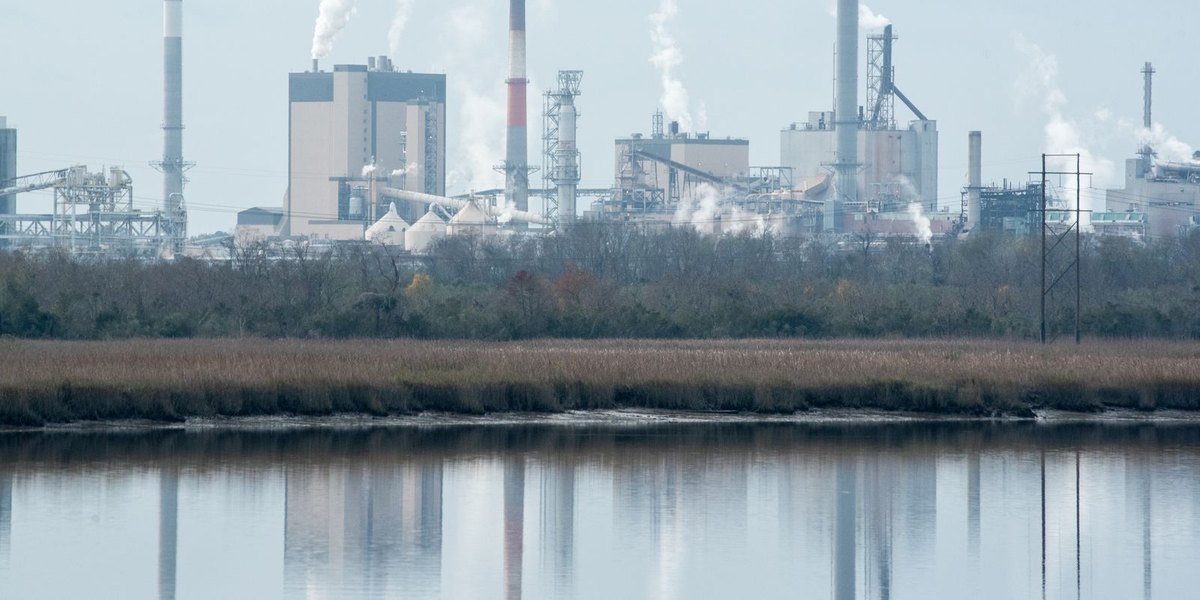
Photo: Dominik Gryzbon / Pexels (free license)
Quick summary
Vietnam's domestic carbon exchange opened on 29 June 2026 at the Hanoi Stock Exchange, with greenhouse gas emission allowances under the code VN2025 as its first listed product. According to HNX data as at 14 August 2026, the entire volume ever matched remains the 1,210 tCO2e of the opening session, worth VND161.66 million; July and August recorded zero. Against the 511.47 million tonnes of CO2 equivalent allocated to VN2025, that is roughly 0.00024%. This article places that figure alongside the Vietnam Carbon Forum 2026 held in Ho Chi Minh City on 14 August by the Ministry of Agriculture and Environment, gathers the named explanations for the thin liquidity, and answers the question only small and medium enterprises ask: if I am not one of the 110 facilities holding allowances, what does this news mean for me. It does not forecast carbon prices, does not recommend buying or selling, and states plainly that the carbon-credit project section of the HNX product file records no data yet — which makes any pitch to do ESG so you can sell credits for quick cash a pitch made at the wrong time.
Quick answer: Vietnam's domestic carbon exchange is open, but it is not yet a real selling channel for small and medium enterprises. According to Hanoi Stock Exchange (HNX) data as at 14 August 2026, the VN2025 allowance code has matched exactly 1,210 tonnes of CO2 equivalent, all of it in the opening session on 29 June, worth VND161.66 million — roughly 0.00024% of the 511.47 million tonnes allocated, as reported by Dan Tri on 19 August 2026. The right move now is not to wait for a price. It is to build a defensible emissions dataset.
Last updated: 24 Aug 2026.
The short version for busy readers
Eight things to remember if you only have three minutes, each with its own cut-off date:
- The exchange is genuinely open: launched 29 June 2026 at HNX, first product the VN2025 emission allowance, tradable until 24 December 2027.
- Liquidity is close to zero: as at the 14 August 2026 cut-off, cumulative matched volume is still the 1,210 tCO2e of the opening session; July and August recorded nothing.
- The denominator is very large: 511.47 million tonnes of CO2 equivalent were allocated for the 2025-2026 compliance cycle, so traded volume is about 0.00024% of it.
- Today's participants are not SMEs: 110 facilities across thermal power, cement and steel hold pilot allowances; 92 organisations have registered on the market.
- Carbon credits are not listed yet: the carbon-credit project section of the HNX product file records no data.
- A first domestic price reference exists: VND130,000–136,000 per tCO2e recorded on 29 June — a reference point, not a forecast.
- Two technical caps matter: credits may offset no more than 30% of allocated allowances, and firms may borrow at most 15% of the next period's allowances.
- What SMEs should do now: inventory and standardise emissions data, not hunt for prices. Without verifiable data there is no position to trade.
Key facts — each with a cut-off date, an issuing body and a source you can check:
- As at the 14 August 2026 cut-off, per HNX statistics: "In July, trading volume fell to zero, meaning trading value was also zero. In August, as at the 14 August update, that had not changed" (translated) — Dan Tri, 19 August 2026.
- Opening session, 29 June 2026: "Allowance prices reached as high as VND136,000 ($5.17) per ton of carbon dioxide equivalent (CO2e) before closing at VND130,000 ($4.95) per ton. More than 1,200 tons of CO2e were traded on the first day, with a total transaction value of VND161.7 million ($6,150)" — The Investor, 15 August 2026.
- No trades since: "Since the opening session, however, the VN2025 allowance code has recorded no additional trading volume or value, while the system has yet to record a closing price, according to data from HNX's carbon trading portal" — Viet Nam News, 22 August 2026.
- Who is in the pilot: "About 92 companies engaging in these industries are participating in the pilot, including major industrial groups such as Hoa Phat, Formosa, EVN, PV Power, and Vicem", with allowances held by about 110 large-emitting facilities in thermal power, steel and cement — The Investor, 15 August 2026.
- The legal basis of the exchange: Decree No. 29/2026/ND-CP on the domestic carbon exchange, issued and effective on 19 January 2026, signed by Tran Hong Ha — record on the Government legal document system (Vietnamese-language official gazette).
Scope note: this article describes and explains published market data. It is not investment advice, not a recommendation to buy or sell allowances or carbon credits, and contains no price forecast. Any trading decision should go through an authorised trading member and rest on professional advice fitted to your own situation.

Vietnam's carbon exchange after two months: the numbers as at 14 August 2026
Straight answer: the system runs, but almost nothing has traded since the opening bell. The domestic carbon exchange launched on 29 June 2026 at the Hanoi Stock Exchange, listing greenhouse gas emission allowances for the 2025-2026 compliance cycle under the code VN2025. Per HNX statistics updated to 14 August 2026, June recorded 1,210 tonnes of CO2 equivalent traded at a value of VND161.66 million — and that remains the entire volume recorded since the market opened. July fell to zero, and as at the 14 August update the situation had not changed.
Set against the denominator, the number becomes very small indeed. Dan Tri, citing HNX data on 19 August 2026, put it at roughly 0.00024% of the 511.47 million tonnes of CO2 equivalent allocated to the VN2025 code. If you picture the whole compliance-cycle allocation as a reservoir, the volume that has passed through the exchange would not fill a glass. That is a data point, not a verdict — and the rest of this article keeps the two apart.
On price, the opening session closed at VND130,000 per tCO2e with a high of VND136,000, on total turnover of VND161.7 million. One technical detail deserves attention: because no further trades have occurred, the system has yet to record a closing price since, according to Viet Nam News on 22 August 2026 citing the HNX carbon trading portal. That means the VND130,000–136,000 range is the trace of a single session, not a price level being re-confirmed by daily supply and demand.
A further point often missed: the only product trading is the emission allowance, not carbon credits. Dan Tri notes explicitly that on the HNX product file, the section covering carbon-credit projects records no data. For a small or medium enterprise, that is the single most important sentence in the whole news cycle — and we return to it in the section on the "do ESG and sell credits" pitch.
| Item | Value | Cut-off / source |
|---|---|---|
| Exchange launch date | 29 June 2026 | HNX, via Dan Tri 19 Aug 2026 |
| Product currently trading | VN2025 (emission allowance, 2025-2026 compliance cycle) | HNX, via Dan Tri 19 Aug 2026 |
| Total allocation under VN2025 | 511.47 million tCO2e | HNX, via Dan Tri 19 Aug 2026 |
| Cumulative matched volume | 1,210 tCO2e — all in the 29 June session | Cut-off 14 Aug 2026, HNX statistics |
| Cumulative traded value | VND161.66 million | Cut-off 14 Aug 2026, HNX statistics |
| Share of allocation traded | about 0.00024% | Dan Tri 19 Aug 2026, citing HNX |
| July and August volume | 0 | To 14 Aug 2026, HNX statistics |
| Opening session price | close VND130,000/tCO2e; high VND136,000/tCO2e | The Investor, 15 Aug 2026 |
| Last trading day for VN2025 | 24 December 2027 | The Investor, 15 Aug 2026 |
| Facilities holding pilot allowances | about 110, in thermal power, steel and cement | The Investor, 15 Aug 2026 |
| Organisations registered on the market | 92 | The Investor, 15 Aug 2026 |
| Carbon-credit project data on the HNX product file | no data recorded | Dan Tri, 19 Aug 2026 |
Why almost nothing trades: the named explanations on the record
Straight answer: at least five distinct explanations have been offered publicly by people inside the market, and they do not exclude one another. We list each with the person who said it and the date, rather than picking a single conclusion, because with a two-month-old market choosing an answer in advance is the fastest way to get it wrong.
The first explanation is a shortage of product. Viet Nam News on 22 August 2026 reports that only a limited number of carbon credits are currently eligible for listing and trading, and that while credit transactions do happen, the standardisation needed to bring such products onto an exchange has not been implemented at scale. The Investor adds a concrete timeline: companies seeking to list international credits from projects transitioning out of the clean development mechanism are expected to need another six to eight months to complete the required procedures.
The second explanation is companies do not yet know whether they are long or short. Viet Nam News puts it plainly: "Most enterprises are still completing greenhouse gas inventories, assessing their quota requirements and familiarising themselves with trading procedures, meaning sustained demand for buying and selling allowances has yet to emerge." This is the explanation that matters most to a business reader, because it says the bottleneck sits in data, not in the exchange.
The third is what early carbon markets simply look like. Nguyen The Minh, director of the investment banking division at An Binh Securities, speaking at the Vietnam Carbon Forum 2026 and quoted by The Investor, said low liquidity is not unique to Vietnam and is a feature of many carbon markets around the world, including in Europe, adding that weak liquidity can make companies and financial intermediaries more cautious about participating. He compared the situation with the early days of Vietnam's stock market, when only two companies were listed.
The fourth is the trading mechanism itself. Carbon transactions are conducted through negotiated deals, with buyers and sellers agreeing price, volume and other terms before completing the transaction, rather than through the continuous order matching used in equities — which, as The Investor notes, means trading frequency is likely to stay relatively low in the early stages. The fifth is market microstructure: with only six securities firms serving as carbon trading members and trading confined to two daily sessions, the number of realistic counterparties on any given day is small.
None of these five is an official verdict, and we do not rank them. What they share is a common implication for a company outside the pilot: the constraint is not access to a screen, it is the absence of standardised, verified emissions data on both sides of a potential trade.
| Explanation | Substance | Speaker / source, date |
|---|---|---|
| Shortage of product | Few credits eligible for listing; international transition credits need another six to eight months of procedure | Viet Nam News, 22 Aug 2026; The Investor, 15 Aug 2026 |
| Position unknown | Most firms are still completing GHG inventories and assessing quota needs | Viet Nam News, 22 Aug 2026 |
| Normal for an early carbon market | Low liquidity is a feature of many carbon markets, Europe included | Nguyen The Minh, An Binh Securities — The Investor, 15 Aug 2026 |
| Negotiated trading mechanism | Parties agree terms before entering orders; no continuous matching | The Investor, 15 Aug 2026 |
| Thin market microstructure | Six securities firms as trading members; two trading sessions a day | Viet Nam News, 22 Aug 2026 and 14 Aug 2026 |

Emissions data decides whether you are a buyer or a seller
Straight answer: without verified inventory data there is no position to trade, whether or not an exchange exists. This is where the whole mid-August news cycle converges, and it is also the only part a company can control today. Every credible account of the market puts the inventory first: your position depends entirely on the gap between actual verified emissions and the allowances you hold, and a company that cannot measure the first half of that equation has nothing to bring to the second.
The argument does not apply only to the 110 facilities holding allowances. It applies to any company that wants a voice in any carbon-related conversation, including one that happens inside a supply contract rather than on a screen. Nguyen Ngoc Tung of the VinaCarbon Fund under VinaCapital, speaking at the forum and quoted by VietnamPlus on 19 August 2026, framed the requirement as follows: "Measurement, reporting and verification (MRV) systems must provide clear, traceable data, transparent calculation methods and independently verified results." Data that is not standardised cannot be traded and cannot be negotiated over either.
We have written separately about Scope 1, 2 and 3 boundaries and how to build a baseline dataset in our piece on greenhouse gas inventories across Scope 1, 2 and 3 for SMEs, so here we press only one point: the correct order is data first, market second. A great many calls our advisory team took in August began with a question about price and ended with the discovery that the company had no twelve months of electricity consumption recorded in physical units. That is a consulting observation from GROW, not survey data.
One practical suggestion raised during the mid-August coverage and worth adopting: build a carbon balance sheet — putting estimated emissions, allowances if you hold any, and abatement costs side by side under several price scenarios, rather than merely estimating how many credits you might sell. The same coverage makes the cheapest recommendation of all, and the one most often skipped: get control of electricity consumption before considering any clean-energy investment.
If your company is not one of the 110 facilities, why does this matter
Straight answer: through three channels — your supply chain, the different participation rights attached to allowances versus credits, and the first domestic price reference in existence. Start with what is not true: small and medium enterprises are not among the entities receiving pilot allowances. Allowances went to about 110 large-emitting facilities in thermal power, steel and cement, according to The Investor of 15 August 2026. If you are not in those sectors at that scale, you hold no allowance, and therefore have no surplus to sell.
The first channel is the supply chain. Those three sectors are inputs to almost every manufacturing and construction activity in Vietnam. Once a cement plant or a steel mill must surrender allowances matching verified emissions, the pressure for data travels down the contract: your customer needs to know the emissions intensity of what they buy from you. We unpack how that requirement propagates in our article on green supply chains for SMEs.
The second channel is participation rights, a legal detail rarely mentioned but material for SMEs. Viet Nam News on 22 August 2026 reports the HNX position directly: "Only facilities and organisations allocated emission quotas by the State can trade allowances, while carbon-credit trading is open to all organisations operating in Việt Nam." In other words, the door for SMEs is on the credit side — and that is precisely the door with no stock behind it, since the HNX product file records no carbon-credit project data.
The third channel is the price reference, covered in the next section. Before that, one placement note: if you are still unsure how an allowance differs from a credit and what the legal foundation looks like, read our earlier piece on Vietnam's carbon market: allowances, credits and where SMEs stand first. This article is an operating-data update laid on top of that groundwork, not a replacement for it.
| Instrument | Who may trade it | Status at the 14 Aug 2026 cut-off | What it means for an SME |
|---|---|---|---|
| Emission allowance (VN2025) | Only facilities and organisations allocated quotas by the State | Trading; 1,210 tCO2e cumulative | A typical SME is not in this group |
| Carbon credit | All organisations operating in Vietnam | No project data recorded on the HNX product file | Door open in principle, no stock to sell |
| Access route | Accounts opened and orders placed through trading members, which are securities firms under the Vietnam Stock Exchange | Six securities firms serve as carbon trading members | You cannot trade directly with HNX |
A first domestic carbon price reference, and how to use it honestly
Straight answer: the VND130,000–136,000 per tCO2e recorded on 29 June 2026 is a reference for your own internal arithmetic, not a live market price. The distinction matters enough to spend a paragraph on. A live price is one re-established continuously by supply and demand; here, the system has not even recorded a closing price since the opening session, per Viet Nam News of 22 August 2026. Any sentence beginning "the current price of carbon in Vietnam is…" therefore needs a question mark after it.
So what is it good for? Exactly one thing: turning emissions into money inside your own investment case. Before 29 June 2026, a plant manager arguing that a waste-heat recovery project was worth funding had to borrow an EU price or a voluntary-market price — numbers that mean little to a Vietnamese board. Since that date there is a figure formed on HNX infrastructure, denominated in dong, that can go into a spreadsheet. When each tonne of CO2e carries a specific number, a company can compare the cost of an abatement technology directly against the cost of buying allowances.
But use it conservatively. We suggest three rules. First, always write the cut-off next to the number in internal documents — "VND130,000–136,000 per tCO2e, session of 29 June 2026, source HNX" — so nobody six months later reads it as the current price. Second, run scenarios, not a point estimate: if your investment decision is only correct at one exact price, it is not yet a sound decision. Third, do not put credit sales revenue into a financial case before you have a verified project, for reasons the next-but-one section sets out.
For a company weighing an energy efficiency investment, this price reference is an additional variable rather than a decisive one. Most of the value in an efficiency project still sits in the electricity bill you avoid, and we set out that calculation in our article on factory energy efficiency and ISO 50001 for SMEs. If a project only pays back on a carbon-price assumption, revisit the project.
Three things you should not conclude from 1,210 tonnes
Straight answer: a small number does not by itself prove anything about policy, about future prices, or about your company's opportunity. We include this section because all three inferences have appeared in industry groups and sales decks over the past fortnight, and none of them survives contact with the available data.
First inference to avoid: "a quiet exchange means the policy failed." The data tells you that matched volume was low in the first two months, as at the 14 August 2026 cut-off. It tells you nothing about whether the infrastructure works — and on that point the participants say the opposite. Nguyen Tuan Anh, deputy general director of HNX, told the forum that the top priority is ensuring the trading system operates safely and smoothly and stays integrated with the Vietnam Securities Depository and Clearing Corporation and the national registration system, and that HNX plans to add online trading channels. Judging infrastructure by second-month turnover is the wrong instrument.
Second inference to avoid: "prices will rise because supply is tight" — or the reverse. This article makes no price forecast and advises scepticism toward any document that does. The present structure of the market — one listed instrument, negotiated trading, allowances allocated free of charge — makes any extrapolation from a single session statistically meaningless. In an early market without price bands, an erroneous price that the counterparty confirms is still recorded as a valid trade, and a completed transaction cannot be amended or cancelled.
Third inference to avoid, and the most dangerous: "the market is quiet, so there is no need to prepare." This reverses the lesson of every compliance market. Activity concentrates near the end of the compliance period, once companies have finished their inventories and know how short they are. Vietnam's own timetable points the same way: the inventory report for the 2025-2026 compliance cycle is due before 1 December 2027 and allowances must be surrendered before 31 December 2027, while VN2025 trades until 24 December 2027. Whoever starts building data at that point will be buying from a position of weakness.
The legal framework behind the exchange: four instruments worth knowing by name
Straight answer: the exchange is not a market initiative, it is an institution created by instrument, and the four below are the minimum framework. We cite only documents whose records we were able to open on the Government legal document system, and we flag the ones we could not reach, so you can see the boundary of this article.
The founding instrument is Decision No. 232/QD-TTg of 24 January 2025, by which the Prime Minister approved the scheme for establishing and developing a carbon market in Vietnam, signed by Tran Hong Ha — record on the Government legal document system. It sets the policy and the roadmap. Next comes Decree No. 29/2026/ND-CP on the domestic carbon exchange, issued and effective on the same day, 19 January 2026, also signed by Tran Hong Ha — this is the instrument governing how the exchange operates; see the record on the Government system.
At the supervision layer, Circular No. 48/2026/TT-BTC of 12 May 2026, issued by the Ministry of Finance, guides the supervision of allowance and carbon-credit trading on the exchange and the reporting duties of the stock exchange and the depository towards the State Securities Commission — record on the Government system. On the international side, reporting from the forum indicates that Decree 112/2026/ND-CP, issued on 1 April 2026 and effective from 19 May 2026, created the legal framework for international transfers of emission reduction outcomes and carbon credits under Article 6 of the Paris Agreement.
Two further instruments are named in press coverage but we could not open the originals, so we report them as coverage rather than as documents we have read: Dan Tri of 21 August 2026 writes that under Decision No. 699 of the Ministry of Agriculture and Environment, implementing Decision 263 of the Prime Minister, 110 large-emitting facilities received pilot allowances for 2025-2026 totalling 511,473,846 tCO2e. That total matches the 511.47 million tonnes shown on the HNX product file, but you should verify the instrument numbers yourself before quoting them in your own legal documents.
| Instrument | Date issued | Subject | Issuing body |
|---|---|---|---|
| Decision 232/QD-TTg | 24 Jan 2025 | Approving the scheme to establish and develop a carbon market in Vietnam | Prime Minister |
| Decree 29/2026/ND-CP | 19 Jan 2026 (effective same day) | The domestic carbon exchange | Government |
| Circular 48/2026/TT-BTC | 12 May 2026 (effective same day) | Supervision of allowance and credit trading; reporting to the State Securities Commission | Ministry of Finance |
| Decree 112/2026/ND-CP (per forum reporting, 14 Aug 2026) | issued 1 Apr 2026, effective 19 May 2026 | Framework for international transfer of emission reduction outcomes and carbon credits | Government |
Dates an SME should put in the calendar now
Straight answer: the pilot runs to the end of 2028 and the market goes fully operational from 2029 — which gives you about two years to prepare, not ten. Under the roadmap presented at the forum and reported by Viet Nam News on 14 August 2026, the pilot market applies to about 150 major emitting businesses across thermal power, steel and cement, with allowances allocated free of charge for a period, and at the end of each compliance period businesses must surrender allowances corresponding to their actual verified emissions.
For the facilities already holding allowances, the two nearest deadlines are specific: for the 2025-2026 compliance cycle, the greenhouse gas inventory report is due before 1 December 2027 and allowance surrender must be completed before 31 December 2027, while VN2025 itself trades until 24 December 2027. Those three dates sit close together by design, and they are also the reason volume is more likely to cluster at the end of the cycle than to spread evenly across it.
For an SME with no allowance, those dates still belong in the calendar, because that is exactly when your larger customers will be busiest with emissions data and most demanding of their suppliers. Preparing twelve months ahead means having the numbers ready when they ask, rather than assembling them in a fortnight. That is an operational argument, not a market forecast.
One nuance on the participant count, offered so you can reconcile figures you may see elsewhere: the roadmap figure of about 150 major emitters is a design target for the pilot, whereas 110 is the number of facilities actually allocated allowances for 2025-2026 and 92 is the number of organisations registered on the market as at 14 August 2026. Three different numbers, three different things being counted.
| Date | What happens | Source, date |
|---|---|---|
| 29 June 2026 | Domestic carbon exchange launches at HNX with VN2025 as first product | The Investor, 15 Aug 2026 |
| To end-2028 | Pilot operating phase | Viet Nam News, 14 Aug 2026 |
| Before 1 Dec 2027 | Greenhouse gas inventory report due for the 2025-2026 compliance cycle | Forum reporting, 14 Aug 2026 |
| 24 Dec 2027 | Last trading day for VN2025 | The Investor, 15 Aug 2026 |
| Before 31 Dec 2027 | Allowance surrender completed for the 2025-2026 cycle | Forum reporting, 14 Aug 2026 |
| From 2029 | Carbon market operates officially at national scale | Viet Nam News, 14 Aug 2026 |
Two technical caps that stop credits being a free pass
Straight answer: carbon credits may offset at most 30% of allocated allowances, and a company may borrow forward at most 15% of the next period's allowances. Both figures were set out by the Department of Climate Change under the Ministry of Agriculture and Environment at the Vietnam Carbon Forum 2026 on 14 August 2026. They matter to both sides of the market, for different reasons.
For an obligated entity, the 30% cap means you cannot buy your way out of the problem. A company allocated one million allowances may use at most three hundred thousand credits to offset. The remainder must come from real abatement or from purchasing further allowances. That is a deliberate design choice, keeping allowances rather than credits as the primary instrument of the scheme.
For a would-be credit seller — the role many SMEs are being invited to imagine for themselves — the 30% cap places a hard ceiling on total domestic credit demand at this stage. Combined with the fact that the HNX product file records no carbon-credit project data as at 14 August 2026, the picture is clear: demand is capped, and supply has not yet formed on the exchange. Every credit sales pitch circulating today has to be read inside that context.
There is a further layer on project quality. Reporting from the forum stresses that not every emission-reduction activity automatically produces a carbon credit that can be sold internationally, and that the running requirement is additionality plus demonstrable, genuine reductions. The same coverage notes a consequence rarely mentioned to businesses: grid-connected solar and onshore wind projects increasingly struggle to demonstrate additionality, because the technology has become common and its costs have fallen.
Why "do ESG so you can sell credits for quick cash" is a pitch at the wrong time
Straight answer: because as at the 14 August 2026 cut-off, the carbon-credit project section of the HNX product file records no data, and the methodological framework for domestic credit projects has not been issued. Those two facts alone are enough to dispose of any promise of near-term cash flow from selling credits, without needing a single speculative step.
We press the point because this is a common form of sales-side greenwashing: attaching the outcome of a very distant step to the cost of the first one. An ESG advisory contract can promise outputs — an inventory dataset, a report, a file capable of passing verification — but it cannot promise credit revenue, because that revenue depends on having an eligible project, a buyer, and a published methodology. If a proposal says otherwise, ask three questions: which project, verified to which standard, and sold to whom.
A view from the forum itself reinforces this. According to VietnamPlus on 19 August 2026, Le Chau Hai Vu, a sustainable development specialist and director of the consultancy ConsulTech, observed that some large businesses, particularly exporters, have begun measuring emissions and adopting international standards, while most small and medium-sized enterprises are still learning about the market. The same coverage delivers the sharpest line in the whole news cycle: businesses should focus on developing high-quality emission reduction projects that can generate revenue and be properly verified, "rather than simply estimating how many credits they could sell."
We have written separately about the boundary between honest communication and greenwashing in our piece on Vietnam's green labels and avoiding greenwashing for SMEs, and about building a reduction roadmap with verifiable targets in the Net Zero roadmap for SMEs. Here one principle suffices: never sign a contract that ties advisory fees to revenue from a market that does not yet exist.
What drives the cost of getting your data ready
Straight answer: the cost of the data preparation phase turns on four variables, and there is no single number that fits every company. Those variables are: how many production sites must be surveyed; how available your last twelve months of operating data is in physical units; how wide a boundary your customers or lenders require; and whether independent verification is needed in this cycle. We present variables rather than third-party market prices because no reliable public source publishes such a range for Vietnam.
On our own side, GROW publishes three packages with concrete ranges so you can position a budget. Green Start at VND 80–120 million covers a preliminary ESG assessment, a Scope 1–2 emissions inventory and a short report, suited to companies under 100 employees. Green Pathway at VND 220–380 million runs the full four-phase methodology, suited to companies of 100–500 employees. Green Enterprise from VND 600 million is for cases requiring ESG data integrated into management systems and a supplier engagement programme. Details are on the Green Transition Advisory page.
One budget note that smaller companies find useful: according to VietnamPlus on 19 August 2026, for small and medium-sized enterprises, cooperation through industry clusters, cooperatives or value chains can help share costs and achieve sufficient scale. That is a far more realistic route than a thirty-employee workshop absorbing the full cost of verification alone. Our article on the cost of green transition for small and medium enterprises breaks down the cost structure of the whole journey.
| Package | Price range | Company size | Relevance to this article |
|---|---|---|---|
| Green Start | VND 80–120 million | Under 100 employees | Build the Scope 1–2 baseline so you know where you stand |
| Green Pathway | VND 220–380 million | 100–500 employees | Full four phases, for when large customers already ask for numbers |
| Green Enterprise | From VND 600 million | Larger or multi-site companies | Data integration and supplier programme rollout |
Four things to do next month without waiting for further news
Straight answer: the first four tasks depend on nothing the exchange does, and three of the four cost almost nothing. Task one: export twelve months of consumption data in physical units — kilowatt-hours, litres of fuel, cubic metres of water, tonnes of waste — rather than in currency. This is the foundation of every emissions calculation, and most companies already hold the data, scattered between finance and engineering.
Task two: fix the organisational boundary on a single page — which legal entity, which sites, which outsourced processing counts. The boundary determines workload more than any other factor, and changing it midway is the single most common cause of projects overrunning. Task three: collect every request for emissions data your customers and lenders have sent in the past twelve months into one list. You will be surprised how much of it repeats.
Task four — the only one requiring budget — is deciding whether independent verification is needed in this cycle, and if so for which boundary. This is the point to take advice before signing, because verification scope drives cost more than company size does. If you want to see how we break the work into phases, our engagement process page sets it out, and you can arrange a conversation through the contact page.
Finally, a note on how to read every bulletin of this kind over the next six months: look for the cut-off date before you look for the number. An article saying "the carbon exchange has had no trades" without saying as at which date is unusable for any decision. The figures in this article are cut off at 14 August 2026 per HNX statistics; by the time you read it the numbers may have moved, and that would be entirely normal.
The bottom line: as at the 14 August 2026 cut-off, Vietnam's domestic carbon exchange had run for nearly two months on a total of 1,210 tonnes of CO2 equivalent ever matched against 511.47 million tonnes allocated — a figure that neither proves the market has failed nor licenses any price forecast, but that does prove one thing clearly: what a small or medium enterprise lacks today is not a venue to sell on, but an emissions dataset solid enough to earn a seat at the table when the market genuinely needs supply.
Frequently asked questions
How much has Vietnam's carbon exchange traded so far?
According to Hanoi Stock Exchange data as at 14 August 2026, the VN2025 allowance code has recorded 1,210 tonnes of CO2 equivalent matched, all of it in the opening session on 29 June 2026, worth VND161.66 million. July and August, to 14 August, recorded zero volume. Against the 511.47 million tonnes of CO2 equivalent allocated to VN2025, that is roughly 0.00024%. Every figure here must be read with that cut-off date attached, because the state of the market may have moved since.
Can a small or medium enterprise sell carbon credits on the exchange?
In principle yes for credits: per the HNX position reported by Viet Nam News on 22 August 2026, only facilities and organisations allocated emission quotas by the State can trade allowances, while carbon-credit trading is open to all organisations operating in Vietnam. In practice, however, as at the 14 August 2026 cut-off the carbon-credit project section of the HNX product file records no data, and the methodological framework for domestic credit projects has not been issued. The door is open in regulation but there is no stock behind it.
Why has the exchange seen almost no trading in July and August?
At least five explanations have been put on the record and they do not exclude each other: few credits are eligible for listing and international transition credits need another six to eight months of procedure; most companies are still completing greenhouse gas inventories and do not yet know whether they are long or short; low liquidity is a normal feature of early carbon markets including in Europe; trading is by negotiated deal rather than continuous matching; and the market microstructure is thin, with six securities firms as trading members and two sessions a day. This article does not rank them.
What is the current carbon price in Vietnam?
That question needs a question mark. The opening session on 29 June 2026 closed at VND130,000 per tonne of CO2 equivalent with a high of VND136,000, per HNX data. But because no further trades have occurred, the system has yet to record a closing price since, according to Viet Nam News of 22 August 2026. The range above is therefore the trace of one session, not a level confirmed by supply and demand. This article makes no price forecast and no recommendation to buy or sell.
Which companies hold emission allowances?
About 110 large-emitting facilities across thermal power, steel and cement hold pilot allowances for the 2025-2026 compliance cycle, and about 92 companies are participating in the pilot, including groups such as Hoa Phat, Formosa, EVN, PV Power and Vicem, according to The Investor of 15 August 2026. A separate roadmap figure of about 150 major emitters is a design target for the pilot phase rather than a count of current allowance holders. Typical small and medium enterprises are not in the allocated group at this stage.
Can carbon credits offset all emissions above an allowance?
No. Per the Department of Climate Change under the Ministry of Agriculture and Environment, speaking at the Vietnam Carbon Forum 2026 on 14 August 2026, credits may be used to offset no more than 30% of allocated allowances, and a company may borrow forward at most 15% of the next period's allowances to meet a current obligation. The worked example given: a company allocated one million allowances may use at most three hundred thousand credits to offset.
What should an SME without allowances do over the next 12 months?
Four things, three of which cost almost nothing: export twelve months of consumption data in physical units rather than in currency; fix the organisational boundary on one page covering legal entity, sites and outsourced processing; collect every emissions-data request received from customers and lenders in the past year into a single list; and decide whether independent verification is needed this cycle and for which boundary. The correct order is data first, market second.
How long does the pilot phase of the carbon market last?
To the end of 2028, with the market operating officially at national scale from 2029, according to the roadmap presented at the Vietnam Carbon Forum 2026 and reported by Viet Nam News on 14 August 2026. For the 2025-2026 compliance cycle, the greenhouse gas inventory report is due before 1 December 2027 and allowance surrender must be completed before 31 December 2027, while the VN2025 code trades until 24 December 2027.
References
- Dân trí, 19/8/2026 — Sàn carbon sau gần 2 tháng vận hành đang ra sao? (số liệu HNX, kỳ chốt 14/8/2026)
- Dân trí, 21/8/2026 — Sàn carbon Việt Nam: Bao nhiêu cơ sở đang có vé giao dịch? (110 cơ sở, 511.473.846 tCO2e)
- Thời báo VTV, 16/8/2026 — Sàn giao dịch carbon: Thanh khoản cần thời gian cải thiện
- Báo Sài Gòn Giải Phóng, 14/8/2026 — Thị trường tín chỉ carbon Việt Nam sau 2 tháng giao dịch: 92 doanh nghiệp tham gia
- Báo Nông nghiệp và Môi trường, 14/8/2026 — Khai mạc Diễn đàn Carbon Việt Nam 2026: Từ chính sách đến hành động
- Báo Thế giới và Việt Nam, 14/8/2026 — Thị trường carbon Việt Nam chuyển từ chính sách sang hành động
- Tiền Phong, 14/8/2026 — Sàn giao dịch carbon Việt Nam hoạt động thế nào? (giới hạn bù trừ 30%, vay trước 15%)
- VnExpress, 5/8/2026 — Vì sao sàn carbon chưa có thêm giao dịch sau một tháng vận hành?
- Việt Nam News, 22/8/2026 — Carbon market needs greater liquidity (quyền giao dịch hạn ngạch và tín chỉ)
- VietnamPlus (bản tiếng Anh), 19/8/2026 — Ho Chi Minh City businesses eye opportunities from carbon market
- Hệ thống văn bản pháp quy Chính phủ — Nghị định số 29/2026/NĐ-CP ngày 19/01/2026: Sàn giao dịch các-bon trong nước
- Hệ thống văn bản pháp quy Chính phủ — Quyết định số 232/QĐ-TTg ngày 24/01/2025: Phê duyệt Đề án Thành lập và phát triển thị trường các-bon tại Việt Nam
- Hệ thống văn bản pháp quy Chính phủ — Thông tư số 48/2026/TT-BTC ngày 12/05/2026: Giám sát giao dịch hạn ngạch phát thải và tín chỉ các-bon trên sàn