ESG materiality assessment for Vietnamese SMEs: how to pick the 6–8 topics that matter and drop the rest
Limited budget, so what do you do first? The four GRI 3 steps, where to set your cut-off, who must be in the room, what you get, and what drives the cost.
August 17, 2026 · 21 min read

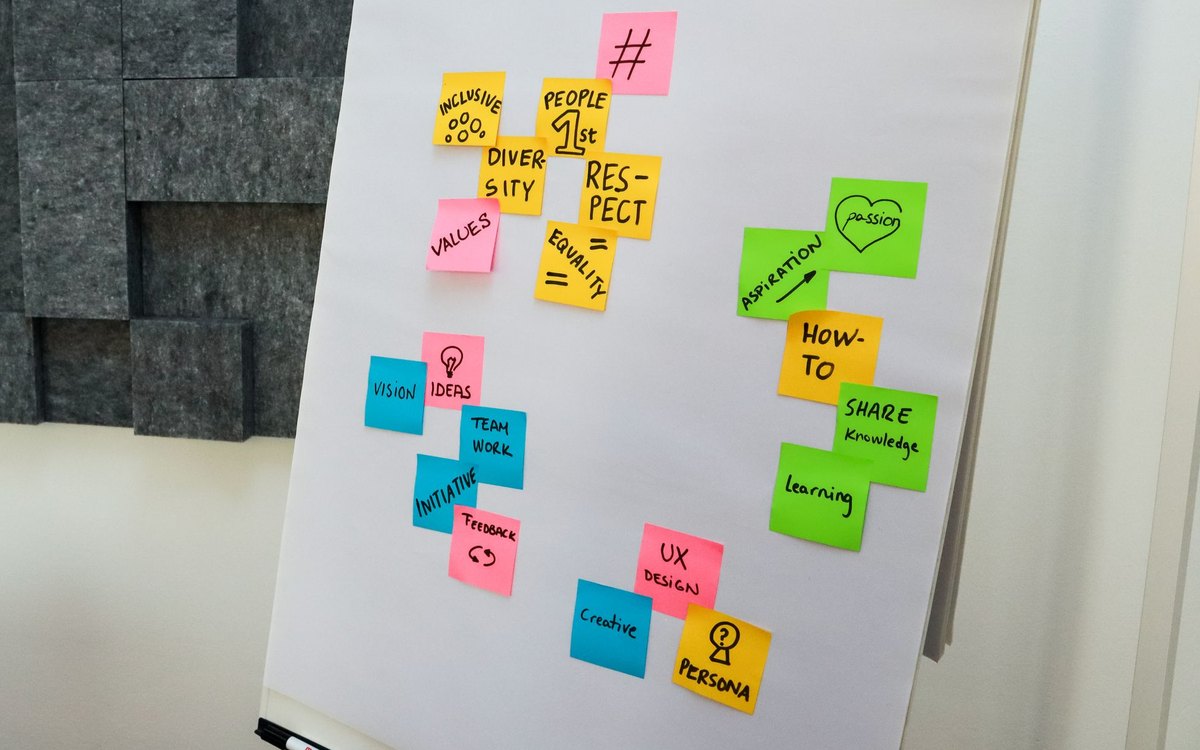
Photo: Moe Magners / Pexels (free license)
Quick summary
A materiality assessment is the first step of any serious ESG programme: agreeing a short list of topics the company will actually resource, and accepting that the rest will not be done this period. This article rebuilds the four steps for determining material topics set out in GRI 3: Material Topics 2021 — read directly from the standard published by the Global Reporting Initiative, effective for reports published on or after 1 January 2023 — and translates each step into the real work of a Vietnamese small or medium enterprise. It separates two things that are routinely conflated: impact materiality under GRI, which measures how severe the company's impacts on the economy, environment and people are; and financial materiality under IFRS S1, which measures the sustainability risks and opportunities that could reasonably be expected to affect the company's own cash flows, access to finance or cost of capital. It answers the four questions clients ask most often when the budget is tight: where to put the cut-off, who has to be in the room, what the deliverables are, and which variables drive the cost of this phase. It closes with something sales material usually avoids saying: a materiality assessment does not, by itself, cut a single kilogram of emissions.
Quick answer: when the budget is tight, the right order is not "cheapest first" but most material first. A materiality assessment identifies the short list of environmental, social and governance topics your company will resource, and records why the rest is out of scope for this period. Under GRI 3: Material Topics 2021, material topics are those that "represent an organization's most significant impacts on the economy, environment, and people, including impacts on their human rights". Doing this first avoids the trap that catches most Vietnamese SMEs: starting by trying to cover everything, then stalling in month four with no money, no people and nothing to show a customer.
Last updated: 17 Aug 2026.
The short version for busy readers
Eight things to remember if you only have three minutes:
- A materiality assessment is about choosing work, not writing a report. The output is a prioritised topic list plus a scope of work for the phases that follow.
- Reference standard: GRI 3: Material Topics 2021, effective for reports published on or after 1 January 2023.
- Four steps: understand the organisation's context, identify actual and potential impacts, assess the significance of those impacts, prioritise the most significant ones for reporting.
- Two different kinds of materiality: impact materiality under GRI looks outward, financial materiality under IFRS S1 looks inward. Exporters usually need the first one first; borrowers usually get asked the second one first.
- You set your own cut-off — GRI 3 prescribes no number, but it does require you to document the threshold you set.
- This is not an EHS department meeting: without finance, procurement and sales in the room, the result will be skewed and unusable for budgeting.
- Cost is driven by four variables: number of sites, number of stakeholders to consult, number of candidate topics, and how available your baseline data is.
- No environmental outcome is promised: a materiality assessment is a resource-allocation decision, and by itself it reduces nothing.
Key facts — each line independently checkable, source in place:
- GRI 3: Material Topics 2021 "is effective for reports or other materials published on or after 1 January 2023", per the standard published by the Global Reporting Initiative.
- IFRS S1 "is effective for annual reporting periods beginning on or after 1 January 2024" and was issued by the ISSB in June 2023, per the IFRS Foundation standard page.
- On 30 July 2025 the European Commission adopted a recommendation on a voluntary sustainability reporting standard for SMEs, intended to "reduce administrative burden on SMEs by making it easier for them to respond to requests for sustainability information from large companies and financial institutions" — Directorate-General for Financial Stability, Financial Services and Capital Markets Union.
- Vietnam is still drafting an ESG framework tiered by company size: household businesses at least 3 criteria, micro and small enterprises 6, medium enterprises 12, large enterprises 18 — per VnEconomy, 10 June 2026, citing the Department of Environment under the Ministry of Agriculture and Environment.
- As of the end of Q1 2026, "82 credit institutions have recorded outstanding green credit loans totalling 828 trillion VND (approximately 31.8 billion USD), with an average annual growth rate of more than 20% during the 2017–2025 period", and loans subject to environmental and social risk assessment exceeded 5.1 quadrillion VND, or 27.7% of total outstanding credit — State Bank of Vietnam figures released on 9 June 2026, per VietnamPlus.
What a materiality assessment actually is, and why it comes first
Straight answer: a materiality assessment is a resource-allocation decision, not a chapter in a report. It answers exactly one question: out of the dozens of things people call ESG, which ones will your company measure, manage and disclose over the next twelve months. Everything downstream — emissions inventory, supplier policy, reduction targets, reporting — takes this list as its input. Get the order wrong and you will measure things nobody asks about, and fail to measure the one thing your largest customer is about to ask about.
The source definition sits in GRI 3: Material Topics 2021, which states that material topics are those representing an organisation's most significant impacts on the economy, environment and people, including impacts on their human rights. Note the direction of the arrow: your impact on the world, not the world's risk to you. That is a fundamental departure from how many owner-managers approach ESG, which is as a line in a risk register. Both directions are legitimate, but they are different exercises and they produce different lists — the section below separates them.
It is also worth separating this from choosing a reporting framework. Deciding between GRI, ISSB or a customer-supplied template belongs to the disclosure phase; we covered that separately in ESG reporting to GRI and ISSB for SMEs. Materiality sits one step earlier: it determines what gets reported, whichever framework you later adopt. If you are at the very beginning and are not sure what ESG covers, read what ESG means for an SME first and come back.
There is a second, very practical reason to do this first: it is the only thing in the whole roadmap that lets you say no with a defensible basis. When a customer sends a forty-page questionnaire, what lets you answer "we do not currently track this indicator, because it falls below the materiality threshold we documented" is not confidence — it is a dated document with a method and a signature behind it. Without that document, every refusal reads as evasion.
The four GRI 3 steps, translated into real SME work
Straight answer: GRI 3 describes four steps, and the first three happen outside the reporting process. The standard states that the first three steps "are conducted independently of the sustainability reporting process, but they inform the last step". That matters a great deal for a small or medium enterprise: you do not have to wait for reporting season to start, and most of the work is ordinary operational knowledge, written down properly.
Step one, understand the organisation's context. The standard asks the organisation to create "an initial high-level overview of its activities and business relationships, the sustainability context in which these occur, and an overview of its stakeholders". For a metalworking plant in Binh Duong, that means: a list of plants and warehouses, a materials-in and materials-out diagram, a tier-one supplier list, a customer list by export market, and a list of parties affected outside the fence line — neighbouring residents, contracted hauliers, seasonal workers.
Step two, identify actual and potential impacts. GRI 3 puts it plainly: "actual impacts are those that have already occurred, and potential impacts are those that could occur but have not yet occurred". This is where internal interviews pay off most, because the people running the machines know things a balance sheet never shows.
Step three, assess significance. This is the most technical part and the most frequently rushed, so it gets its own table below. Step four, prioritise the most significant impacts for reporting — that is, set the threshold and lock the list.
| Step | What GRI 3 requires | Real work for a Vietnamese SME | Verifiable deliverable |
|---|---|---|---|
| 1. Understand context | Build a high-level overview of activities, business relationships, sustainability context and stakeholders | List sites, material flows, tier-one suppliers, export markets, communities around the plant | A one-page organisational scope diagram plus a segmented stakeholder list |
| 2. Identify impacts | Identify actual and potential impacts on the economy, environment and people, including human rights, across activities and business relationships | Interview operations, safety, procurement and HR; review past incidents and complaints; review large-customer requirements | A long list of impacts, each marked actual or potential, negative or positive |
| 3. Assess significance | For actual negative impacts, severity. For potential negative impacts, severity and likelihood | Score each impact on scale, scope and irremediable character; record the assumptions and subjective judgments used | A scoring table with a reasons column that an outsider can re-audit |
| 4. Prioritise for reporting | Arrange impacts from most to least significant, define a cut-off point or threshold, and document that threshold | Lock the short list with the board; minute why the cut sits where it sits | An approved material-topic list plus a threshold decision record |
One detail in the standard is rarely repeated in Vietnamese-language material, and it saves companies from pointless argument. GRI 3 says severity is determined by three characteristics — the scale, the scope and the irremediable character of the impact — and that "any one of the three characteristics can make an impact severe". So an incident affecting few people but impossible to remediate can outrank a problem affecting many people that is fixable within a week. For human rights impacts specifically, the standard is explicit that "the severity of the impact takes precedence over its likelihood" — meaning you cannot use "it rarely happens" to drop a human rights risk off the list.

Scope: one legal entity, each production site, or the supply chain too
Straight answer: scope must be locked before you start, because it drives workload more than any other variable. The three common options are: assess one legal entity, assess each production site, or extend to tier-one suppliers. Picking the wrong scope in the first meeting is the single most common reason these projects overrun, because every scope expansion means another round of data collection.
GRI 3 guides organisations to consider the activities, business relationships, stakeholders and sustainability context of all the entities they control or have an interest in. For a typical Vietnamese SME that usually means one legal entity, two or three sites, plus the outsourced processing that many owners forget to count. Outsourced processing matters because it concentrates much of the labour impact and a meaningful share of the environmental impact, while sitting outside your direct line of sight.
A practical rule we apply: if your large customers have already started asking about tier-one suppliers, bring the supply chain into scope in the first round, even at a very coarse level. The reason is economic — bolting a supplier survey onto a running project costs far more than including it from the start. We have unpacked that separately in green supply chains for SMEs. Conversely, if you sell only domestically and nobody has asked, extending to the supply chain in round one is spending money on something you cannot yet use.
Scope also determines what you will have to inventory later. An assessment scoped at legal-entity level leads to a materially lighter greenhouse gas inventory than one covering suppliers; the Scope 1, 2 and 3 boundary detail sits in the Scope 1, 2, 3 GHG inventory guide for SMEs. Put bluntly, the decision you take in today's scoping meeting sets next quarter's invoice.
Impact materiality versus financial materiality: which one first
Straight answer: these are two different exercises, and answering this wrong sends companies back to the start. Impact materiality, under GRI, asks what significant impacts the company has on the economy, environment and people. Financial materiality, under IFRS S1, asks which sustainability risks and opportunities affect the company itself. The IFRS Foundation's standard page sets a very specific threshold: risks and opportunities that "could reasonably be expected to affect the entity's cash flows, its access to finance or cost of capital over the short, medium or long term".
In Vietnamese advisory practice, the answer depends on who is asking you. If the pressure comes from export customers, they will ask about impacts: labour conditions, wastewater, emissions per unit of product, raw-material provenance. If the pressure comes from a bank or a fund, they will ask about financial risk: how much compliance cost is coming, which assets could be stranded, which revenue depends on a market that is tightening its rules. Companies squeezed from both sides do both — but still in sequence, because an impact list is a good input to financial risk analysis, while the reverse is not true.
| Criterion | Impact materiality — GRI 3 | Financial materiality — IFRS S1 |
|---|---|---|
| Underlying question | What significant impacts does the company have on the economy, environment and people | Which sustainability risks and opportunities affect the company's own prospects |
| Direction of view | From the company outward | From the outside inward |
| Threshold | Severity of the impact; for potential impacts, severity and likelihood | Could reasonably be expected to affect cash flows, access to finance or cost of capital |
| Effective from | Reports published on or after 1 January 2023 | Annual reporting periods beginning on or after 1 January 2024; issued by the ISSB in June 2023 |
| Who usually asks | Export customers, brands, supplier rating bodies | Banks, funds, shareholders, M&A counterparties |
| Typical output | A material topic list and how each topic is managed | Four disclosure areas: governance, strategy, risk management, metrics and targets |
There is one overlap that few people notice and that saves you money: both standards are built around prioritisation. IFRS S1 requires an entity to disclose "the processes the entity uses to identify, assess, prioritise and monitor sustainability-related risks and opportunities". In other words, both systems assume you will not do everything, and both require you to explain how you chose. So the effort spent documenting your selection method is never wasted, whichever branch you later take.
The cut-off: why stop at 6–8 topics, and how to drop the rest safely
Straight answer: GRI 3 prescribes no number at all — 6 to 8 is GROW's practice convention, not a requirement of the standard. What the standard does require is that the organisation "should arrange its impacts from most to least significant and define a cut-off point or threshold to determine which of the impacts it will focus its reporting on", and "should document this threshold". Anyone telling you the standard mandates a specific topic count is making it up.
So why 6 to 8? That is the range our advisory team finds a small or medium enterprise can actually carry through a full twelve-month cycle without abandoning half of it: each topic needs an owner, a measurable indicator and at least one funded action. Below 6 the list usually under-covers the social or governance side and looks thin to a third party. Above 8, in a company where ESG is somebody's second job, the topics at the bottom of the table reliably go untouched. This is a practice estimate, not a standard, and it should flex with company size and complexity.
The harder part is dropping the rest safely. We always apply three rules. First, out of this period is not out of the file: below-threshold topics stay on the long list with their scores and reasons, ready for the next review. GRI 3 guides that "in each reporting period, the organization should review its material topics from the previous reporting period to account for changes in the impacts". Second, where you use GRI Sector Standards and decide that a topic in them is not material, the standard requires you to list that topic in the content index and explain why it is not material. Silence is not a valid option. Third, never cut a topic simply because you lack data — missing data is a finding, not a reason for exclusion.
The most common trap here is thoroughly mundane: people score topics by how uncomfortable it feels to be asked about them rather than by the severity of the impact. The result is that the topics customers ask about most get pushed to the top, while topics with real impact that nobody has asked about sink to the bottom. That kind of list serves questionnaire-answering very well for six months, then breaks the first time a third party audits on site. If your context really is an EU customer interrogation, keep the two jobs apart: use the EU customer ESG questionnaire guide for the reactive side, and keep your materiality assessment independent of it.
Who has to be in the room, and who only needs to be consulted
Straight answer: if only the EHS function takes part, the result will lean environmental and will not be usable for budgeting. A materiality assessment touches finance's data, procurement's contracts, sales' commitments and HR's records. Miss any of those groups and, at planning stage, you will discover your topic list does not match what the business can actually do next year.
GRI 3 stresses stakeholder engagement and notes the need to make that engagement genuinely effective, particularly with vulnerable groups: the standard says that "engagement with at-risk or vulnerable groups may necessitate specific approaches and call for special attention", giving the example of removing social barriers that limit women's participation in public forums. For a Vietnamese factory, that translates very concretely: do not interview line workers in the supervisor's office.
| Role | Level of involvement | What they bring | What breaks without them |
|---|---|---|---|
| Board or general director | At the table, approves the threshold | Risk appetite, next year's budget, commitments already made to customers | Nobody defends the list when budgets get cut |
| Chief accountant or finance | At the table | Period cost data for energy, water, waste treatment | Impacts cannot be translated into money, actions cannot be budgeted |
| Procurement | At the table | Supplier list, contract terms, outsourced processing | Everything outside the fence line is missed |
| Sales or export | At the table | What customers actually require per market, and by when | Priorities drift away from what is blocking orders |
| Production and EHS | At the table | Past incidents, technical bottlenecks, operating data | The list stays theoretical |
| HR | At the table | Workforce structure, seasonal labour, grievances, occupational safety | The social pillar is empty and the file looks unbalanced |
| Line workers and team leaders | Interviewed, need not attend the decision meeting | Real impacts that management reporting never surfaces | The most severe people-related impacts are missed |
| Tier-one suppliers | Surveyed, selectively | Raw-material provenance, capacity to meet new requirements | Supply chain commitments become empty promises |
| Neighbouring community | Consulted where impact is evident | Noise, odour, dust, traffic, water | Legal and local-relations risk stays outside the frame |
In terms of time, most of these groups need one session each. What consumes the calendar is not the number of meetings but the hunt for data between them — which is exactly why the inputs section below is worth reading before you book the first session.
What to have ready before the first session
Straight answer: having four document sets ready before the first session compresses the whole phase, because most of the elapsed time goes into waiting for paperwork rather than into analysis. Those four are: environmental permits and legal records, operating data in physical units, a stakeholder list, and the ESG requirements you are already receiving.
First, environmental legal records: the environmental licence or environmental registration, the most recent monitoring results, contracts with waste collection and treatment providers, and water and wastewater records. This set matters not only for its content but because it shows where the company stands against the compliance floor — and legal compliance is the bottom layer of every ESG framework. Vietnam's own draft ESG framework is described as having two parts, one of which is the mandatory legal compliance group compiled from existing laws, per VnEconomy's report of 10 June 2026.
Second, operating data in physical units, not in money: kilowatt-hours of electricity, litres of fuel, kilograms of gas, cubic metres of water, tonnes of waste, output per product unit. This is where many companies lose a month unnecessarily, because the file that arrives contains only invoice totals. Working backwards from money to quantity is both slow and error-prone whenever tariffs change mid-year.
Third, a stakeholder list that is segmented and has named contacts, rather than abstract categories like "the community" or "suppliers". Fourth, every ESG requirement you are currently receiving: customer questionnaires, clauses in framework agreements, conditions in credit files. This fourth set is what turns a standards exercise into a commercial one, because it tells you what the market is demanding of you right now.
Deliverables: what you actually take away
Straight answer: the deliverable is not a sustainability report but four things you can use immediately, for planning and for answering customers. If an adviser hands you a thick pack without these four, you have not received what you paid for.
First, a board-approved list of material topics, each with a one-sentence scope definition so that nobody reinterprets it later. GRI 3 requires organisations to disclose their "list of material topics" and to "report changes to the list of material topics compared to the previous reporting period" — meaning this list is an asset with a life cycle, not a one-off sheet of paper.
Second, a written description of the process used: how you identified impacts, how you prioritised them, whom you consulted. That is exactly the content the standard requires under the process disclosure, and it is the first thing an independent assurance provider will ask for. Third, a matrix or ranked table with the threshold recorded, plus a decision record explaining why the cut sits there. Fourth — and this is the one with the clearest commercial value — a scope of work for the following phases, detailed enough to price: which emission sources need inventorying, which policies need writing, which indicators need measuring, by whom and by when.
Because of that fourth deliverable, we routinely advise clients not to fold the materiality assessment into a long all-in contract at the outset. Until scope is known, every quotation for the later phases is guesswork — on both sides. Once this step is done you have enough information to shop around, including asking us. Our phased way of working is described on the engagement process page.
How long it takes
Straight answer: for a small or medium enterprise with one or two sites and average record-keeping, this phase is measured in weeks, not months. Elapsed time is governed by three things: how fast documents can be assembled, how many interviews have to be scheduled, and how many rounds of board approval are needed. None of the three depends on the adviser as much as it depends on the company.
For a published reference point, GROW's Green Start package is described as building a baseline in 8–12 weeks, and a standard roadmap is described as running 10–14 months from assessment to the first report. The materiality assessment sits at the front of that window and occupies only part of it. We deliberately do not publish a specific person-day figure for this step alone, because it varies too much with scope — and a tidy invented number would only cause you to plan badly.
More useful than a number is the sequencing. The first three GRI 3 steps, as the standard states, happen independently of the reporting process. That means you can start recording impacts and collecting operating data today, before signing any advisory contract. Companies that do so enter the engagement with a very concrete advantage: shorter elapsed time and fewer bought-in person-days.
What drives the cost — and where GROW's three packages sit
Straight answer: the cost of a materiality assessment is not priced by report length but by four variables multiplied together. They are: the number of sites to survey, the number of stakeholders to interview or survey, the number of candidate topics to score, and the availability of baseline data. Understanding these four lets you read anyone's quotation — including ours — without being dazzled by the headline figure.
The variable that consumes the most budget is usually the number of sites, since each site means a visit, its own operating dataset and its own local stakeholder group. Second is the number of stakeholders consulted directly: form-based surveys are far cheaper than in-depth interviews, but for vulnerable groups the standard recommends specific approaches and those take time. Third is the number of candidate topics: a textile dyeing business will have a far longer list than a mechanical assembly business. Fourth is data availability, and this is the only variable you can reduce yourself before signing anything.
| Variable | Why it pushes cost up | What you can do to bring it down |
|---|---|---|
| Number of sites surveyed | Each site is a trip, a dataset and a separate local stakeholder group | Lock scope early; group identical-process sites into one representative sample, with the reasoning recorded |
| Stakeholders consulted directly | In-depth interviews and vulnerable-group engagement need specific approaches and take time | Prepare a named contact list; run form-based surveys yourself for lower-risk groups |
| Candidate topics to score | Every topic needs evidence, a scoring scale and a recorded rationale | Screen out clearly sector-irrelevant topics early, with one line of justification each |
| Baseline data availability | Chasing documents costs more person-days than analysis does | Assemble 12 months of physical-unit data and your environmental legal file in advance |
On absolute numbers, we quote only the package range published on GROW's own Green Transition Advisory page, and no third-party market prices — because there is no reliable public source to cite for those. The Green Start package is VND 80–120 million, covering a preliminary ESG assessment, a Scope 1–2 emissions inventory and a concise 12-page report, suited to companies under 100 employees. Green Pathway is VND 220–380 million and runs all four phases of the GROW Green Pathway methodology, suited to companies of 100–500 employees. Green Enterprise starts at VND 600 million, for companies integrating ESG with enterprise resource systems and running supplier engagement programmes.
| Package | Published range | Suited to | Where materiality sits |
|---|---|---|---|
| Green Start | VND 80–120 million | Under 100 employees | An opening, preliminary step, bundled with the Scope 1–2 inventory and a short report |
| Green Pathway | VND 220–380 million | 100–500 employees | Full phase one of four, with stakeholder engagement and a matrix |
| Green Enterprise | From VND 600 million | Companies integrating systems | Extended into the supply chain and tied to a supplier programme |
If you want the whole-journey cost picture rather than just this first step, we have a separate piece on the cost of green transition for small and medium enterprises. And if you are considering using subsidised finance to pay for this phase, the next section has a data point worth noting.
Vietnam is standardising the question of how much is enough
Straight answer: the question "how much is enough" is about to get an administrative answer in Vietnam, and that answer is designed to scale with company size. The Ministry of Agriculture and Environment is finalising guidance on identifying green projects, projects meeting circularity criteria, and applying an ESG framework. At the time the information was released this was still a draft, not an issued instrument — which needs stating plainly rather than presented as law in force.
The part most relevant to small and medium enterprises is the tiering. Per VnEconomy of 10 June 2026, compliance is designed to flex with size: household businesses or individuals must meet at least 3 criteria, micro and small enterprises at least 6, medium enterprises at least 12, and large enterprises at least 18. The same source describes the ESG framework as a supporting tool for assessing a project's management capability and risk control, comprising two groups: mandatory legal compliance compiled from existing laws, and a voluntary group referencing international standards such as GRI, IFRS S1/S2 and the ASEAN Taxonomy.
| Category | Minimum criteria (draft) | What it implies for topic selection |
|---|---|---|
| Household business or individual | 3 | A very short list, essentially the legal compliance layer only |
| Micro and small enterprise | 6 | Broadly aligned with the 6–8 topics a lean material list tends to settle on |
| Medium enterprise | 12 | Requires coverage across all three of environment, social and governance |
| Large enterprise | 18 | Close to the scope of a full sustainability report |
Why care now, while the text is still a draft? Because it is tied to money. According to the same reporting, the guidance is intended to be the basis for a state-budget interest rate support policy of 2% per year alongside green credit programmes. And the green funding pool is no longer small: as of the end of Q1 2026, 82 credit institutions had recorded outstanding green credit of 828 trillion VND, roughly 31.8 billion USD, with average annual growth above 20% across 2017–2025; loans subject to environmental and social risk assessment exceeded 5.1 quadrillion VND, about 27.7% of total outstanding credit in the economy. These figures were released by State Bank Deputy Governor Nguyen Ngoc Canh at a 9 June 2026 workshop and reported by VietnamPlus.
In other words, a company that already holds a properly constructed GRI 3 material topic list will be well placed when Vietnam's framework is finalised, because most of the file work is done and only a mapping exercise remains. The reverse direction is much harder. We have written in more detail about the financing side in the green taxonomy and green credit guide for SMEs and in accessing green investment funds in Vietnam.
The international context is also moving toward lightening the load on smaller companies rather than adding to it. On 30 July 2025 the European Commission adopted a recommendation on a voluntary sustainability reporting standard for SMEs, explicitly aimed at reducing administrative burden when they respond to information requests from large companies and financial institutions subject to mandatory reporting. That does not exempt you — it means the expected length of the answer is being standardised downward, and whoever has a clear material topic list benefits most.
A materiality assessment does not reduce emissions by itself
Straight answer: a materiality assessment is a resource-allocation decision, not a mitigation measure. It does not cut a single kilogram of greenhouse gas, does not lower a single cubic metre of wastewater, and does not improve anyone's working conditions. We write this because Vietnam's ESG advisory market is full of step-skipping promises, of the form that completing an assessment will deliver a given percentage emissions cut within a given number of months. There is no basis for such a promise, and GROW does not make one.
Emissions reductions come from quite different things: replacing motors, switching fuels, rescheduling operations, investing in heat recovery, renegotiating with suppliers. All of them cost capital or operational discipline, and all of them happen after this step. What the materiality assessment does achieve is making sure you spend in the right place: if your largest impact sits in wastewater rather than electricity, a rooftop solar investment — however sound financially — will not address the thing your customer is worried about.
This is also the line between real ESG work and greenwashing. Greenwashing rarely starts with an outright lie; it usually starts with attributing a later step's outcome to an earlier one, or publishing a number whose method cannot be traced. If a sales document tells you an assessment will directly deliver a percentage emissions reduction, ask three questions: measured by what method, against which base period, and verified by whom. We covered this at length in Vietnam's green labels and anti-greenwashing for SMEs.
A practical consequence: do not attach environmental outcome targets to the contract for this phase. Attach output targets instead — an approved list, a documented method, a scope of work good enough to price the next step. Environmental outcome targets belong to the roadmap phase, and you can see how we handle them in the Net Zero roadmap for SMEs.
Seven mistakes SMEs make doing this in-house
Straight answer: most in-house materiality assessments fail not from a lack of standards knowledge but from seven very ordinary process errors. We list them so you can self-diagnose before deciding whether to outsource or keep it internal.
One, scoring by discomfort rather than by severity — discussed above, and the most common of all. Two, not documenting the threshold: six months later nobody remembers why topic nine was dropped, and the whole list loses its defensibility. Three, treating this as one person's job: a part-time ESG owner with no authority to demand data from finance and procurement will stop at whatever they can find alone.
Four, ignoring impacts outside the fence line, especially outsourced processing and contracted transport. Five, conflating the two kinds of materiality and producing a hybrid list that satisfies neither the customer nor the bank. Six, dropping topics for lack of data: missing data is a finding to be planned for, not grounds for deletion. Seven, doing it once and shelving it: the standard guides a review each reporting period to reflect changes in impacts, and in practice a growing company's list changes quite fast.
If four of those seven describe your situation, your problem is probably not a missing template but a missing coordinator with authority across departments. That is an organisational decision rather than a purchasing decision — and it should be taken before you sign anything.
Where to start if you have to brief the board next week
Straight answer: you need no budget to begin the first three tasks, and those three carry most of the value of the whole phase. Task one: write a one-page organisational scope — which legal entity, which sites, which outsourced work, which markets. Task two: build a stakeholder list with names and contacts. Task three: ask finance to export 12 months of data in physical units, not in currency.
Those three are precisely step one and part of step two of GRI 3 — the steps the standard itself says run independently of the reporting process. Once done, you will know roughly where you stand, and if you then decide to outsource, you will be buying a defined scope rather than a promise. To compare with how we deliver it, see the Green Transition Advisory page and the engagement process; and if you want a quick review of your own scope and data gaps, get in touch with GROW — we do not commit to environmental outcomes, only to a defensible list and a scope of work clear enough for you to price.
The bottom line: a materiality assessment is not the opening chapter of a report but the first resource-allocation decision of an entire ESG roadmap — done properly, a small or medium enterprise ends up with a short list of topics defensible by method, a cut-off threshold documented exactly as GRI 3 requires, and a scope of work clear enough to price the following steps; done badly, every subsequent dollar risks landing on a topic nobody will ever ask about.
Frequently asked questions
What is an ESG materiality assessment?
It is the step that identifies which environmental, social and governance topics a company will resource in a given period, and records why the rest is out of scope. Under GRI 3: Material Topics 2021, material topics are those that represent an organisation's most significant impacts on the economy, environment and people, including impacts on their human rights. The output is a prioritised list with a documented method, not a sustainability report.
Does GRI 3 say how many topics you must choose?
No. GRI 3 gives no number. The standard requires the organisation to arrange its impacts from most to least significant, define a cut-off point or threshold to determine which impacts it will focus its reporting on, and document that threshold. The 6–8 range used in this article is GROW's practice convention, based on what a small or medium enterprise can realistically carry through a cycle, not a requirement of the standard.
How do impact materiality and financial materiality differ?
Impact materiality under GRI asks what significant impacts the company has on the economy, environment and people — an outward view. Financial materiality under IFRS S1 asks which sustainability risks and opportunities could reasonably be expected to affect the entity's cash flows, its access to finance or cost of capital over the short, medium or long term — an inward view. Export customers usually ask the first question; banks and funds usually ask the second.
What should a company prepare before the first session?
Four sets: environmental legal records including the environmental licence or registration, recent monitoring results and waste treatment contracts; 12 months of operating data in physical units rather than currency, covering kilowatt-hours, litres of fuel, cubic metres of water and tonnes of waste; a stakeholder list with names and contacts; and every ESG requirement currently arriving from customers or lenders. Having these ready materially shortens elapsed time and reduces bought-in person-days.
What drives the cost of a materiality assessment?
Four variables: the number of sites to survey, the number of stakeholders to interview or survey, the number of candidate topics to score, and how available baseline data is. GROW's published packages are Green Start at VND 80–120 million for companies under 100 employees, Green Pathway at VND 220–380 million for 100–500 employees, and Green Enterprise from VND 600 million. We do not quote third-party market prices because there is no reliable public source to cite.
Will emissions fall once the assessment is done?
Not by themselves. A materiality assessment is a resource-allocation decision, not a mitigation measure. Emissions reductions come from investment and operational change in later phases: replacing equipment, switching fuels, rescheduling operations, renegotiating with suppliers. The value of this step is ensuring that later spending lands where the impact is greatest. Anyone promising a percentage reduction purely from running an assessment should be asked three questions: measured by what method, against which base period, and verified by whom.
Does the material topic list have to be redone every year?
GRI 3 guides that in each reporting period the organisation should review the previous period's material topics to account for changes in impacts, since impacts change as activities and business relationships change. The standard also requires disclosure of changes to the list compared with the previous reporting period. In practice, companies growing fast or that have recently added a site tend to see substantial change.
References
- GRI 3: Material Topics 2021 — Global Reporting Initiative, hiệu lực từ 1/1/2023 (PDF chính chủ)
- IFRS S1 General Requirements for Disclosure of Sustainability-related Financial Information — IFRS Foundation, ISSB ban hành 6/2023, hiệu lực từ 1/1/2024
- Ủy ban châu Âu, 30/7/2025 — Khuyến nghị chuẩn báo cáo bền vững tự nguyện cho SME (VSME)
- VnEconomy, 10/6/2026 — Hướng dẫn xác định dự án xanh, dự án tuần hoàn và khung tiêu chuẩn ESG (dự thảo, 3/6/12/18 tiêu chí)
- Báo Nông nghiệp và Môi trường, 9/6/2026 — Dư nợ tín dụng xanh Việt Nam đạt gần 828 nghìn tỷ đồng (số liệu Ngân hàng Nhà nước, kỳ chốt quý I/2026)
- VietnamPlus (bản tiếng Anh), 10/6/2026 — Outstanding green credit reaches 828 trillion VND