Forest carbon credits under Decree 180/2026: which SMEs can buy, who can sell, and how to trade legally
Decree 180/2026 (effective 15 July 2026) opens Vietnam's forest carbon market. SMEs must know: who may offset, who may sell, why credits aren't net-zero.
August 7, 2026 · 16 min read

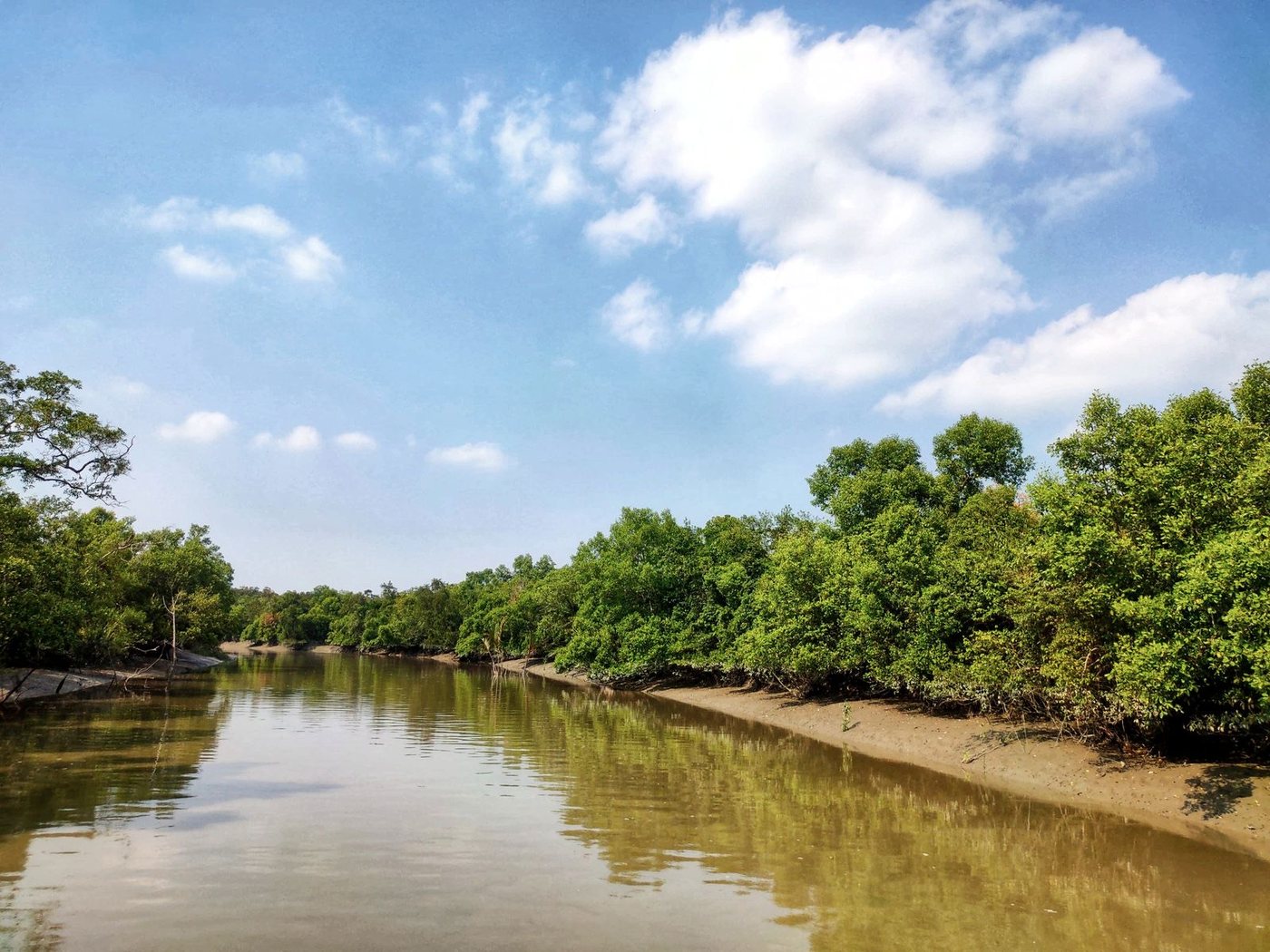
Photo: Daniel Frank / Pexels (free license)
Quick summary
Decree 180/2026/NĐ-CP, signed on 21 May 2026 and effective from 15 July 2026, is Vietnam's first comprehensive legal framework for forest carbon sequestration and storage services (four chapters, 20 articles, six appendices). This article reads the decree from an SME's angle and separates three situations that are often conflated: facilities already allocated an emissions quota may pay to use forest carbon services to offset emissions above their quota, but quotas apply only to large ETS facilities, not every SME; SMEs may buy credits voluntarily for ESG commitments, but only through contracts or a carbon exchange and only after confirmation by the Ministry of Agriculture and Environment, with no resale to third parties; and SMEs that own forests can be suppliers, opening a new revenue stream. It includes tables mapping the supplier/user roles, comparing informal 'hand-to-hand' trades (no longer valid) with contract/exchange trades, and warns against greenwashing: buying credits does not replace measuring and cutting your own emissions. The decree also caps exports of forest carbon credits at 50%.
Quick answer: Decree 180/2026/NĐ-CP (signed 21 May 2026, effective 15 July 2026) creates Vietnam's first legal framework for the forest carbon market. For a small and medium enterprise (SME), the key is not to conflate three different things: the right to offset against a quota using forest carbon credits applies only to facilities that have been allocated an emissions quota; buying credits voluntarily for ESG purposes is allowed but must go through a contract or an exchange and be confirmed by the Ministry of Agriculture and Environment; and if you are an SME that owns forest, you may instead be a seller. In every case: buying credits is not net-zero.
Last updated: 07/08/2026.
A quick summary for busy readers
Six points to remember, each with an official source in the article:
- This is a first legal framework, not an optional guideline. Decree 180/2026 comprehensively governs the supply, confirmation, trading and benefit-sharing of forest carbon credits.
- Informal trades are over. All transactions must go through a contract or a carbon exchange, and be confirmed by the Ministry of Agriculture and Environment before transfer.
- No double selling. Once transferred by contract or on an exchange, credits cannot be resold to a third party.
- Quota offsetting is a right of ETS facilities, not of every SME. Only emission sources allocated a quota may use forest carbon services to offset above-quota emissions.
- Forest-owning SMEs can be sellers. Forest owners, including households and communities, may join forest carbon projects and share the benefits.
- Credits do not replace cuts. For ESG reporting and anti-greenwashing, the order is still measure first, cut first, offset last.
Key facts — one verifiable source per line:
- Decree 180/2026/NĐ-CP on forest carbon sequestration and storage services was issued on 21 May 2026 and takes effect on 15 July 2026, comprising four chapters, 20 articles and six appendices (Vietnam News / VNA, 3 July 2026).
- Services may be carried out through contracts or via a carbon trading exchange, and payments may be made directly or through the Viet Nam Forest Protection and Development Fund (Nhan Dan Online, 25 May 2026).
- The activities must not affect Vietnam's international greenhouse gas emission reduction commitments (Nhan Dan Online).
- Revenue from forest-based carbon credits will be prioritised for forest protection and development and community livelihoods (Eco-Business, 2026).
- Payment levels are calculated in Vietnamese dong per tonne of CO₂, per tonne of CO₂ equivalent, or per forest carbon credit (Nhan Dan Online).
- Vietnam's outstanding green credit reached nearly VND 828 trillion cumulatively by the end of Q1 2026 (31 March 2026), across 82 credit institutions — State Bank of Vietnam data announced on 9 June 2026 (Nong nghiep & Moi truong, 9 June 2026).
What Decree 180/2026 does, and why it matters
Direct answer: Decree 180/2026 is the first document to comprehensively regulate developing, confirming, trading and benefiting from forest carbon credits in Vietnam. Before it, "selling forest carbon" was talked about widely but had no clear legal channel.
According to Vietnam News, the decree "creates a comprehensive legal basis for forest carbon services and provides a clear framework for generating, managing and trading forest carbon credits", and comprises four chapters, 20 articles and six appendices covering project documentation, methods for allocating emissions reduction targets, contract templates and financial management (Vietnam News, 3 July 2026). A foundational principle: these activities "must not affect the international commitments on greenhouse gas emission reductions to which Viet Nam is a party" (Nhan Dan Online, 25 May 2026). In other words, forest carbon credits are not an unlimited free-flowing commodity: part of the emission reductions is reserved for Vietnam's Nationally Determined Contribution (NDC) — which is why there is an export cap.
Why should an SME care about a decree that looks "for the forestry sector"? Because more and more SMEs are asked to prove emission cuts by EU customers, banks and supply chains — and "buy forest carbon to offset" is the most heavily marketed, and most misunderstood, answer. Decree 180 is the first text to state clearly who may buy, how, and where it counts. We mapped the domestic carbon market in Vietnam's carbon market for SMEs; here we focus on forest carbon credits under Decree 180.
Two SME roles: supplier or user of the service
Direct answer: before asking "can an SME buy forest carbon credits", identify your role. Decree 180 clearly separates two sides — the service supplier and the service user — with very different conditions.
The supplier is a forest owner or their representative: they build and register a forest carbon project, organise measurement, reporting and verification, receive credits and sell. Notably for rural areas, the decree lets households, individuals and communities that are forest owners join forest carbon projects under domestic or international standards. For publicly-owned forests, the Ministry of Agriculture and Environment or provincial People's Committees represent ownership depending on who manages the project (Vietnam News).
The user is an organisation that buys emission reductions or forest carbon credits. The core condition: it must operate lawfully under Vietnamese investment and enterprise law, perform the contract or comply with carbon exchange rules, and meet its financial obligations. A lawful SME can be a user — but "may buy" and "may offset against a quota" are two different things, separated in the two sections below.
| Criterion | SUPPLIER (seller) | USER (buyer) |
|---|---|---|
| Who qualifies | Forest owners under the Forestry Law; households, individuals, communities; provincial authorities / MAE (public forests) | Organisations operating lawfully under Vietnamese investment and enterprise law (domestic or foreign entities lawfully active in Vietnam) |
| What they must do | Build and register a project; measure, report, verify; obtain credits; contribute reductions + financial obligations | Sign a contract or trade on an exchange; perform the contract; meet tax/fee obligations if any |
| Typical SME | Agri-forestry SMEs, forestry cooperatives, production forest owners | SMEs with ESG/net-zero commitments buying voluntary credits |
| Opportunity / risk | New revenue from forests; risk is measurement–verification cost and methodology | A transparent offset tool; risk is buying informal credits or misusing them in reports |

SMEs buying voluntarily: allowed, but on four conditions
Direct answer: a lawful SME may buy forest carbon credits voluntarily to serve its own ESG goals. But a trade is valid only if it meets four conditions — and buying cheap "off the books" is no longer an option.
Four conditions from the decree's principles: (1) the trade must go through a commercial contract or a carbon exchange, not informal deals; (2) transfer is allowed only after the Ministry of Agriculture and Environment confirms the reduction/credit volume; (3) transferred credits cannot be resold to a third party — the anti-double-selling rule; (4) payment is made directly to the supplier or entrusted through the Forest Protection and Development Fund, calculated in VND per tonne of CO₂ equivalent or per credit (Nhan Dan Online, 25 May 2026).
For SMEs this is actually good news: it protects you from buying credits already sold to someone else. The anti-double-selling mechanism is precisely what gives the credits you buy their value when they enter a report.
| Aspect | "Hand-to-hand" (no longer valid) | Under Decree 180 (valid) |
|---|---|---|
| Trade form | Verbal deals, off-the-books trading | Commercial contract or carbon exchange |
| Legal confirmation | Not required | Must be confirmed by MAE before transfer |
| Anti-double-selling | Uncontrolled — one credit sold many times | Once transferred, cannot be resold to third parties |
| Value in ESG reporting | High risk, hard to prove origin | Traceable, more credible to auditors |
Quota offsetting: a right of ETS facilities, not a default for SMEs
Direct answer: this is where SMEs most often go wrong. Using forest carbon credits to "offset above-quota emissions" applies only to facilities allocated an emissions quota — the large facilities in the emissions trading system (ETS). Most SMEs are not on that list.
Decree 180 lets emission sources that have been allocated a quota pay to use forest carbon services to offset the portion above their quota. But "allocated a quota" is a distinct legal status set by the ETS framework, not an automatic right of every business. In practice, the list of facilities that must inventory emissions and receive quotas in the pilot phase is concentrated in high-emitting sectors (thermal power, steel, cement), not a garment workshop or a small processing facility.
This yields a practical distinction: if you have no quota, the credits you buy are a voluntary offset for ESG/brand commitments — not a compliance obligation, and not deducted from any quota. If you are subject to inventory and quota allocation, start by measuring your own emissions first; see our guide on GHG inventory Scope 1-2-3 for SMEs. Do not reverse the order: buying credits before you know your emissions is spending blind.
| Situation | Who you are | What you may do | Where it counts |
|---|---|---|---|
| Have an emissions quota | ETS facility (usually large) | Use forest carbon services to offset above-quota emissions | ETS compliance obligation |
| No quota, voluntary buyer | SME with ESG/net-zero commitment | Buy credits via contract/exchange, confirmed by MAE | Voluntary offset, ESG/brand reporting |
| Forest owner | Agri-forestry SME, forest owner | Be a supplier: run a project, obtain and sell credits | Revenue; partly contributes to the NDC |
Agri-forestry SMEs: the chance to become a seller
Direct answer: if your business owns or manages forest, Decree 180 opens a new revenue stream — but with measurement, verification and compliance costs, so run the cost side before dreaming of the revenue.
The decree lets forest owners cooperate and link with organisations and individuals to implement forest carbon projects, and share the resulting reductions and credits. This matters for forestry cooperatives and agri-forestry SMEs: you need not do every step yourself, but can partner with specialists to develop a project. Revenue from public-forest carbon credits is prioritised for forest protection and development, community livelihoods, project development and forestry databases (Eco-Business, 2026).
On funding: outstanding green credit reached nearly VND 828 trillion cumulatively by the end of Q1 2026 across 82 credit institutions, per State Bank of Vietnam data announced on 9 June 2026 — some of which may finance forestry and low-emission agriculture. We analyse how to access this capital in accessing green funds in Vietnam.
The 50% export cap and anti-double-selling: what they mean for price
Direct answer: the 50% export cap and the no-resale rule both tighten international supply and raise the quality of domestic credits. Both affect price and the reliability of the credits you buy.
Domestically-reported coverage notes the decree sets a maximum 50% export cap on forest carbon credits to ensure national emissions security and the 2050 net-zero commitment; international transfers must also follow the Government's separate rules on international exchange of emission reductions and carbon credits. The combined effect for SMEs: keeping at least half of credits at home increases domestic supply, in theory favourable to a domestic voluntary buyer; but confirmation and anti-double-selling raise transaction costs, so a "clean" traceable credit may cost more than the loose credits of the past — the price of trust. A cheap credit whose origin cannot be traced is useless when an ESG audit asks.
Greenwashing warning: credits do not replace cutting emissions
Direct answer: using forest carbon credits to claim "net-zero" while you have not measured or cut your own emissions is the shortest path to a greenwashing accusation. The right order is measure first, cut first, and offset only what you cannot cut.
The decree's own principle notes these activities must not affect Vietnam's international emission reduction commitments — offsetting is not a licence to emit more. At company level the logic is the same: a "carbon neutral" claim holds only if you have real inventory data, a reduction pathway, and use credits solely for the remainder. Three practical rules to avoid greenwashing: (1) do not say "net-zero" when you have only bought credits without an emissions inventory; (2) separate "emissions reduced" from "emissions offset" in your communications; (3) use only confirmed, traceable credits as Decree 180 requires. We discuss the legal and communication limits of green claims in green labels and anti-greenwashing for SMEs, and the reduction pathway in the Net Zero roadmap for SMEs.
What SMEs should do now
Direct answer: do not start by buying credits. Start by identifying your role and measuring your emissions — buying credits, if needed, is the last step, not the first.
Four steps in order: (1) determine your group in Table 3 — quota holder, voluntary buyer, or forest owner; (2) if you must inventory emissions, do a Scope 1-2-3 inventory first; (3) if buying voluntarily, buy only via contract or exchange, and require proof of MAE confirmation and the no-resale commitment; (4) if you own forest, cost the measurement–verification work before deciding on a project, and consider partnering with specialists.
GROW works with SMEs on exactly these four steps: reading your legal position in the carbon framework, building an emissions inventory as the base, connecting green finance, and designing an offset strategy that does not slide into greenwashing. If a "buy forest carbon to go net-zero" pitch has you confused, let us help you separate the real from the sales.
With Decree 180/2026, forest carbon credits finally have clear rules in Vietnam — but for an SME, buying credits only makes sense once you have measured and cut your own emissions first; if you have not, that credit does not buy carbon neutrality, only greenwashing risk.
Frequently asked questions
Are SMEs required to buy forest carbon credits under Decree 180?
No. Decree 180/2026 creates a framework for supplying and trading forest carbon credits; it does not require SMEs to buy. Offsetting above-quota emissions with forest carbon credits applies only to facilities allocated a quota (usually large ETS facilities). SMEs without a quota buy only voluntarily to serve ESG commitments.
Does buying forest carbon credits make my company net-zero?
Not automatically. Buying credits is only offsetting. A credible net-zero claim needs a real emissions inventory, a reduction pathway, and credits used only for what cannot be cut. Claiming net-zero after merely buying credits is a greenwashing risk.
How do I buy forest carbon credits legally under Decree 180?
Trades must go through a commercial contract or a carbon exchange; transfer is allowed only after the Ministry of Agriculture and Environment confirms; transferred credits cannot be resold to a third party (anti-double-selling). Informal, off-the-books trading is no longer accepted.
Can my agri-forestry business sell forest carbon credits?
Possibly. Forest owners under the Forestry Law — including households, individuals and communities — may join forest carbon projects, obtain credits and sell via contract or exchange. But budget for measurement, reporting and verification costs; you can partner with specialists.
When does Decree 180/2026 take effect?
Decree 180/2026/NĐ-CP was signed on 21 May 2026 and takes effect on 15 July 2026, comprising four chapters, 20 articles and six appendices.
References
- Cổng Thông tin điện tử Chính phủ — Nguyên tắc cung ứng và sử dụng dịch vụ hấp thụ, lưu giữ carbon của rừng (Nghị định 180/2026/NĐ-CP), 23/5/2026
- Thời báo Tài chính Việt Nam (Bộ Tài chính) — Tín chỉ carbon rừng chỉ được giao dịch qua sàn hoặc hợp đồng, xuất khẩu tối đa 50%, 25/5/2026
- Vietnam News (Thông tấn xã Việt Nam) — New decree lays legal foundation for Việt Nam's forest carbon market, 3/7/2026
- Nhân Dân Online (EN) — Regulations issued on the provision of forest carbon services, 25/5/2026
- Eco-Business — Vietnam, Indonesia launch new regulations for forest carbon projects, 2026
- Nông nghiệp & Môi trường — Dư nợ tín dụng xanh Việt Nam đạt gần 828 nghìn tỷ đồng (số NHNN đến hết quý I/2026), 9/6/2026