EUDR delayed to 30 Dec 2026: what Vietnam's coffee, wood and rubber SMEs must do now
The EU Deforestation Regulation is delayed a second time to 30 Dec 2026 (30 Jun 2027 for small firms). Vietnam is 'low risk' — lighter, not exempt. Here are the four things coffee, wood and rubber SMEs should do with the breathing room left.
August 28, 2026 · 18 min read
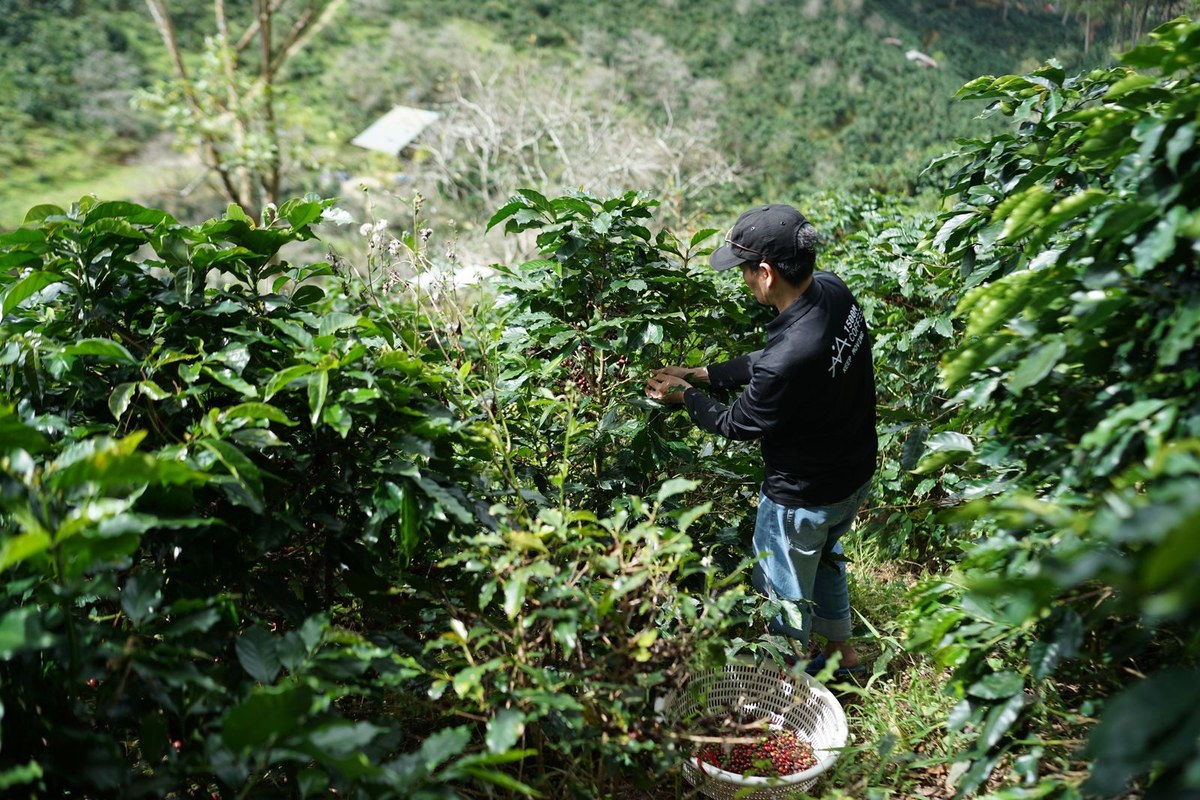
Photo: 1500m Coffee / Pexels (free license)
Quick summary
The EU Deforestation Regulation (EUDR, Regulation (EU) 2023/1115) has been postponed a second time by Regulation (EU) 2025/2650: full application now starts on 30 December 2026 for operators and traders that are not micro or small enterprises, and on 30 June 2027 for natural persons and micro and small enterprises. EUDR requires seven commodity groups — cattle, cocoa, coffee, oil palm, rubber, soya and wood, plus products derived from them — to prove they do not come from land deforested or degraded after 31 December 2020, backed by geolocation coordinates of the plots and a due diligence file. For Vietnam, coffee, wood and rubber all fall in scope, with the EU taking roughly 38-40% of Vietnam's coffee export value. Vietnam remains classified by the EU as a low-risk country, so due diligence is simplified, but low risk does not mean exemption from traceability. The article separates three questions SMEs need answered: what the delay actually changes, how much lighter low risk really is, and the four concrete things to finish before 30 December 2026. It promises no emission-reduction or cost-saving figures and invents no penalty amount, because EUDR leaves penalties to each EU member state.
Quick answer: EUDR — the EU Deforestation Regulation — has not been scrapped; it has been delayed a second time. According to the European Commission's Access2Markets page, it now applies "from 30 December 2026 (30 June 2027 in the case of natural persons..." — that is 30 Dec 2026 for operators and traders that are not micro or small enterprises, and 30 Jun 2027 for natural persons, micro and small enterprises. Vietnam's coffee, wood and rubber are all in scope. The right thing to do now is not to wait for another delay, but to build proper plot-level geolocation data and traceability records with the breathing room that is left.
Last updated: 28/08/2026.
The short version for busy readers
Seven points to remember if you only have three minutes, each with a date and a checkable source:
- EUDR is delayed, not dead: the base act is Regulation (EU) 2023/1115; the second delay via Regulation (EU) 2025/2650 moves full application to 30 Dec 2026.
- Small firms get another half year: natural persons, micro and small enterprises apply from 30 Jun 2027.
- Seven commodity groups: cattle, cocoa, coffee, oil palm, rubber, soya and wood, plus derived products. Vietnam is hit on three: coffee, wood, rubber.
- The cut-off is 31 Dec 2020: goods must not come from land deforested or degraded after that date.
- Vietnam = low risk: due diligence is simplified, but that is not the same as being exempt from traceability.
- The EU matters for Vietnamese coffee: it takes roughly 38-40% of Vietnam's coffee export value.
- What SMEs should do now: plot geolocation, traceability, a due diligence statement and reference numbers — not waiting for price or for another delay.
Key facts — one line, one milestone, one checkable source each:
- New application dates: "from 30 December 2026 (30 June 2027 in the case of natural persons..." — EU Access2Markets.
- Cut-off date 31 Dec 2020: goods must not come from land "deforested or degraded after Dec. 31, 2020" — World Resources Institute.
- Seven commodities: "cattle, cocoa, coffee, oil palm, rubber, soy" plus wood — World Resources Institute.
- Vietnam's coffee exports, first half of 2026: more than 1.05 million tonnes, USD 4.81 billion, up 7.4% in volume, per Vietnam Customs data reported by Nong nghiep va Moi truong (2 Aug 2026).
- Sector readiness: per Vicofa, around 35-40% of current coffee supply can meet EUDR requirements — Nong nghiep va Moi truong, 2 Aug 2026.
Scope note: this article describes published legal obligations. It is not binding legal advice for your specific situation, and contains no emission-reduction or cost-saving commitment. EUDR leaves penalties to each EU member state, so this article states no penalty amount.
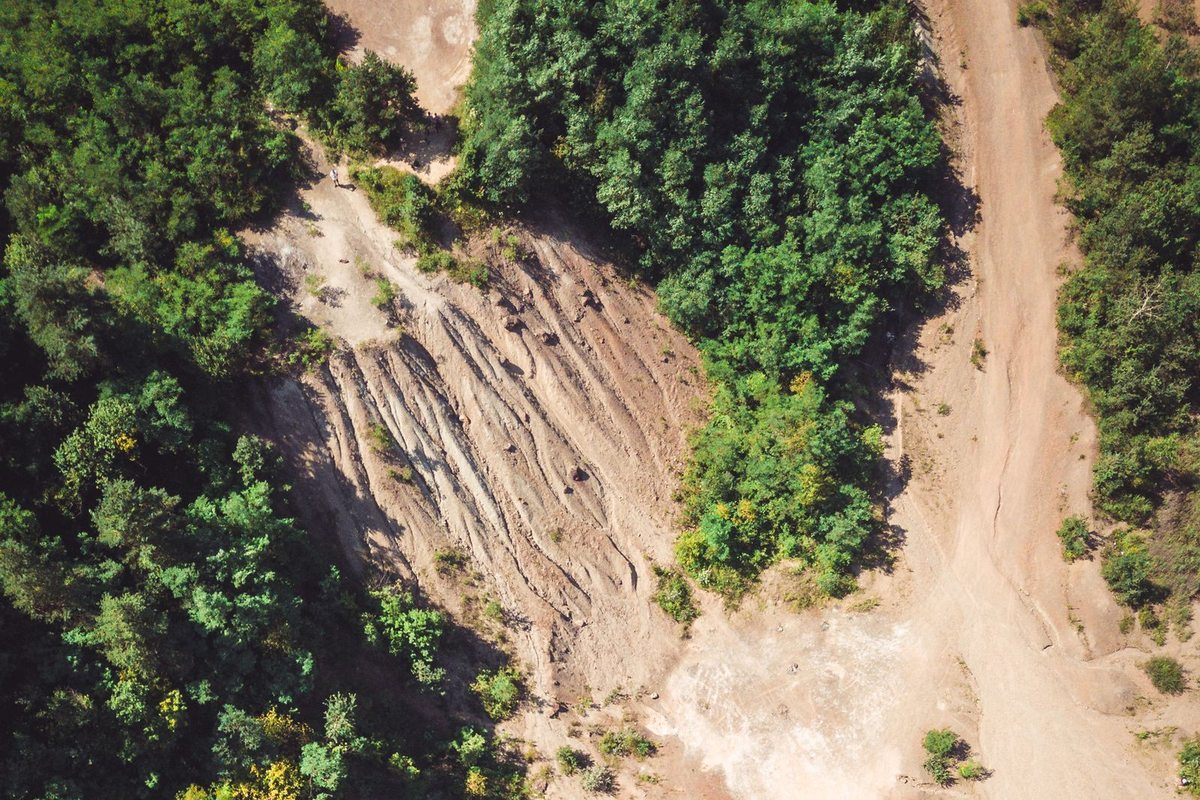
What EUDR is, and why Vietnam's coffee, wood and rubber are in its sights
Direct answer: EUDR forces whoever places goods on the EU market to prove they do not come from land deforested after 31 Dec 2020, and three of Vietnam's biggest exports are on the list. EUDR is short for Regulation (EU) 2023/1115 — the EU regulation on deforestation-free products. Its mechanism is unlike a tariff or a quota: it is a due diligence obligation. Every in-scope consignment must carry evidence that the source area was not deforested or degraded after the cut-off date.
Scope covers seven commodity groups. The World Resources Institute lists them as "cattle, cocoa, coffee, oil palm, rubber, soy" plus wood and derived products. For Vietnam, three hit directly: coffee, wood and rubber — exactly the agricultural and forestry staples heading to the EU. For coffee alone, the EU takes roughly 38-40% of Vietnam's coffee export value, so this is not a niche issue but a whole-sector one.
The dependence on the EU is not small. According to Nong nghiep va Moi truong (2 Aug 2026), citing Vietnam Customs, in the first half of 2026 Vietnam exported more than 1.05 million tonnes of coffee for USD 4.81 billion; the EU alone imported more than 409,700 tonnes of Vietnamese coffee worth roughly USD 1.735 billion. A market of that size cannot be replaced in a few months if goods are blocked for missing origin records — and that, not a small compliance fee, is the real risk EUDR poses.
The point most easily misread is the cut-off date. EUDR does not ban all goods from land that once held forest; it uses 31 Dec 2020. WRI explains that goods must be shown not to come from land "deforested or degraded after Dec. 31, 2020". Land converted before that date is not automatically excluded; what matters is deforestation or degradation after it. That is why plot geolocation data sits at the centre: without coordinates, you cannot check a plot against the 2020 forest map.
EUDR sits alongside the other mechanisms EU customers are already asking Vietnamese suppliers about. If you have read our piece on the ESG questionnaires from EU customers, EUDR is one of them, but with a harder legal edge (mandatory EU law, not just a survey). It also differs from CBAM — which targets the embedded carbon of steel, aluminium and cement — in that EUDR targets the land origin of agricultural and forestry goods.
The new 30 Dec 2026 deadline — and what the second delay really changed
Direct answer: the delay moves the start date, it does not remove the obligation; alongside it come a few genuine simplifications for small firms and for the downstream chain. Regulation (EU) 2025/2650 amends Article 38 of EUDR. According to EU Access2Markets, it applies "under Regulation (EU) 2023/1115 from 30 December 2026 (30 June 2027 in the case of natural persons... micro or small enterprises)". This is the second delay — the deadline was previously end-2025.
There are three substantive changes beyond the date. First, a "primary operator" is defined as "a natural person or micro or small enterprise", and such operators in low-risk countries may submit "a single simplified declaration". Second, downstream operators and traders "no longer have to submit" their own due diligence statement; instead they "collect and retain the reference number of the initial declaration". Third, the stated aim of the revision is to "reduce impact and administrative burden on micro and small operators".
What did NOT change is the important part: the 31 Dec 2020 cut-off stands, the geolocation and traceability requirements stand, and the seven commodity groups stand. In other words, the delay buys preparation time; it does not lower the bar. A business that treats the delay as an escape will repeat the mistake of the first delay: scrambling at the last minute.
| Group | Definition | Applies from |
|---|---|---|
| Non micro/small enterprises | Large and medium operators/traders | 30 Dec 2026 |
| Natural persons, micro, small | "primary operator" = natural person or micro/small enterprise | 30 Jun 2027 |
| Downstream operators/traders | Not the party first placing goods on the EU market | No separate DDS; retain the reference number of the initial declaration |
| Item | Changed by 2025/2650? | Detail |
|---|---|---|
| Application date | Yes | Moved to 30 Dec 2026 (30 Jun 2027 for small) |
| Small operators' declaration in low-risk countries | Yes | A single simplified declaration |
| Downstream obligation | Yes | Retain a reference number instead of filing own DDS |
| Deforestation cut-off | No | Still 31 Dec 2020 |
| Geolocation + traceability | No | Still mandatory |
| Seven commodity groups | No | Cattle, cocoa, coffee, oil palm, rubber, soya, wood |
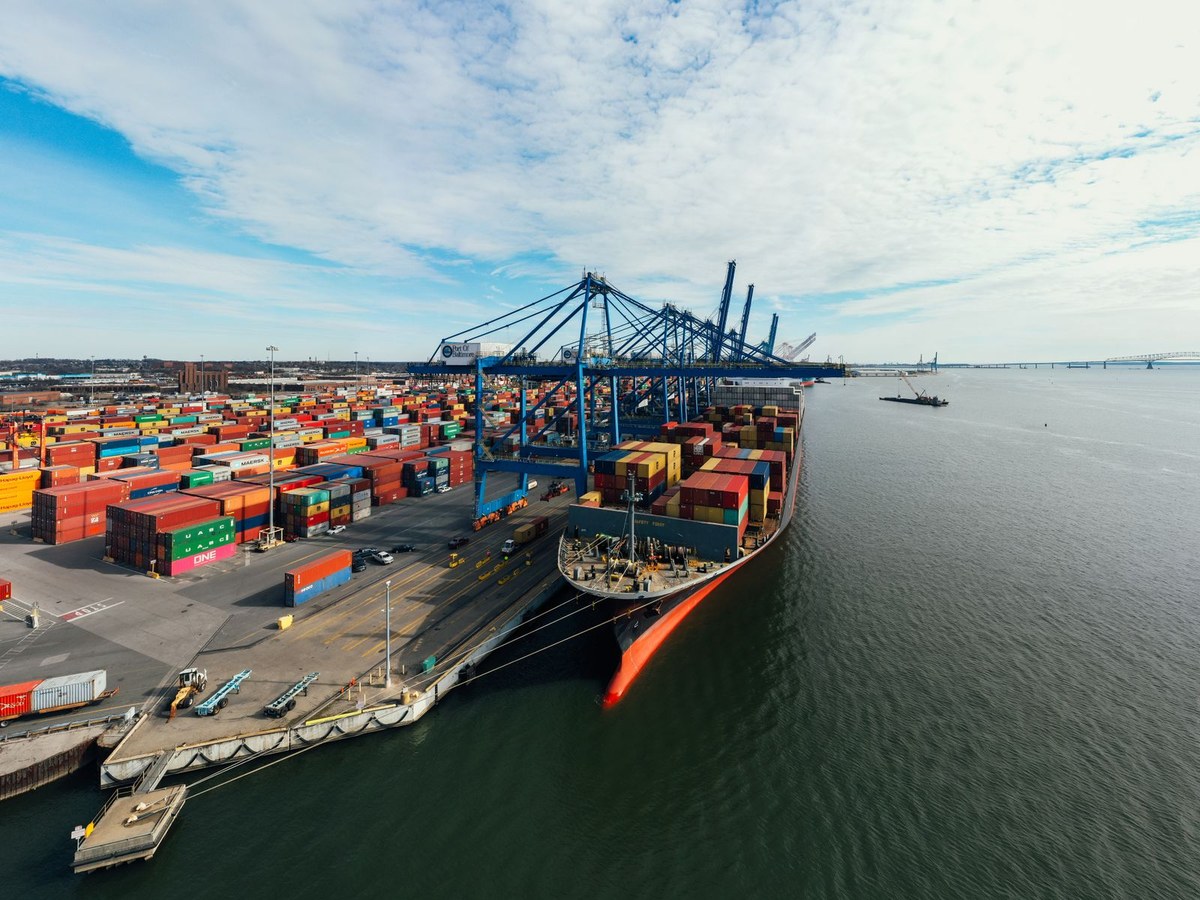
What "low risk" means for Vietnamese firms — lighter, not exempt
Direct answer: low risk cuts the volume of due diligence, but geolocation and traceability still apply, and the status can be lost if violations occur. EUDR sorts countries into three risk tiers — low, standard, high — with different obligations by tier. Vietnam sits in the low-risk tier: Tin nhanh Chung khoan (27 May 2026) reports that Vietnam "continues to be classified by the EU as a 'low-risk' country for deforestation".
The concrete benefit of the low-risk tier is paperwork volume: per EU Access2Markets, micro/small primary operators in low-risk countries may file "a single simplified declaration". But "simplified" is not "exempt". The same Tin nhanh Chung khoan piece warns that if violations occur, Vietnam's low-risk advantage could be affected, and that the need for a transparent, traceable supply chain — plot data, geographic coordinates, traceability records — remains large. In other words, low risk is a collective national asset; a few sloppy exporters can drag the whole tier down.
Actual readiness is still modest. According to Nong nghiep va Moi truong (2 Aug 2026), citing Vicofa, around 35-40% of current coffee supply is able to meet EUDR requirements. That number is both good news (a base exists) and a warning (the other 60-65% is not ready). At local level, big growing regions have started: per Bao Dak Lak (Nov 2025), cooperatives have obtained 4C-EUDR certification covering 9,437 hectares — showing the compliance path is feasible when organised.
Four things SMEs should do with the runway to 30 Dec 2026
Direct answer: four tasks — a plot geolocation map, traceability down to the farm, a due diligence statement (DDS), and reference-number management — done early keep your orders; done late lose them. The list below is ordered by what to do first, not by difficulty.
| Task | What it is | Why it must be done before the deadline |
|---|---|---|
| 1. Plot geolocation | Record geographic coordinates for each source plot/area | Without coordinates you cannot check against the 2020 forest map — a precondition, not a last-minute patch |
| 2. Traceability to the farm | Link each export lot back to the correct growing area | Low risk still requires traceability; a broken link leaves that lot "naked" |
| 3. DDS file | A due diligence statement in the EU format | A mandatory document for goods to clear into the EU |
| 4. Reference-number management | Store and pass the initial declaration's reference number to downstream buyers | After 2025/2650, downstream parties rely on this number instead of filing their own |
The hardest and slowest are tasks 1 and 2 — because they depend on data outside the direct control of the exporter: coordinates live with growers, cooperatives and collectors. A business that treats EUDR as a last-minute software purchase will fail, because software does not conjure plot coordinates if nobody goes out to collect them. This is exactly why supply-chain governance must start now, not in Q4 2026.
It helps to picture what "geolocation" means in practice. For a small plot it is a single point coordinate; for a larger area it is a polygon of coordinates tracing the boundary. Those coordinates then get matched against forest-cover data from 2020 to show the plot was not forest cleared after the cut-off. The work is not intellectually hard — but it is field work, repeated across every grower who feeds your export volume, and it cannot be back-dated. A cooperative that mapped its members' plots in 2025 is in a different position from an exporter who buys from a shifting pool of collectors and has never recorded where a single bag came from. The 4C-EUDR certified area in Dak Lak exists precisely because someone did that field work early.
On support, GROW handles the first three tasks within the scope of its export-market and green-transition advisory pillars: surveying source areas, building the geolocation map, setting up traceability and preparing the DDS file. Cost depends on the number of plots and how fragmented the supply chain is, so we quote after an on-the-ground survey rather than posting a generic figure. If you export coffee, wood or rubber to the EU, get in touch for an initial survey.
This article promises nothing
Direct answer: we make no numeric promises, and we are wary of anyone who does. EUDR attracts attractive but baseless claims — "EUDR compliance raises your selling price by X%", "this software gets you EUDR-ready in Y days". This article deliberately states no emission-reduction, cost-saving or price-uplift figure, because no real source supports such numbers for your specific case.
On penalties: EUDR leaves the setting of sanctions to each EU member state, so there is no single penalty figure applying to every market. Any article printing a "maximum fine of N euros" as a unified EUDR number is overstating. What is certain is that goods that cannot prove their origin will not enter the EU — and losing a market usually costs more than any fine.
EUDR does not ban Vietnam's coffee, wood or rubber from the EU — it requires each consignment to prove it did not come from land deforested after 31 December 2020; firms that finish their plot geolocation data and traceability records before 30 December 2026 will keep their market, while those that wait until the deadline will lose orders.
Frequently asked questions
EUDR is delayed — do we still need to act now?
Yes. The second delay (Regulation (EU) 2025/2650) only moves full application to 30 Dec 2026 (30 Jun 2027 for micro and small firms); it does not lower the bar. The 31 Dec 2020 deforestation cut-off stands and the geolocation and traceability requirements stand. Because collecting plot coordinates takes months and depends on growers, starting early is the only way to be ready in time.
Vietnam is classified low risk — does that mean it is exempt from EUDR?
No. Low risk reduces the volume of due diligence — for example, micro and small primary operators in low-risk countries may file a single simplified declaration — but geolocation and traceability are still required. If violations occur, the whole country's low-risk advantage could be affected.
Which Vietnamese products fall under EUDR?
EUDR covers seven groups: cattle, cocoa, coffee, oil palm, rubber, soya and wood, plus derived products. For Vietnam, three hit directly: coffee, wood and rubber. For coffee alone, the EU takes roughly 38-40% of Vietnam's coffee export value.
What is the EUDR penalty?
EUDR does not set a single penalty; sanctions are defined by each EU member state. So figures presented as a unified EUDR fine should be treated with caution. The more certain consequence is that goods that cannot prove their origin will not be placed on the EU market.
What are the four things SMEs must do before 30 Dec 2026?
One, build a geolocation map of source plots. Two, set up traceability down to the farm. Three, prepare a due diligence statement (DDS) in the EU format. Four, manage and pass the initial declaration's reference number to downstream buyers. The first two take the most time because they depend on data from growers.
References
- EU Access2Markets — Delay until December 2026 and other developments in the implementation of the EUDR (Regulation (EU) 2025/2650)
- Tin nhanh Chứng khoán — EU lùi áp dụng EUDR đến cuối 2026, nông sản Việt thêm 'khoảng thở' (27/5/2026)
- World Resources Institute — What Is the EU Deforestation Regulation (EUDR)?
- Báo Nông nghiệp và Môi trường — Tận dụng lợi thế, cà phê Việt chinh phục EUDR (2/8/2026)
- Báo Đắk Lắk — Chủ động vượt 'rào cản' EUDR (11/2025)